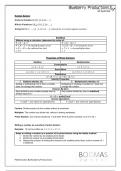
Number System
𝑵𝒂𝒕𝒖𝒓𝒂𝒍 𝑵𝒖𝒎𝒃𝒆𝒓𝒔 (ℕ): {1,2,3,4, . . . }
𝑾𝒉𝒐𝒍𝒆 𝑵𝒖𝒎𝒃𝒆𝒓𝒔 (ℕ𝑶 ): {0,1,2,3,4, . . . }
𝑰𝒏𝒕𝒆𝒈𝒆𝒓𝒔(ℤ): {. . . , −2, −1, 0, 1, 2, . . . } – Extends ℕ𝑂 to include negative numbers
BODMAS
Without using a calculator, determine the value of:
𝟕 × 𝟑 − 𝟐 =? 𝟕 × (𝟑 − 𝟐) =?
𝟕 × 𝟑 − 2 → 𝑑𝑜 𝑚𝑢𝑙𝑡𝑖𝑝𝑙𝑖𝑐𝑎𝑡𝑖𝑜𝑛 𝑓𝑖𝑟𝑠𝑡 7 × (𝟑 − 𝟐) → 𝑑𝑜 𝑏𝑟𝑎𝑐𝑘𝑒𝑡𝑠 𝑓𝑖𝑟𝑠𝑡
= 21 − 𝟐 → 𝑑𝑜 𝑠𝑢𝑏𝑡𝑟𝑎𝑐𝑡𝑖𝑜𝑛 𝑙𝑎𝑠𝑡 = 7 × 1 → 𝑑𝑜 𝑚𝑢𝑙𝑡𝑖𝑝𝑙𝑖𝑐𝑎𝑡𝑖𝑜𝑛
= 19 =7
Properties of Whole Numbers
Addition Multiplication
Commutative
𝑎+𝑏 =𝑏+𝑎 𝑎×𝑏 =𝑏×𝑎
Associative
(𝑎 + 𝑏) + 𝑐 = 𝑎 + (𝑏 + 𝑐) (𝑎 × 𝑏) × 𝑐 = 𝑎 × (𝑏 × 𝑐)
Distributive
𝒂 × (𝒃 + 𝒄) = (𝒂 × 𝒃) + (𝒂 × 𝒄)
Identity Properties
1. Additive Identity: (0) 2. Multiplicative Identity: (1)
Adding or subtracting 0 to or from a number Multiplying or dividing a number by 1 does not
does not change the number. change the number.
Division By Zero
Zero divided by any number (except zero) is Any number divided by zero is undefined.
always equal to 0.
𝟎 ÷ 𝟎 = 𝒖𝒏𝒅𝒆𝒇𝒊𝒏𝒆𝒅
Inverse Operations
+ 𝑎𝑛𝑑 − 𝑎𝑟𝑒 𝑖𝑛𝑣𝑒𝑟𝑠𝑒 𝑜𝑝𝑒𝑟𝑎𝑡𝑖𝑜𝑛𝑠 × 𝑎𝑛𝑑 ÷ 𝑎𝑟𝑒 𝑖𝑛𝑣𝑒𝑟𝑠𝑒 𝑜𝑝𝑒𝑟𝑎𝑡𝑖𝑜𝑛𝑠
Factors: Divide exactly into the number without a remainder.
Multiples: The number can divide into, without a leaving remainder.
Prime Number: Can only be divided by 1 and itself. (First 5 prime numbers: 𝟐; 𝟑; 𝟓; 𝟕; 𝟏𝟏 )
Writing a number as a product of prime factors:
Example: 12 can be written as: 2 × 2 × 3 = 22 × 3
Steps to writing a number as a product of its prime factors using the ladder method.
1. Divide the number by its smallest prime factor.
2. Divide the answer by its smallest prime factor.
3. Repeat the process of dividing the answer by its smallest prime factor until an answer of 1
is obtained.
Mathematics By Blueberry Productions
𝑵𝒂𝒕𝒖𝒓𝒂𝒍 𝑵𝒖𝒎𝒃𝒆𝒓𝒔 (ℕ): {1,2,3,4, . . . }
𝑾𝒉𝒐𝒍𝒆 𝑵𝒖𝒎𝒃𝒆𝒓𝒔 (ℕ𝑶 ): {0,1,2,3,4, . . . }
𝑰𝒏𝒕𝒆𝒈𝒆𝒓𝒔(ℤ): {. . . , −2, −1, 0, 1, 2, . . . } – Extends ℕ𝑂 to include negative numbers
BODMAS
Without using a calculator, determine the value of:
𝟕 × 𝟑 − 𝟐 =? 𝟕 × (𝟑 − 𝟐) =?
𝟕 × 𝟑 − 2 → 𝑑𝑜 𝑚𝑢𝑙𝑡𝑖𝑝𝑙𝑖𝑐𝑎𝑡𝑖𝑜𝑛 𝑓𝑖𝑟𝑠𝑡 7 × (𝟑 − 𝟐) → 𝑑𝑜 𝑏𝑟𝑎𝑐𝑘𝑒𝑡𝑠 𝑓𝑖𝑟𝑠𝑡
= 21 − 𝟐 → 𝑑𝑜 𝑠𝑢𝑏𝑡𝑟𝑎𝑐𝑡𝑖𝑜𝑛 𝑙𝑎𝑠𝑡 = 7 × 1 → 𝑑𝑜 𝑚𝑢𝑙𝑡𝑖𝑝𝑙𝑖𝑐𝑎𝑡𝑖𝑜𝑛
= 19 =7
Properties of Whole Numbers
Addition Multiplication
Commutative
𝑎+𝑏 =𝑏+𝑎 𝑎×𝑏 =𝑏×𝑎
Associative
(𝑎 + 𝑏) + 𝑐 = 𝑎 + (𝑏 + 𝑐) (𝑎 × 𝑏) × 𝑐 = 𝑎 × (𝑏 × 𝑐)
Distributive
𝒂 × (𝒃 + 𝒄) = (𝒂 × 𝒃) + (𝒂 × 𝒄)
Identity Properties
1. Additive Identity: (0) 2. Multiplicative Identity: (1)
Adding or subtracting 0 to or from a number Multiplying or dividing a number by 1 does not
does not change the number. change the number.
Division By Zero
Zero divided by any number (except zero) is Any number divided by zero is undefined.
always equal to 0.
𝟎 ÷ 𝟎 = 𝒖𝒏𝒅𝒆𝒇𝒊𝒏𝒆𝒅
Inverse Operations
+ 𝑎𝑛𝑑 − 𝑎𝑟𝑒 𝑖𝑛𝑣𝑒𝑟𝑠𝑒 𝑜𝑝𝑒𝑟𝑎𝑡𝑖𝑜𝑛𝑠 × 𝑎𝑛𝑑 ÷ 𝑎𝑟𝑒 𝑖𝑛𝑣𝑒𝑟𝑠𝑒 𝑜𝑝𝑒𝑟𝑎𝑡𝑖𝑜𝑛𝑠
Factors: Divide exactly into the number without a remainder.
Multiples: The number can divide into, without a leaving remainder.
Prime Number: Can only be divided by 1 and itself. (First 5 prime numbers: 𝟐; 𝟑; 𝟓; 𝟕; 𝟏𝟏 )
Writing a number as a product of prime factors:
Example: 12 can be written as: 2 × 2 × 3 = 22 × 3
Steps to writing a number as a product of its prime factors using the ladder method.
1. Divide the number by its smallest prime factor.
2. Divide the answer by its smallest prime factor.
3. Repeat the process of dividing the answer by its smallest prime factor until an answer of 1
is obtained.
Mathematics By Blueberry Productions