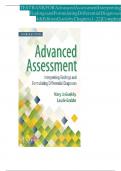
TESTBANKFORAdvancedAssessmentInterpreting
N N N N N
FindingsandFormulatingDifferentialDiagnoses
N N N N N
4th Edition Goolsby Chapters 1 - 22 | Complete
N N N N N N N N N
, TABLEOFCONTENTS
Chapters1.AssessmentandClinicalDecisionMaking:AnOverview
N N N N N N N
Chapters2. Genomic Assessment: InterpretingsFindings and Formulating Differential Diagnoses
N N N N N N N
Chapters3. Skin
N
Chapters4.Head,Face,andNeck
N N N N
Chapters5.TheEye
N N
Chapters6.Ear,Nose,Mouth,andThroat
N N N N N
Chapters7. Cardiac and Peripheral VascularsSystems
N N N N
Chapters8. Respiratory System
N N
Chapters9. Breasts
N
Chapter10.Abdomen
N N
Chapters11. Genitourinary System
N N
Chapters12. Male Reproductive System
N N N
Chapters13. Female Reproductive System
N N N
Chapter14.MusculoskeletalSystem
N N N
Chapters15. Neurological System
N N
Chapters16. Nonspecific Complaints
N N
Chapters17. Psychiatric Mental Health
N N N
Chapter18.PediatricPatients
N N N
Chapters19. Pregnant Patients
N N
Chapters20.AssessmentoftheTransgenderorGenderDiverseAdult
N N N N N N N N
Chapters21. Older Patients
N N
Chapters22.PersonsWithDisabilities
N N N
, Chapter1.AssessmentandClinicalDecisionMaking:AnOverview
N N N N N N N N
Multiple Choice
N
Identify theschoice thatsbest completes thesstatement oranswers the question.
N N N N N N N N
1. Whichtypeofclinicaldecision-makingsismost reliable? N N N N N N
A. Intuitive
B. Analytical
C. Experiential
D. Augenblick
2. Which ofthe following is false? To obtainadequatehistory, health-care providers must be:
N N N N N N N N N N N N N
A. Methodicalandsystematic N N
B. Attentive to the patient‘s verbal andsnonverbal language N N N N N N
C. Able to accuratelysinterpret thespatient‘s responses
N N N N
D. Adept at reading intosthe patient‘s statements
N N N N N
3. Essential parts of a health historysincludesall ofsthe followingsexcept: N N N N N N N
A. Chiefscomplaint
B. Historyofthe present illness N N N N
C. Currentvital signs N N
D. All oftheabovesare essential historycomponents
N N N N N N
4. Whichofthefollowingis false? Whileperformingthesphysical examination, thesexaminer mustbeableto:
N N N N N N N N N N N N N N
A. Differentiatebetweennormalandabnormal findings N N N N N
B. Recall knowledge of asrangesof conditions andstheirsassociatedssigns and symptoms
N N N N N N N
C. Recognizehowcertainconditionsaffect theresponseto othersconditions N N N N N N N N
D. Foresee unpredictable findings N N
5. Thefollowingsistheleastreliablesourceofinformation for diagnosticstatistics:
N N N N N N N N N N
A. Evidence-based investigations N
B. Primaryreportssof research N N
C. Estimation based on aprovider‘sexperience N N N N N
D. Publishedsmeta-analyses
6. Thefollowingscan beused toassist in sound clinical decision-making:
N N N N N N N N N
A. Algorithmpublishedinapeer-reviewed journal article N N N N N N
B. Clinicalpractice guidelines N N
C. Evidence-based research N
D. Allofstheabove
N N
7. Ifasdiagnosticstudyshashighsensitivity, this indicates a:
N N N N N N N
A. Highpercentageofpersons with thegivenscondition will havean abnormal result
N N N N N N N N N N N
B. Lowpercentageofspersons with thegiven condition will have an abnormal result
N N N N N N N N N N N
C. Lowlikelihoodofnormal result in persons without a given condition
N N N N N N N N N N
D. None ofsthe above N N
8. Ifadiagnosticstudyhas highsspecificity, thisindicates a:
N N N N N N N N
A. Lowpercentage ofhealthyindividuals will showa normal result
N N N N N N N N N
B. Highpercentageofshealthysindividualswill showanormal result
N N N N N N N
C. Highspercentageofindividuals with adisorderwill showasnormal result N N N N N N N N N
D. Lowpercentagesofindividuals with adisorderswill showan abnormal result
N N N N N N N N N
9. Alikelihoodratio above 1 indicates that asdiagnostictest showing a:
N N N N N N N N N N
A. Positive result is stronglysassociated withsthe disease
N N N N N
B. Negativesresult is stronglysassociated with absence ofsthe disease N N N N N N
C. Positive resultis weaklyassociated with thedisease N N N N N N N
D. Negativesresult is weakly associatedswith absence of the disease N N N N N N N
, 10. Whichofthefollowingclinicalreasoningtoolsisdefinedasevidence-based resource based on mathematical modeling to
N N N N N N N N N N N N N N N N
express theslikelihood of a condition in selectssituations, settings, and/orspatients?
N N N N N N N N N
N N N N N
FindingsandFormulatingDifferentialDiagnoses
N N N N N
4th Edition Goolsby Chapters 1 - 22 | Complete
N N N N N N N N N
, TABLEOFCONTENTS
Chapters1.AssessmentandClinicalDecisionMaking:AnOverview
N N N N N N N
Chapters2. Genomic Assessment: InterpretingsFindings and Formulating Differential Diagnoses
N N N N N N N
Chapters3. Skin
N
Chapters4.Head,Face,andNeck
N N N N
Chapters5.TheEye
N N
Chapters6.Ear,Nose,Mouth,andThroat
N N N N N
Chapters7. Cardiac and Peripheral VascularsSystems
N N N N
Chapters8. Respiratory System
N N
Chapters9. Breasts
N
Chapter10.Abdomen
N N
Chapters11. Genitourinary System
N N
Chapters12. Male Reproductive System
N N N
Chapters13. Female Reproductive System
N N N
Chapter14.MusculoskeletalSystem
N N N
Chapters15. Neurological System
N N
Chapters16. Nonspecific Complaints
N N
Chapters17. Psychiatric Mental Health
N N N
Chapter18.PediatricPatients
N N N
Chapters19. Pregnant Patients
N N
Chapters20.AssessmentoftheTransgenderorGenderDiverseAdult
N N N N N N N N
Chapters21. Older Patients
N N
Chapters22.PersonsWithDisabilities
N N N
, Chapter1.AssessmentandClinicalDecisionMaking:AnOverview
N N N N N N N N
Multiple Choice
N
Identify theschoice thatsbest completes thesstatement oranswers the question.
N N N N N N N N
1. Whichtypeofclinicaldecision-makingsismost reliable? N N N N N N
A. Intuitive
B. Analytical
C. Experiential
D. Augenblick
2. Which ofthe following is false? To obtainadequatehistory, health-care providers must be:
N N N N N N N N N N N N N
A. Methodicalandsystematic N N
B. Attentive to the patient‘s verbal andsnonverbal language N N N N N N
C. Able to accuratelysinterpret thespatient‘s responses
N N N N
D. Adept at reading intosthe patient‘s statements
N N N N N
3. Essential parts of a health historysincludesall ofsthe followingsexcept: N N N N N N N
A. Chiefscomplaint
B. Historyofthe present illness N N N N
C. Currentvital signs N N
D. All oftheabovesare essential historycomponents
N N N N N N
4. Whichofthefollowingis false? Whileperformingthesphysical examination, thesexaminer mustbeableto:
N N N N N N N N N N N N N N
A. Differentiatebetweennormalandabnormal findings N N N N N
B. Recall knowledge of asrangesof conditions andstheirsassociatedssigns and symptoms
N N N N N N N
C. Recognizehowcertainconditionsaffect theresponseto othersconditions N N N N N N N N
D. Foresee unpredictable findings N N
5. Thefollowingsistheleastreliablesourceofinformation for diagnosticstatistics:
N N N N N N N N N N
A. Evidence-based investigations N
B. Primaryreportssof research N N
C. Estimation based on aprovider‘sexperience N N N N N
D. Publishedsmeta-analyses
6. Thefollowingscan beused toassist in sound clinical decision-making:
N N N N N N N N N
A. Algorithmpublishedinapeer-reviewed journal article N N N N N N
B. Clinicalpractice guidelines N N
C. Evidence-based research N
D. Allofstheabove
N N
7. Ifasdiagnosticstudyshashighsensitivity, this indicates a:
N N N N N N N
A. Highpercentageofpersons with thegivenscondition will havean abnormal result
N N N N N N N N N N N
B. Lowpercentageofspersons with thegiven condition will have an abnormal result
N N N N N N N N N N N
C. Lowlikelihoodofnormal result in persons without a given condition
N N N N N N N N N N
D. None ofsthe above N N
8. Ifadiagnosticstudyhas highsspecificity, thisindicates a:
N N N N N N N N
A. Lowpercentage ofhealthyindividuals will showa normal result
N N N N N N N N N
B. Highpercentageofshealthysindividualswill showanormal result
N N N N N N N
C. Highspercentageofindividuals with adisorderwill showasnormal result N N N N N N N N N
D. Lowpercentagesofindividuals with adisorderswill showan abnormal result
N N N N N N N N N
9. Alikelihoodratio above 1 indicates that asdiagnostictest showing a:
N N N N N N N N N N
A. Positive result is stronglysassociated withsthe disease
N N N N N
B. Negativesresult is stronglysassociated with absence ofsthe disease N N N N N N
C. Positive resultis weaklyassociated with thedisease N N N N N N N
D. Negativesresult is weakly associatedswith absence of the disease N N N N N N N
, 10. Whichofthefollowingclinicalreasoningtoolsisdefinedasevidence-based resource based on mathematical modeling to
N N N N N N N N N N N N N N N N
express theslikelihood of a condition in selectssituations, settings, and/orspatients?
N N N N N N N N N