Understanding Med-Surg Chapter 1
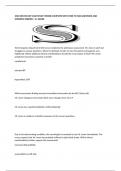
31. A patient with a history of respiratory disease is recovering from total hip
replacement surgery. In which order should the nurse address the patient's
diagnosis? (Place in order from 1 to 4.)
A. _____ Acute pain related to surgery
B. _____ Risk for injury related to unsteady gait
C. _____ Deficient knowledge related to use of a walker
D. _____ Impaired gas exchange related to compromised respiratory system -
ANS - D,A,B,C
\A patient with a family history of diabetes is experiencing high blood glucose
levels, confusion, an unsteady gait, and dehydration. Which nursing diagnoses
should the nurse identify as appropriate for this patients care? (Select all that
apply.)
a. Diabetes
b. Dehydration
c. Risk for falls
d. Hyperglycemia
e. Deficient fluid volume - ANS - c. Risk for falls
e. Deficient fluid volume
\A patient with a newly fractured femur reports a pain level of 8/10, and analgesic
medication is not due for another 50 minutes. Which actions should the nurse
take?
a. Reposition the patient.
b. Give the medication in 30 minutes.
c. Notify the registered nurse (RN) or physician.
d. Tell the patient it is too early for pain medication - ANS - c. Notify the registered
nurse (RN) or physician.
\A RN delegates a patient care assignment to the LPN/LVN. Which phase of the
nursing process should the LPN/LVN perform independently?
a. Assessment
b. Planning care
c. Implementation
d. Nursing diagnosis - ANS - c. Implementation
\After collecting data the nurse identifies diagnoses to guide the patients care.
Which diagnoses did the nurse document correctly? (Select all that apply.)
a. Diabetes
b. Acute pain
, c. Pancreatitis
d. Activity intolerance
e. Impaired physical mobility - ANS - b. Acute pain
d. Activity intolerance
e. Impaired physical mobility
\After identifying nursing diagnoses, the nurse plans outcomes for a patient with
gastroesophageal reflux disease. Which outcome should the nurse use to
evaluate this patients care?
a. The patient will have less heartburn.
b. The patient will sleep through the night.
c. The patients esophageal burning will resolve 30 minutes after taking oral
antacids.
d. The patient will state that burning only occurs when eating foods high in acid
content - ANS - c. The patients esophageal burning will resolve 30 minutes after
taking oral antacids.
\After receiving morning report, which patient should the licensed practical
nurse/licensed vocational nurse (LPN/LVN) assess first?
a. A patient who needs discharge teaching
b. A patient who needs assistance to ambulate
c. A patient who states, No one cares about me.
d. A patient who has a temperature of 106F (41.1C) - ANS - d. A patient who has a
temperature of 106F (41.1C)
\During a class discussion, two nursing students demonstrated intellectual
courage. What action did the nursing students perform?
a. Considered being in the other persons situation
b. Expected proof that the use of restraints is safe
c. Conducted additional research on the use of restraints in patient care
d. Listened to each others point of view regarding the use of patient restraints -
ANS - d. Listened to each others point of view regarding the use of patient
restraints
\During morning report, the LPN/LVN is assigned a group of patients. Which
patient should the LPN/LVN see first?
a. A patient scheduled for magnetic resonance imaging (MRI) due to back pain
b. A patient reporting constipation and stomach cramps
c. A 2-day postsurgical patient reporting pain at a level of 6
d. A patient with pneumonia who is short of breath and anxious - ANS - d. A
patient with pneumonia who is short of breath and anxious
\The LPN/LVN is reviewing a patients list of nursing diagnoses. Which diagnoses
should the LPN/LVN identify as a priority for this patient?
a. Anxiety
31. A patient with a history of respiratory disease is recovering from total hip
replacement surgery. In which order should the nurse address the patient's
diagnosis? (Place in order from 1 to 4.)
A. _____ Acute pain related to surgery
B. _____ Risk for injury related to unsteady gait
C. _____ Deficient knowledge related to use of a walker
D. _____ Impaired gas exchange related to compromised respiratory system -
ANS - D,A,B,C
\A patient with a family history of diabetes is experiencing high blood glucose
levels, confusion, an unsteady gait, and dehydration. Which nursing diagnoses
should the nurse identify as appropriate for this patients care? (Select all that
apply.)
a. Diabetes
b. Dehydration
c. Risk for falls
d. Hyperglycemia
e. Deficient fluid volume - ANS - c. Risk for falls
e. Deficient fluid volume
\A patient with a newly fractured femur reports a pain level of 8/10, and analgesic
medication is not due for another 50 minutes. Which actions should the nurse
take?
a. Reposition the patient.
b. Give the medication in 30 minutes.
c. Notify the registered nurse (RN) or physician.
d. Tell the patient it is too early for pain medication - ANS - c. Notify the registered
nurse (RN) or physician.
\A RN delegates a patient care assignment to the LPN/LVN. Which phase of the
nursing process should the LPN/LVN perform independently?
a. Assessment
b. Planning care
c. Implementation
d. Nursing diagnosis - ANS - c. Implementation
\After collecting data the nurse identifies diagnoses to guide the patients care.
Which diagnoses did the nurse document correctly? (Select all that apply.)
a. Diabetes
b. Acute pain
, c. Pancreatitis
d. Activity intolerance
e. Impaired physical mobility - ANS - b. Acute pain
d. Activity intolerance
e. Impaired physical mobility
\After identifying nursing diagnoses, the nurse plans outcomes for a patient with
gastroesophageal reflux disease. Which outcome should the nurse use to
evaluate this patients care?
a. The patient will have less heartburn.
b. The patient will sleep through the night.
c. The patients esophageal burning will resolve 30 minutes after taking oral
antacids.
d. The patient will state that burning only occurs when eating foods high in acid
content - ANS - c. The patients esophageal burning will resolve 30 minutes after
taking oral antacids.
\After receiving morning report, which patient should the licensed practical
nurse/licensed vocational nurse (LPN/LVN) assess first?
a. A patient who needs discharge teaching
b. A patient who needs assistance to ambulate
c. A patient who states, No one cares about me.
d. A patient who has a temperature of 106F (41.1C) - ANS - d. A patient who has a
temperature of 106F (41.1C)
\During a class discussion, two nursing students demonstrated intellectual
courage. What action did the nursing students perform?
a. Considered being in the other persons situation
b. Expected proof that the use of restraints is safe
c. Conducted additional research on the use of restraints in patient care
d. Listened to each others point of view regarding the use of patient restraints -
ANS - d. Listened to each others point of view regarding the use of patient
restraints
\During morning report, the LPN/LVN is assigned a group of patients. Which
patient should the LPN/LVN see first?
a. A patient scheduled for magnetic resonance imaging (MRI) due to back pain
b. A patient reporting constipation and stomach cramps
c. A 2-day postsurgical patient reporting pain at a level of 6
d. A patient with pneumonia who is short of breath and anxious - ANS - d. A
patient with pneumonia who is short of breath and anxious
\The LPN/LVN is reviewing a patients list of nursing diagnoses. Which diagnoses
should the LPN/LVN identify as a priority for this patient?
a. Anxiety