Bauhaus (1919-1933)
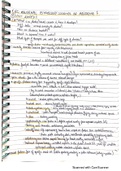
- In the early 20th century, many nations aimed to improve quality of manufactured
goods and compete in the world marketplace by injecting art into industry.
- However, the traditional concept of applying art to the surfaces of manufactured
goods was deemed irrelevant with the rise of machine production.
- Instead, a simple, rational style that symbolised the technological glory of the new
century was developed, replacing the curves of Art Nouveau with a more geometric
"machine aesthetic."
- This became the dominant style of the era, with Europe considered the leader in
taste.
- derived from the idea of interchangeability and standardisation in mass production
- Form should at all times be modern, abstract, and functional, with universal appeal,
liberated from historical references.
Walter Gropius (german)
- After ww1 education in art and applied science was modernised by walter gropius
The Bauhaus
- Students were given the opportunity to rethink buildings, furniture, film,
photography, theatre, music, toys, appliances and fashion.
- Combined fine arts and design
- Take advantage of the new technologies and cost-cutting industrial mass production.
- Students did metal work, Cabinetmaking, Weaving, Ceramics, Typography, Furniture
etc
- Prepared students to work with industry
- Aims of bauhaus was for artists, architects and designers to become more socially
conscious and responsible
- believed in the ideals of freedom, democracy and the improvement of the lives of
the workers.
- Closed in 1933 by natzis
Influences
● Modern abstract art - Cubism and Futurism: emphasises formal elements of an
artwork. Form, line and colour are regarded as the most important elements.
● Arts and Crafts movement: truthful materials in functional manner. Appropriate for
purpose
● Russian constructivism: simplicity of form, geometric shapes, dynamic diagonal lines
and limited use of colour. Artworks are modern, efficient and functional
● De stijl: simplicity of form, line and colour
Characteristics
- Geometric abstraction: simple geometric forms. rational , objective.
- Funtionality
- Simplicity: ‘less is more’
- Modern machine aesthetic
- In the early 20th century, many nations aimed to improve quality of manufactured
goods and compete in the world marketplace by injecting art into industry.
- However, the traditional concept of applying art to the surfaces of manufactured
goods was deemed irrelevant with the rise of machine production.
- Instead, a simple, rational style that symbolised the technological glory of the new
century was developed, replacing the curves of Art Nouveau with a more geometric
"machine aesthetic."
- This became the dominant style of the era, with Europe considered the leader in
taste.
- derived from the idea of interchangeability and standardisation in mass production
- Form should at all times be modern, abstract, and functional, with universal appeal,
liberated from historical references.
Walter Gropius (german)
- After ww1 education in art and applied science was modernised by walter gropius
The Bauhaus
- Students were given the opportunity to rethink buildings, furniture, film,
photography, theatre, music, toys, appliances and fashion.
- Combined fine arts and design
- Take advantage of the new technologies and cost-cutting industrial mass production.
- Students did metal work, Cabinetmaking, Weaving, Ceramics, Typography, Furniture
etc
- Prepared students to work with industry
- Aims of bauhaus was for artists, architects and designers to become more socially
conscious and responsible
- believed in the ideals of freedom, democracy and the improvement of the lives of
the workers.
- Closed in 1933 by natzis
Influences
● Modern abstract art - Cubism and Futurism: emphasises formal elements of an
artwork. Form, line and colour are regarded as the most important elements.
● Arts and Crafts movement: truthful materials in functional manner. Appropriate for
purpose
● Russian constructivism: simplicity of form, geometric shapes, dynamic diagonal lines
and limited use of colour. Artworks are modern, efficient and functional
● De stijl: simplicity of form, line and colour
Characteristics
- Geometric abstraction: simple geometric forms. rational , objective.
- Funtionality
- Simplicity: ‘less is more’
- Modern machine aesthetic