NR 518 Module 6 Collaboration Café
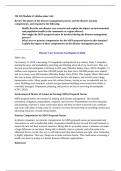
Review the phases of the disaster management process and the disaster nursing
competencies, and respond to the following.
Briefly describe one disaster case scenario and explain the impact on environmental
and population health in the community or region affected.
How might the MSN-prepared nurse be involved during the disaster management
process?
What are two priority competencies for the MSN-prepared nurse in this situation?
Explain the impact of those competencies on the disaster management process.
_______________
Disaster Case Scenario: Earthquake in Haiti
Hello class,
On January 12, 2010, a devasting 7.0 magnitude earthquake hit my country, Haiti. I remember
hearing the news and immediately panicking and thinking about all of my loved ones. This was
the post powerful earthquake to hit Haiti in 200 years (Mesidor & Kaye, 2019). Roughly 1.5
million were impacted, more than 220,000 people lost their lives, 300,000 people were injured
and so so many were left homeless (Mesidor & Kaye,2019). This tragedy affects Haiti until
this stay as many still have not recovered from the loss and impact, and overall cause a huge
humanitarian crisis. Many people were left without homes, having to stay in makeshift tent for
years. Buildings such hospitals, schools and government buildings were turned into rubble or
extremely damaged. Preparation, planning, and practice are key to surviving an earthquake
(CDC, 2024).
Involvement of Master of Science in Nursing (MSN)-Prepared Nurses
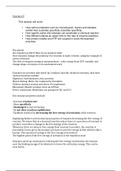
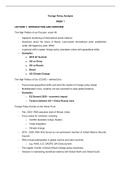
MSN-prepared nurses are essential in helping with disaster management. This includes
prevention, mitigation, preparedness, response, and recovery. Preparedness involves education
and planning, response is when action takes place and they are there to provide care, medicate
and work with others to help come to a resolve, recovery measures help in providing comfort and
allocating resources, overall, being leaders.
Priority Competencies for MSN-Prepared Nurses
In disaster situations, two priority competencies for MSN-prepared nurses are assessment and
intervention as well as leadership skills. Assessment should always be used first and foremost to
ensure the best and least invasive measures. Being able to accurately assess a situation can make
a huge difference in outcomes. Being able to identify what is a priority and what needs to be
addressed first is crucial, this way it will help ensure that interventions are right. Also, leadership
is highly important. This way, things are in order and less chaotic. This could mean overseeing a
health care team or acting as a liaison between different organizations.
References
Review the phases of the disaster management process and the disaster nursing
competencies, and respond to the following.
Briefly describe one disaster case scenario and explain the impact on environmental
and population health in the community or region affected.
How might the MSN-prepared nurse be involved during the disaster management
process?
What are two priority competencies for the MSN-prepared nurse in this situation?
Explain the impact of those competencies on the disaster management process.
_______________
Disaster Case Scenario: Earthquake in Haiti
Hello class,
On January 12, 2010, a devasting 7.0 magnitude earthquake hit my country, Haiti. I remember
hearing the news and immediately panicking and thinking about all of my loved ones. This was
the post powerful earthquake to hit Haiti in 200 years (Mesidor & Kaye, 2019). Roughly 1.5
million were impacted, more than 220,000 people lost their lives, 300,000 people were injured
and so so many were left homeless (Mesidor & Kaye,2019). This tragedy affects Haiti until
this stay as many still have not recovered from the loss and impact, and overall cause a huge
humanitarian crisis. Many people were left without homes, having to stay in makeshift tent for
years. Buildings such hospitals, schools and government buildings were turned into rubble or
extremely damaged. Preparation, planning, and practice are key to surviving an earthquake
(CDC, 2024).
Involvement of Master of Science in Nursing (MSN)-Prepared Nurses
MSN-prepared nurses are essential in helping with disaster management. This includes
prevention, mitigation, preparedness, response, and recovery. Preparedness involves education
and planning, response is when action takes place and they are there to provide care, medicate
and work with others to help come to a resolve, recovery measures help in providing comfort and
allocating resources, overall, being leaders.
Priority Competencies for MSN-Prepared Nurses
In disaster situations, two priority competencies for MSN-prepared nurses are assessment and
intervention as well as leadership skills. Assessment should always be used first and foremost to
ensure the best and least invasive measures. Being able to accurately assess a situation can make
a huge difference in outcomes. Being able to identify what is a priority and what needs to be
addressed first is crucial, this way it will help ensure that interventions are right. Also, leadership
is highly important. This way, things are in order and less chaotic. This could mean overseeing a
health care team or acting as a liaison between different organizations.
References