TEST BANK FOR
PHARMACOLOGY AND THE NURSING PROCESS 9thEDITION
BY LILLEY
(COVERS CHAPTERS 1-58 WITH 100% VERIFIED ANSWER)
,Table of Contents
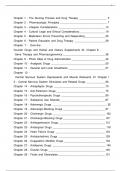
Chapter 01: The Nursing Process And Drug Therapy .................................................................................... 4
Chapter 02: Pharmacologic Principles .......................................................................................................... 8
Chapter 03: Lifespan Considerations .......................................................................................................... 16
Chapter 04: Cultural, Legal, And Ethical Considerations ............................................................................ 23
Chapter 05: Medication Errors: Preventing And Responding ..................................................................... 30
Chapter 06: Patient Education And Drug Therapy ...................................................................................... 34
Chapter 07: Over-The-Counter Drugs And Herbal And Dietary Supplements ............................................ 40
Chapter 08: Gene Therapy And Pharmacogenomics .................................................................................. 45
Chapter 09: Photo Atlas Of Drug Administration ....................................................................................... 49
Chapter 10: Analgesic Drugs ....................................................................................................................... 60
Chapter 11: General And Local Anesthetics ............................................................................................... 68
Chapter 12: Central Nervous System Depressants And Muscle Relaxants................................................. 73
Chapter 13: Central Nervous System Stimulants And Related Drugs ......................................................... 79
Chapter 14: Antiepileptic Drugs .................................................................................................................. 84
Chapter 15: Antiparkinson Drugs ................................................................................................................ 90
Chapter 16: Psychotherapeutic Drugs ........................................................................................................ 96
Chapter 17: Substance Use Disorder ........................................................................................................ 104
Chapter 18: Adrenergic Drugs................................................................................................................... 110
Chapter 19: Adrenergic-Blocking Drugs .................................................................................................... 115
Chapter 20: Cholinergic Drugs .................................................................................................................. 121
Chapter 21: Cholinergic-Blocking Drugs ................................................................................................... 127
Chapter 22: Antihypertensive Drugs......................................................................................................... 133
Chapter 23: Antianginal Drugs .................................................................................................................. 141
Chapter 24: Heart Failure Drugs ............................................................................................................... 147
Chapter 25: Antidysrhythmic Drugs .......................................................................................................... 154
Chapter 26: Coagulation Modifier Drugs .................................................................................................. 160
Chapter 27: Antilipemic Drugs .................................................................................................................. 167
Chapter 28: Diuretic Drugs........................................................................................................................ 173
Chapter 29: Fluids And Electrolytes .......................................................................................................... 180
Chapter 30: Pituitary Drugs....................................................................................................................... 187
Chapter 31: Thyroid And Antithyroid Drugs ............................................................................................. 192
Chapter 32: Antidiabetic Drugs ................................................................................................................. 198
,Chapter 33: Adrenal Drugs........................................................................................................................ 208
Chapter 34: Women’s Health Drugs ......................................................................................................... 213
Chapter 35: Men’s Health Drugs ............................................................................................................... 222
Chapter 36: Antihistamines, Decongestants, Antitussives, And Expectorants ......................................... 227
Chapter 37: Respiratory Drugs .................................................................................................................. 233
Chapter 38: Antibiotics Part 1 ................................................................................................................... 239
Chapter 39: Antibiotics Part 2 ................................................................................................................... 248
Chapter 40: Antiviral Drugs ....................................................................................................................... 253
Chapter 41: Antitubercular Drugs ............................................................................................................. 259
Chapter 42: Antifungal Drugs.................................................................................................................... 265
Chapter 43: Antimalarial, Antiprotozoal, And Anthelmintic Drugs .......................................................... 271
Chapter 44: Anti-Inflammatory And Antigout Drugs ................................................................................ 276
Chapter 45: Antineoplastic Drugs Part 1: Cancer Overview And Cell Cycle-Specific Drugs ...................... 283
Chapter 46: Antineoplastic Drugs Part 2: Cell Cycle–Nonspecific Drugs And Miscellaneous Drugs ........ 290
Chapter 47: Biologic Response–Modifying And Antirheumatic Drugs ..................................................... 295
Chapter 48: Immunosuppressant Drugs ................................................................................................... 301
Chapter 49: Immunizing Drugs ................................................................................................................. 307
Chapter 50: Acid-Controlling Drugs .......................................................................................................... 313
Chapter 51: Bowel Disorder Drugs............................................................................................................ 320
Chapter 52: Antiemetic And Antinausea Drugs ........................................................................................ 329
Chapter 53: Vitamins And Minerals .......................................................................................................... 335
Chapter 54: Anemia Drugs ........................................................................................................................ 342
Chapter 55: Nutritional Supplements ....................................................................................................... 350
Chapter 56: Dermatologic Drugs .............................................................................................................. 355
Chapter 57: Ophthalmic Drugs ................................................................................................................. 362
Chapter 58: Otic Drugs .............................................................................................................................. 368
,Chapter 01: The Nursing Process And Drug Therapy
Lilley: Pharmacology And The Nursing Process, 9th Edition
MULTIPLE CHOICE
1. The Nurse Is Developing A Human Needs Statement For A Patient Who Has A New Diagnosis Of
Heart Failure. Identification Of Human Needs Statements Occur With Which Of These Activities?
A. Collection Of Patient Data
B. Administering Interventions
C. Deciding On Patient Outcomes
D. Documenting The Patient’s Behavior
ANSWER:A
Identification Of Human Needs Occurs With The Collection Of Patient Data.
DIF: Cognitive Level: Understanding (Comprehension) TOP: Nursing Process: Human Needs
Statement
MSC: NCLEX: Safe And Effective Care Environment: Management Of Care
2. The Patient Is To Receive Oral Guaifenesin (Mucinex) Twice A Day. Today, The Nurse Was Busy
And Gave The Medication 2 Hours After The Scheduled Dose Was Due. What Type Of Problem Does This
Represent?
A. “Right Time”
B. “Right Dose”
C. “Right Route”
D. “Right Medication”
ANSWER:A
“Right Time” Is Correct Because The Medication Was Given More Than 30 Minutes After The Scheduled
Dose Was Due. “Dose” Is Incorrect Because The Dose Is Not Related To The Time The Medication
Administration Is Scheduled. “Route” Is Incorrect Because The Route Is Not Affected. “Medication” Is
Incorrect Because The Medication Ordered Will Not Change.
DIF: Cognitive Level: Applying (Application) TOP: Nursing Process: Implementation
,MSC: NCLEX: Safe And Effective Care Environment: Safety And Infection Control
3. The Nurse Has Been Monitoring The Patient’s Progress On A New Drug Regimen Since The First
Dose And Documenting The Patient’s Therapeutic Response To The Medication. Which Phase Of The
Nursing Process Do These Actions Illustrate?
A. Human Needs Statement
B. Planning
C. Implementation
D. Evaluation
ANSWER:D
Monitoring The Patient’s Progress, Including The Patient’s Response To The Medication, Is Part Of The
Evaluation Phase. Planning, Implementation, And Human Needs Statement Are Not Illustrated By This
Example.
DIF: Cognitive Level: Understanding (Comprehension) TOP: Nursing Process: Evaluation
MSC: NCLEX: Safe And Effective Care Environment: Management Of Care
4. The Nurse Is Assigned To A Patient Who Is Newly Diagnosed With Type 1 Diabetes Mellitus.
Which Statement Best Illustrates An Outcome Criterion For This Patient?
A. The Patient Will Follow Instructions.
B. The Patient Will Not Experience Complications.
C. The Patient Will Adhere To The New Insulin Treatment Regimen.
D. The Patient Will Demonstrate Correct Blood Glucose Testing Technique.
ANSWER:D
“Demonstrating Correct Blood Glucose Testing Technique” Is A Specific And Measurable Outcome
Criterion. “Following Instructions” And “Not Experiencing Complications” Are Not Specific Criteria.
“Adhering To New Regimen” Would Be Difficult To Measure.
DIF: Cognitive Level: Applying (Application) TOP: Nursing Process: Planning
MSC: NCLEX: Safe And Effective Care Environment: Management Of Care
5. Which Activity Best Reflects The Implementation Phase Of The Nursing Process For The Patient
Who Is Newly Diagnosed With Hypertension?
A. Providing Education On Keeping A Journal Of Blood Pressure Readings
,B. Setting Goals And Outcome Criteria With The Patient’s Input
C. Recording A Drug History Regarding Over-The-Counter Medications Used At Home
D. Formulating Human Needs Statements Regarding Insufficient Knowledge Related To The New
Treatment Regimen
ANSWER:A
Education Is An Intervention That Occurs During The Implementation Phase. Setting Goals And
Outcomes Reflects The Planning Phase. Recording A Drug History Reflects The Assessment Phase.
Formulating Human Needs Statements Reflects Analysis Of Data As Part Of Planning.
DIF: Cognitive Level: Applying (Application) TOP: Nursing Process: Implementation
MSC: NCLEX: Safe And Effective Care Environment: Management Of Care
6. The Medication Order Reads, “Give Ondansetron (Zofran) 4 Mg, 30 Minutes Before Beginning
Chemotherapy To Prevent Nausea.” The Nurse Notes That The Route Is Missing From The Order. What Is
The Nurse’s Best Action?
A. Give The Medication Intravenously Because The Patient Might Vomit.
B. Give The Medication Orally Because The Tablets Are Available In 4-Mg Doses.
C. Contact The Prescriber To Clarify The Route Of The Medication Ordered.
D. Hold The Medication Until The Prescriber Returns To Make Rounds.
ANSWER:C
A Complete Medication Order Includes The Route Of Administration. If A Medication Order Does Not
Include The Route, The Nurse Must Ask The Prescriber To Clarify It. The Intravenous And Oral Routes Are
Not Interchangeable. Holding The Medication Until The Prescriber Returns Would Mean That The
Patient Would Not Receive A Needed Medication.
DIF: Cognitive Level: Applying (Application)
TOP: Nursing Process: Implementation
MSC: NCLEX: Safe And Effective Care Environment: Management Of Care
7. When The Nurse Considers The Timing Of A Drug Dose, Which Factor Is Appropriate To Consider
When Deciding When To Give A Drug?
A. The Patient’s Ability To Swallow
B. The Patient’s Height
, C. The Patient’s Last Meal
D. The Patient’s Allergies
ANSWER:C
The Nurse Must Consider Specific Pharmacokinetic/Pharmacodynamic Drug Properties That May Be
Affected By The Timing Of The Last Meal. The Patient’s Ability To Swallow, Height, And Allergies Are Not
Factors To Consider Regarding The Timing Of The Drug’s Administration.
DIF: Cognitive Level: Understanding (Comprehension) TOP: Nursing Process: Assessment
MSC: NCLEX: Safe And Effective Care Environment: Management Of Care
8. The Nurse Is Performing An Assessment Of A Newly Admitted Patient. Which Is An Example Of
Subjective Data?
A. Blood Pressure 158/96 Mm Hg
B. Weight 255 Pounds
C. The Patient Reports That He Uses The Herbal Product Ginkgo.
D. The Patient’s Complete Blood Count Results.
ANSWER:C
Subjective Data Include Information Shared Through The Spoken Word By Any Reliable Source, Such As
The Patient. Objective Data May Be Defined As Any Information Gathered Through The Senses Or That
Which Is Seen, Heard, Felt, Or Smelled. A Patient’s Blood Pressure, Weight, And Laboratory Tests Are All
Examples Of Objective Data.
DIF: Cognitive Level: Understanding (Comprehension) TOP: Nursing Process: Assessment
MSC: NCLEX: Safe And Effective Care Environment: Management Of Care
MULTIPLE RESPONSE
1. When Giving Medications, The Nurse Will Follow The Rights Of Medication Administration. The
Rights Include The Right Documentation, The Right Reason, The Right Response, And The Patient’s Right
To Refuse. Which Of These Are Additional Rights? (Select All That Apply.)
A. Right Drug
B. Right Route
C. Right Dose
PHARMACOLOGY AND THE NURSING PROCESS 9thEDITION
BY LILLEY
(COVERS CHAPTERS 1-58 WITH 100% VERIFIED ANSWER)
,Table of Contents
Chapter 01: The Nursing Process And Drug Therapy .................................................................................... 4
Chapter 02: Pharmacologic Principles .......................................................................................................... 8
Chapter 03: Lifespan Considerations .......................................................................................................... 16
Chapter 04: Cultural, Legal, And Ethical Considerations ............................................................................ 23
Chapter 05: Medication Errors: Preventing And Responding ..................................................................... 30
Chapter 06: Patient Education And Drug Therapy ...................................................................................... 34
Chapter 07: Over-The-Counter Drugs And Herbal And Dietary Supplements ............................................ 40
Chapter 08: Gene Therapy And Pharmacogenomics .................................................................................. 45
Chapter 09: Photo Atlas Of Drug Administration ....................................................................................... 49
Chapter 10: Analgesic Drugs ....................................................................................................................... 60
Chapter 11: General And Local Anesthetics ............................................................................................... 68
Chapter 12: Central Nervous System Depressants And Muscle Relaxants................................................. 73
Chapter 13: Central Nervous System Stimulants And Related Drugs ......................................................... 79
Chapter 14: Antiepileptic Drugs .................................................................................................................. 84
Chapter 15: Antiparkinson Drugs ................................................................................................................ 90
Chapter 16: Psychotherapeutic Drugs ........................................................................................................ 96
Chapter 17: Substance Use Disorder ........................................................................................................ 104
Chapter 18: Adrenergic Drugs................................................................................................................... 110
Chapter 19: Adrenergic-Blocking Drugs .................................................................................................... 115
Chapter 20: Cholinergic Drugs .................................................................................................................. 121
Chapter 21: Cholinergic-Blocking Drugs ................................................................................................... 127
Chapter 22: Antihypertensive Drugs......................................................................................................... 133
Chapter 23: Antianginal Drugs .................................................................................................................. 141
Chapter 24: Heart Failure Drugs ............................................................................................................... 147
Chapter 25: Antidysrhythmic Drugs .......................................................................................................... 154
Chapter 26: Coagulation Modifier Drugs .................................................................................................. 160
Chapter 27: Antilipemic Drugs .................................................................................................................. 167
Chapter 28: Diuretic Drugs........................................................................................................................ 173
Chapter 29: Fluids And Electrolytes .......................................................................................................... 180
Chapter 30: Pituitary Drugs....................................................................................................................... 187
Chapter 31: Thyroid And Antithyroid Drugs ............................................................................................. 192
Chapter 32: Antidiabetic Drugs ................................................................................................................. 198
,Chapter 33: Adrenal Drugs........................................................................................................................ 208
Chapter 34: Women’s Health Drugs ......................................................................................................... 213
Chapter 35: Men’s Health Drugs ............................................................................................................... 222
Chapter 36: Antihistamines, Decongestants, Antitussives, And Expectorants ......................................... 227
Chapter 37: Respiratory Drugs .................................................................................................................. 233
Chapter 38: Antibiotics Part 1 ................................................................................................................... 239
Chapter 39: Antibiotics Part 2 ................................................................................................................... 248
Chapter 40: Antiviral Drugs ....................................................................................................................... 253
Chapter 41: Antitubercular Drugs ............................................................................................................. 259
Chapter 42: Antifungal Drugs.................................................................................................................... 265
Chapter 43: Antimalarial, Antiprotozoal, And Anthelmintic Drugs .......................................................... 271
Chapter 44: Anti-Inflammatory And Antigout Drugs ................................................................................ 276
Chapter 45: Antineoplastic Drugs Part 1: Cancer Overview And Cell Cycle-Specific Drugs ...................... 283
Chapter 46: Antineoplastic Drugs Part 2: Cell Cycle–Nonspecific Drugs And Miscellaneous Drugs ........ 290
Chapter 47: Biologic Response–Modifying And Antirheumatic Drugs ..................................................... 295
Chapter 48: Immunosuppressant Drugs ................................................................................................... 301
Chapter 49: Immunizing Drugs ................................................................................................................. 307
Chapter 50: Acid-Controlling Drugs .......................................................................................................... 313
Chapter 51: Bowel Disorder Drugs............................................................................................................ 320
Chapter 52: Antiemetic And Antinausea Drugs ........................................................................................ 329
Chapter 53: Vitamins And Minerals .......................................................................................................... 335
Chapter 54: Anemia Drugs ........................................................................................................................ 342
Chapter 55: Nutritional Supplements ....................................................................................................... 350
Chapter 56: Dermatologic Drugs .............................................................................................................. 355
Chapter 57: Ophthalmic Drugs ................................................................................................................. 362
Chapter 58: Otic Drugs .............................................................................................................................. 368
,Chapter 01: The Nursing Process And Drug Therapy
Lilley: Pharmacology And The Nursing Process, 9th Edition
MULTIPLE CHOICE
1. The Nurse Is Developing A Human Needs Statement For A Patient Who Has A New Diagnosis Of
Heart Failure. Identification Of Human Needs Statements Occur With Which Of These Activities?
A. Collection Of Patient Data
B. Administering Interventions
C. Deciding On Patient Outcomes
D. Documenting The Patient’s Behavior
ANSWER:A
Identification Of Human Needs Occurs With The Collection Of Patient Data.
DIF: Cognitive Level: Understanding (Comprehension) TOP: Nursing Process: Human Needs
Statement
MSC: NCLEX: Safe And Effective Care Environment: Management Of Care
2. The Patient Is To Receive Oral Guaifenesin (Mucinex) Twice A Day. Today, The Nurse Was Busy
And Gave The Medication 2 Hours After The Scheduled Dose Was Due. What Type Of Problem Does This
Represent?
A. “Right Time”
B. “Right Dose”
C. “Right Route”
D. “Right Medication”
ANSWER:A
“Right Time” Is Correct Because The Medication Was Given More Than 30 Minutes After The Scheduled
Dose Was Due. “Dose” Is Incorrect Because The Dose Is Not Related To The Time The Medication
Administration Is Scheduled. “Route” Is Incorrect Because The Route Is Not Affected. “Medication” Is
Incorrect Because The Medication Ordered Will Not Change.
DIF: Cognitive Level: Applying (Application) TOP: Nursing Process: Implementation
,MSC: NCLEX: Safe And Effective Care Environment: Safety And Infection Control
3. The Nurse Has Been Monitoring The Patient’s Progress On A New Drug Regimen Since The First
Dose And Documenting The Patient’s Therapeutic Response To The Medication. Which Phase Of The
Nursing Process Do These Actions Illustrate?
A. Human Needs Statement
B. Planning
C. Implementation
D. Evaluation
ANSWER:D
Monitoring The Patient’s Progress, Including The Patient’s Response To The Medication, Is Part Of The
Evaluation Phase. Planning, Implementation, And Human Needs Statement Are Not Illustrated By This
Example.
DIF: Cognitive Level: Understanding (Comprehension) TOP: Nursing Process: Evaluation
MSC: NCLEX: Safe And Effective Care Environment: Management Of Care
4. The Nurse Is Assigned To A Patient Who Is Newly Diagnosed With Type 1 Diabetes Mellitus.
Which Statement Best Illustrates An Outcome Criterion For This Patient?
A. The Patient Will Follow Instructions.
B. The Patient Will Not Experience Complications.
C. The Patient Will Adhere To The New Insulin Treatment Regimen.
D. The Patient Will Demonstrate Correct Blood Glucose Testing Technique.
ANSWER:D
“Demonstrating Correct Blood Glucose Testing Technique” Is A Specific And Measurable Outcome
Criterion. “Following Instructions” And “Not Experiencing Complications” Are Not Specific Criteria.
“Adhering To New Regimen” Would Be Difficult To Measure.
DIF: Cognitive Level: Applying (Application) TOP: Nursing Process: Planning
MSC: NCLEX: Safe And Effective Care Environment: Management Of Care
5. Which Activity Best Reflects The Implementation Phase Of The Nursing Process For The Patient
Who Is Newly Diagnosed With Hypertension?
A. Providing Education On Keeping A Journal Of Blood Pressure Readings
,B. Setting Goals And Outcome Criteria With The Patient’s Input
C. Recording A Drug History Regarding Over-The-Counter Medications Used At Home
D. Formulating Human Needs Statements Regarding Insufficient Knowledge Related To The New
Treatment Regimen
ANSWER:A
Education Is An Intervention That Occurs During The Implementation Phase. Setting Goals And
Outcomes Reflects The Planning Phase. Recording A Drug History Reflects The Assessment Phase.
Formulating Human Needs Statements Reflects Analysis Of Data As Part Of Planning.
DIF: Cognitive Level: Applying (Application) TOP: Nursing Process: Implementation
MSC: NCLEX: Safe And Effective Care Environment: Management Of Care
6. The Medication Order Reads, “Give Ondansetron (Zofran) 4 Mg, 30 Minutes Before Beginning
Chemotherapy To Prevent Nausea.” The Nurse Notes That The Route Is Missing From The Order. What Is
The Nurse’s Best Action?
A. Give The Medication Intravenously Because The Patient Might Vomit.
B. Give The Medication Orally Because The Tablets Are Available In 4-Mg Doses.
C. Contact The Prescriber To Clarify The Route Of The Medication Ordered.
D. Hold The Medication Until The Prescriber Returns To Make Rounds.
ANSWER:C
A Complete Medication Order Includes The Route Of Administration. If A Medication Order Does Not
Include The Route, The Nurse Must Ask The Prescriber To Clarify It. The Intravenous And Oral Routes Are
Not Interchangeable. Holding The Medication Until The Prescriber Returns Would Mean That The
Patient Would Not Receive A Needed Medication.
DIF: Cognitive Level: Applying (Application)
TOP: Nursing Process: Implementation
MSC: NCLEX: Safe And Effective Care Environment: Management Of Care
7. When The Nurse Considers The Timing Of A Drug Dose, Which Factor Is Appropriate To Consider
When Deciding When To Give A Drug?
A. The Patient’s Ability To Swallow
B. The Patient’s Height
, C. The Patient’s Last Meal
D. The Patient’s Allergies
ANSWER:C
The Nurse Must Consider Specific Pharmacokinetic/Pharmacodynamic Drug Properties That May Be
Affected By The Timing Of The Last Meal. The Patient’s Ability To Swallow, Height, And Allergies Are Not
Factors To Consider Regarding The Timing Of The Drug’s Administration.
DIF: Cognitive Level: Understanding (Comprehension) TOP: Nursing Process: Assessment
MSC: NCLEX: Safe And Effective Care Environment: Management Of Care
8. The Nurse Is Performing An Assessment Of A Newly Admitted Patient. Which Is An Example Of
Subjective Data?
A. Blood Pressure 158/96 Mm Hg
B. Weight 255 Pounds
C. The Patient Reports That He Uses The Herbal Product Ginkgo.
D. The Patient’s Complete Blood Count Results.
ANSWER:C
Subjective Data Include Information Shared Through The Spoken Word By Any Reliable Source, Such As
The Patient. Objective Data May Be Defined As Any Information Gathered Through The Senses Or That
Which Is Seen, Heard, Felt, Or Smelled. A Patient’s Blood Pressure, Weight, And Laboratory Tests Are All
Examples Of Objective Data.
DIF: Cognitive Level: Understanding (Comprehension) TOP: Nursing Process: Assessment
MSC: NCLEX: Safe And Effective Care Environment: Management Of Care
MULTIPLE RESPONSE
1. When Giving Medications, The Nurse Will Follow The Rights Of Medication Administration. The
Rights Include The Right Documentation, The Right Reason, The Right Response, And The Patient’s Right
To Refuse. Which Of These Are Additional Rights? (Select All That Apply.)
A. Right Drug
B. Right Route
C. Right Dose