NUR2063 essentials of pathophysiology
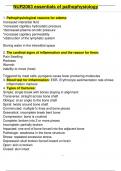
1. Pathophysiological reasons for edema:
Increased interstitial fluid
*increased capillary hydrostatic pressure
*decreased plasma oncotic pressure
*increased capillary permeability
*obstruction of the lymphatic system
Storing water in the interstitial space
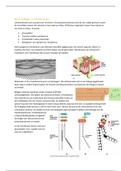
2. The cardinal signs of inflammation and the reason for them:
Pain Swelling
Redness
Warmth
inability to move (heat)
Triggered by mast cells, pyrogens cause fever producing molecules
3. Blood test for inflammation: ESR- Erythrocyte sedimentation rate shows
inflammation markers
4. Types of fractures:
Simple: single break with bones staying in alignment
Transverse: straight across bone shaft
Oblique: at an angle to the bone shaft
Spiral: twists around bone shaft
Comminuted: multiple fx lines and bone pieces
Greenstick: incomplete break bent bone
Compression: bone is crushed
Complete: broken into 2 or more pieces
Incomplete: partially broken
Impacted: one end of bone forced into the adjacent bone
Pathologic: weakness in the bone structure
Stress: repeated excessive stress
Depressed: skull broken forced inward on brain
Open: skin is broken
Closed: skin intact
1/4
1. Pathophysiological reasons for edema:
Increased interstitial fluid
*increased capillary hydrostatic pressure
*decreased plasma oncotic pressure
*increased capillary permeability
*obstruction of the lymphatic system
Storing water in the interstitial space
2. The cardinal signs of inflammation and the reason for them:
Pain Swelling
Redness
Warmth
inability to move (heat)
Triggered by mast cells, pyrogens cause fever producing molecules
3. Blood test for inflammation: ESR- Erythrocyte sedimentation rate shows
inflammation markers
4. Types of fractures:
Simple: single break with bones staying in alignment
Transverse: straight across bone shaft
Oblique: at an angle to the bone shaft
Spiral: twists around bone shaft
Comminuted: multiple fx lines and bone pieces
Greenstick: incomplete break bent bone
Compression: bone is crushed
Complete: broken into 2 or more pieces
Incomplete: partially broken
Impacted: one end of bone forced into the adjacent bone
Pathologic: weakness in the bone structure
Stress: repeated excessive stress
Depressed: skull broken forced inward on brain
Open: skin is broken
Closed: skin intact
1/4