Chapter 28: Pain Management
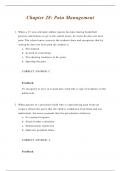
1. When a 17-year-old male athlete injures his knee during basketball
practice and refuses to go to the school nurse, he states he does not have
pain. The school nurse assesses the students knee and recognizes that by
stating he does not have pain the student is
a. Not injured
b. In need of counseling
c. Not showing weakness to his peers
d. Ignoring the pain
CORRECT ANSWER: C
Feedback:
To recognize or give in to pain may seem like a sign of weakness in the
adolescent.
2. When parents of a preschool child who is experiencing pain fr om ear
surgery inform the nurse that the child is withdrawn from them and acts
ambivalent, the nurse responds that the preschoolers behavior
a. Is a normal response
b. Needs further evaluation
c. Demonstrates regression
d. Indicates potential abuse
CORRECT ANSWER: A
Feedback:
, Although parents are childrens greatest source of comfort and support,
children may appear ambivalent toward them, as though they blame
them for pain. Encourage and support parents in such instances,
helping them underst and childrens responses.
3. Which of the following guidelines regarding pain should be included in
the nurses teaching plan for a group of parents with infants and toddlers?
a. Pain can be a source of fear and threat to the toddlers securit y
b. Toddlers are often reluctant to express pain
c. Infants cannot express pain until 8 months of age
d. Toddlers often try to be brave and not cry
CORRECT ANSWER: A
Feedback:
During the toddler and preschool years, children are achieving a s ense
of autonom y. Because pain can be a source of fear and threat to
securit y, children respond with crying, anger, physical resistance, or
withdrawal.
4. The nurse identifies the pain described by a patient whose back discomfort
began after an autom obile accident and has persisted for 8 months as
a. Acute
b. Recurrent
c. Chronic
d. Malignant
CORRECT ANSWER: C
1. When a 17-year-old male athlete injures his knee during basketball
practice and refuses to go to the school nurse, he states he does not have
pain. The school nurse assesses the students knee and recognizes that by
stating he does not have pain the student is
a. Not injured
b. In need of counseling
c. Not showing weakness to his peers
d. Ignoring the pain
CORRECT ANSWER: C
Feedback:
To recognize or give in to pain may seem like a sign of weakness in the
adolescent.
2. When parents of a preschool child who is experiencing pain fr om ear
surgery inform the nurse that the child is withdrawn from them and acts
ambivalent, the nurse responds that the preschoolers behavior
a. Is a normal response
b. Needs further evaluation
c. Demonstrates regression
d. Indicates potential abuse
CORRECT ANSWER: A
Feedback:
, Although parents are childrens greatest source of comfort and support,
children may appear ambivalent toward them, as though they blame
them for pain. Encourage and support parents in such instances,
helping them underst and childrens responses.
3. Which of the following guidelines regarding pain should be included in
the nurses teaching plan for a group of parents with infants and toddlers?
a. Pain can be a source of fear and threat to the toddlers securit y
b. Toddlers are often reluctant to express pain
c. Infants cannot express pain until 8 months of age
d. Toddlers often try to be brave and not cry
CORRECT ANSWER: A
Feedback:
During the toddler and preschool years, children are achieving a s ense
of autonom y. Because pain can be a source of fear and threat to
securit y, children respond with crying, anger, physical resistance, or
withdrawal.
4. The nurse identifies the pain described by a patient whose back discomfort
began after an autom obile accident and has persisted for 8 months as
a. Acute
b. Recurrent
c. Chronic
d. Malignant
CORRECT ANSWER: C