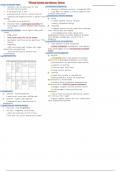
Immune Function and Infection Control
>
- Gut as immune organ
• tolerance - gut microbiota part of "self", -
Tranfusion compatibility
educated immune system • hemolytic transfusion reaction - incompatible RBCs
• B cell produce IgA to limit - lyse RBCs, no therapy to reverse, supportive care
• promotes barrier function, controls infection to reduce kidney failure
- decreases neutrophil activation to prevent tissue escaping host immune defenses
-
damage • hiding
- stimulates mucus production - antigen masking, mimicry, variation
• disruption leads to pathological outcomes: IBS, - latency, intracellular lifestyle
food allergies, metabolic disorders, heart disease, • undermine
cancer - suppress immune function: break down antibodies,
- autoimmune disorders - attack against healthy self
infect immune cells, block signals
tissues - avoid phagocytosis: make capsule, block
• 80% women phagolysosome fusion, neutralize hydrolytic enzymes,
• celiac, lupus, type 1 DM, RA, MS, graves toxic damage to phagocytes, evolve to live in
• neurological conditions: autism, parkinsons, PTSD, - phagocyte
> susceptibility of microorganisms
anxiety
• diagnosing • most resistant to least suscpebtible
- S&S: joint/muscle pain, fatigue, rash, organ - prions, endospores, mycobacteria, most gram(-),
dysfunction, low grade fever fungi, nonenvelgped viruses, most gram(+), enveloped
- detecting self reactive immune cells/ viruses
autoantibodies
>
- control of microorganisms
> hypersensitivity • physical
- autoclaving: steam under pressure to sterilize
objects, kills all pathogens/endospores, not archaea
- pasteurization: not sterilization (some survive)
- radiation: UV/ionizing
- filtration: liquid, HEPA filters
- drying, osmotic pressure
• chemical
- soaps: form micelles to trap particles
- phenols/phenolics: disrupt cell membranes
(bacteriostatic or bacteriocidal)
- alcohols: disrupt cytoplasmic membranes and
denature proteins, ineffective against endospores
- halogens: iodophor, chlorine, bromine, fluorine
- oxidizing agents: destroy proteins and
>
-
Anaphylaxis membranes
• localized - isolated symptoms - heavy metal ions: protein denaturation, arsenic,
- watery eyes, runny nose, confined rash zinc, mercury, silver, copper
• systemic - system wide response - gaseous agents: objects that can't tolerate heat/
- anaphylactic shock, administration of water, denature proteins/DNA
epinepherine
- diagnosing and treating allergies
• blood test - look for IgE titers
• skin test - cheap/fast, cause lesions
- wheal: skin swells due to fluid in tissue
- flare: skin turns red d/t dilated blood vessels
>
- Gut as immune organ
• tolerance - gut microbiota part of "self", -
Tranfusion compatibility
educated immune system • hemolytic transfusion reaction - incompatible RBCs
• B cell produce IgA to limit - lyse RBCs, no therapy to reverse, supportive care
• promotes barrier function, controls infection to reduce kidney failure
- decreases neutrophil activation to prevent tissue escaping host immune defenses
-
damage • hiding
- stimulates mucus production - antigen masking, mimicry, variation
• disruption leads to pathological outcomes: IBS, - latency, intracellular lifestyle
food allergies, metabolic disorders, heart disease, • undermine
cancer - suppress immune function: break down antibodies,
- autoimmune disorders - attack against healthy self
infect immune cells, block signals
tissues - avoid phagocytosis: make capsule, block
• 80% women phagolysosome fusion, neutralize hydrolytic enzymes,
• celiac, lupus, type 1 DM, RA, MS, graves toxic damage to phagocytes, evolve to live in
• neurological conditions: autism, parkinsons, PTSD, - phagocyte
> susceptibility of microorganisms
anxiety
• diagnosing • most resistant to least suscpebtible
- S&S: joint/muscle pain, fatigue, rash, organ - prions, endospores, mycobacteria, most gram(-),
dysfunction, low grade fever fungi, nonenvelgped viruses, most gram(+), enveloped
- detecting self reactive immune cells/ viruses
autoantibodies
>
- control of microorganisms
> hypersensitivity • physical
- autoclaving: steam under pressure to sterilize
objects, kills all pathogens/endospores, not archaea
- pasteurization: not sterilization (some survive)
- radiation: UV/ionizing
- filtration: liquid, HEPA filters
- drying, osmotic pressure
• chemical
- soaps: form micelles to trap particles
- phenols/phenolics: disrupt cell membranes
(bacteriostatic or bacteriocidal)
- alcohols: disrupt cytoplasmic membranes and
denature proteins, ineffective against endospores
- halogens: iodophor, chlorine, bromine, fluorine
- oxidizing agents: destroy proteins and
>
-
Anaphylaxis membranes
• localized - isolated symptoms - heavy metal ions: protein denaturation, arsenic,
- watery eyes, runny nose, confined rash zinc, mercury, silver, copper
• systemic - system wide response - gaseous agents: objects that can't tolerate heat/
- anaphylactic shock, administration of water, denature proteins/DNA
epinepherine
- diagnosing and treating allergies
• blood test - look for IgE titers
• skin test - cheap/fast, cause lesions
- wheal: skin swells due to fluid in tissue
- flare: skin turns red d/t dilated blood vessels