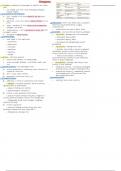
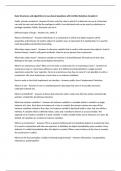
Pathogenesis
>
-
Tropism - preference of pathogen for specific cell, tissue,
host
• can change over time, most emerging pathogens
expand tropism
>
- outcomes of viral infection
• lytic - release of virus and death of the cell (cold,
influenza)
• persistent - slow virus release without killing host cell
(HIV) - endotoxins - enter from either local or systemic
• latent - presence of virus without active replication infections (bowel perforations, surgery
(shingles, cold sores) complications)
• transformation - cell is converted to tumor cell (HPV) • endotoxemia can lead to septic shock
oncogenic viruses >
- exotoxins - toxic proteins secreted by pathogen
• oncogenes - induce tumors • cytotoxins - damage host cells membrane
> antiviral drugs - hemolysins destroy RBCs
• block steps in virus replication - leukocidins destroy WBCs
- attachment - lecithinase and phospholipase attach
- penetration phospholids
- unceasing • neurotoxins - damage nerve cells
- replication - botulism toxin binds to neural cytoplasmic
- assembly membranes, prevents vesicle fusion; prevents
muscle contraction, results in flaccid paralysis
- release
- tetanus blocks please of inhibitory
> prions - infectious proteins neurotransmitters; prevents muscle relaxation,
• causes other proteins to change shape restlts in spastic pparalysis
• cause neurologic diseases - creutizfeldt Jakob, mad • enterotoxins - damage cells lining GI tract
cow evasion of host defenses
>
- portals of entry - how pathogens enter • hiding from immune - intracellular pathogens,
• mucous membranes - respiratory (most common), GI, entering latency, antigenic masking/mimicry
urogenital, conjuctiva • undermining immunity - suppressing immune,
• skin - injury, pores, follicles avoid phagocytosis, killing immune cells,
• parenteral - punctures, bites, cuts destroying key proteins
>
- virulence factors
>
- portals of exit
• adherence - critical in colonization and invasion • usually by same route as entry
- adhesins - microbial receptors, serve as anchors
(glycoproteins or lipoproteins)
- capsule, fimbriae, pili, biofilms
- heparan/heparin, fibronectin
• invasive - some penetrate cells/tissues
- produce invasins (invasion enzymes), flagella for
motility, penetrate deeper tissues, live in phagocytes
- collagenases (break down collagen), coagulase
(promote clotting)
• nutrient acquisition
- exotoxins release nutrients from host cells -
hemolysins release iron from lysing RBCs
- siderophores scavenge iron
>
-
Tropism - preference of pathogen for specific cell, tissue,
host
• can change over time, most emerging pathogens
expand tropism
>
- outcomes of viral infection
• lytic - release of virus and death of the cell (cold,
influenza)
• persistent - slow virus release without killing host cell
(HIV) - endotoxins - enter from either local or systemic
• latent - presence of virus without active replication infections (bowel perforations, surgery
(shingles, cold sores) complications)
• transformation - cell is converted to tumor cell (HPV) • endotoxemia can lead to septic shock
oncogenic viruses >
- exotoxins - toxic proteins secreted by pathogen
• oncogenes - induce tumors • cytotoxins - damage host cells membrane
> antiviral drugs - hemolysins destroy RBCs
• block steps in virus replication - leukocidins destroy WBCs
- attachment - lecithinase and phospholipase attach
- penetration phospholids
- unceasing • neurotoxins - damage nerve cells
- replication - botulism toxin binds to neural cytoplasmic
- assembly membranes, prevents vesicle fusion; prevents
muscle contraction, results in flaccid paralysis
- release
- tetanus blocks please of inhibitory
> prions - infectious proteins neurotransmitters; prevents muscle relaxation,
• causes other proteins to change shape restlts in spastic pparalysis
• cause neurologic diseases - creutizfeldt Jakob, mad • enterotoxins - damage cells lining GI tract
cow evasion of host defenses
>
- portals of entry - how pathogens enter • hiding from immune - intracellular pathogens,
• mucous membranes - respiratory (most common), GI, entering latency, antigenic masking/mimicry
urogenital, conjuctiva • undermining immunity - suppressing immune,
• skin - injury, pores, follicles avoid phagocytosis, killing immune cells,
• parenteral - punctures, bites, cuts destroying key proteins
>
- virulence factors
>
- portals of exit
• adherence - critical in colonization and invasion • usually by same route as entry
- adhesins - microbial receptors, serve as anchors
(glycoproteins or lipoproteins)
- capsule, fimbriae, pili, biofilms
- heparan/heparin, fibronectin
• invasive - some penetrate cells/tissues
- produce invasins (invasion enzymes), flagella for
motility, penetrate deeper tissues, live in phagocytes
- collagenases (break down collagen), coagulase
(promote clotting)
• nutrient acquisition
- exotoxins release nutrients from host cells -
hemolysins release iron from lysing RBCs
- siderophores scavenge iron