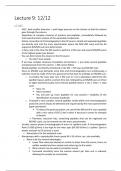
virus - non living infectious agents
& Intro to Viruses
• acellular (no metabolism)
• smaller than bacterial cells
• obligate intracellular parasties
- require host cell for replication and survival
• infect all life forms
- eukaryotes: animals, plants, protists, fungi
- prokaryotes: bacteria, archaea
• specific organisms and types of cell depend on
receptors and attatchment proteins
↳ structure >
- influenza virus
• capsid - protein coat, made of capsomeres • neuraminidase - N (9) protein
• genome - either RNA or DNA, single or double • hemagglutinin - H (15) protein
stranded • immune system recognized H and N combinations
- DNA can be circular or linear - new combinations make pandemics
- RNA can be linear or segmented antigenic drift - genome mutates, minor changes to H
- negative is template strand and N spikes
- positive is coding strand antigenic shift - major genetic reassortment
• nucleocapsid - capsid with enclosed genome
• spikes - help virus attatch to and penetrate
host cells
• enveloped viruses - surrounded by lipid based
envelop
• naked viruses - no envelope
S bacteriophage lytic replication
• bacteriophage binds to bacterial cell
• injects genome, replicated, DNA broken down
• genome packed into capdis, phage structures
assembles
• cell lyses, released phage cells
S phage conversions
• vibrio cholerae - cholera
• escherichia coli - shigalike, hemorrhagic
diarrhea
• clostridium botulinum - botulism
• corynebacterium diptheriae - diptheria
• streptococcus pyogenes - scarlet fever
-
change over time
• quick replication time, large quantity produced
• RNA mutate more than DNA
• attenuated strains - genetic change that limit
infectivity
• beneficial mutations: escape host immune
detection, broaden host range, tropism
3 tissue tropism
• host range - what organisms virus can infect
• tissue specificity - type of tissue can infect
& Intro to Viruses
• acellular (no metabolism)
• smaller than bacterial cells
• obligate intracellular parasties
- require host cell for replication and survival
• infect all life forms
- eukaryotes: animals, plants, protists, fungi
- prokaryotes: bacteria, archaea
• specific organisms and types of cell depend on
receptors and attatchment proteins
↳ structure >
- influenza virus
• capsid - protein coat, made of capsomeres • neuraminidase - N (9) protein
• genome - either RNA or DNA, single or double • hemagglutinin - H (15) protein
stranded • immune system recognized H and N combinations
- DNA can be circular or linear - new combinations make pandemics
- RNA can be linear or segmented antigenic drift - genome mutates, minor changes to H
- negative is template strand and N spikes
- positive is coding strand antigenic shift - major genetic reassortment
• nucleocapsid - capsid with enclosed genome
• spikes - help virus attatch to and penetrate
host cells
• enveloped viruses - surrounded by lipid based
envelop
• naked viruses - no envelope
S bacteriophage lytic replication
• bacteriophage binds to bacterial cell
• injects genome, replicated, DNA broken down
• genome packed into capdis, phage structures
assembles
• cell lyses, released phage cells
S phage conversions
• vibrio cholerae - cholera
• escherichia coli - shigalike, hemorrhagic
diarrhea
• clostridium botulinum - botulism
• corynebacterium diptheriae - diptheria
• streptococcus pyogenes - scarlet fever
-
change over time
• quick replication time, large quantity produced
• RNA mutate more than DNA
• attenuated strains - genetic change that limit
infectivity
• beneficial mutations: escape host immune
detection, broaden host range, tropism
3 tissue tropism
• host range - what organisms virus can infect
• tissue specificity - type of tissue can infect