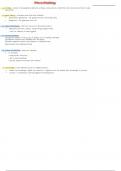
Intro to Microbiology
Y microbe - cellular microorganisms (bacteria, archaea, fungi, protists, helminths) and noncellular entities (viruses
and prions)
> germ theory - microbes cause infectious diseases
• spontaneous generation - life generates from non-living items
• biogenesis - life generates from life
& Ignaz Semmelweis - infection control for delivering mothers
• physicians and med students transmitting puerperal fever
- work on corpses, no hand hygiene
> Koch's postulates
1 organism present in every case of disease, not in healthy individuals
2 organism isolated from diseased host and grown
3 isolate organism should cause disease in susceptible host
4 re-isolated from diseased animal
>
-
human microbiome - some are transient
• GI microbes
- help prevent infections
- aid in food breakdown
- provide essential nutrients and vitamins
> microcsopy - uses radiation source to magnify objects
• smaller the wavelength, higher the resolution - organism must be smaller than wavelength to be seen
• contrast - increased by staining organism and background
Y microbe - cellular microorganisms (bacteria, archaea, fungi, protists, helminths) and noncellular entities (viruses
and prions)
> germ theory - microbes cause infectious diseases
• spontaneous generation - life generates from non-living items
• biogenesis - life generates from life
& Ignaz Semmelweis - infection control for delivering mothers
• physicians and med students transmitting puerperal fever
- work on corpses, no hand hygiene
> Koch's postulates
1 organism present in every case of disease, not in healthy individuals
2 organism isolated from diseased host and grown
3 isolate organism should cause disease in susceptible host
4 re-isolated from diseased animal
>
-
human microbiome - some are transient
• GI microbes
- help prevent infections
- aid in food breakdown
- provide essential nutrients and vitamins
> microcsopy - uses radiation source to magnify objects
• smaller the wavelength, higher the resolution - organism must be smaller than wavelength to be seen
• contrast - increased by staining organism and background