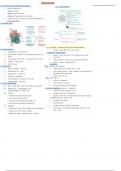
Cardiovascular
> function of cardiovascular system - auscultation
• 3 Ps of perfusion
- pump (heart)
- pipes (blood vessels)
- plasma (liquid portion of blood)
• cardiac output - amount of blood pumped/min
- CO = Hr x SV
> blood flow
>
- murmurs - turbulent blood flow through heart
- alterations • stenois, regurgitation, leaky valve
• dysrhythmia or arrythmia >
- apical - radial pulses
• myocardial ischemia - decreased blood flow to • apical - most accurate HR reading, when heart
heart contracts
• myocardial infarction - no blood flow to heart • radial (distal) - when pulse reaches periphery
• angina - chest pain • apical - radial is pulse deficit
• heart failure variations
>
- factors 4 infants and children
• level of health - anemia • visble pulsation if chest wall is thin
• developmental - age • sinus dysrhythmia - rate increase with inspiration,
• medication - narcotics decrease with expiration
• lifestyle - smoking • more rapid until 8
• environmental - pollution, altitude
↳ older adults
• psychological - anxiety • diffulct to palpate
>
- CV assessment • varicositites common
• labs - CBC, BNP, BUN/creatinine, electrolytes • increased systolic and diastolic
• diagnostics - radiography, ECG, >
- pulse pressure (systolic - diastolic)
echocardiogram, stress test • 120/80 - pulse pressure of 40
• history • greater than 40 - unhealthy
- family (HTN, high cholesterol) • greater than 60 - increased risk of heart disease
- social (smoking, alcohol) manifestations of altered CO
- exercise, diet (sedentary, high fat) • increased HR, rubor
- restrictions (immobile, bedbound) • decreased BP
• physical • fatigue, edema, SOB, clamminess
- inspection (skin, nails, jugular vein distension) • thick nails, non-healing ruddy legs, dry skin, hair
- auscultation (BP, heart sounds) loss, ulcers
- palpation (pulse, capillary refill, edema)
> function of cardiovascular system - auscultation
• 3 Ps of perfusion
- pump (heart)
- pipes (blood vessels)
- plasma (liquid portion of blood)
• cardiac output - amount of blood pumped/min
- CO = Hr x SV
> blood flow
>
- murmurs - turbulent blood flow through heart
- alterations • stenois, regurgitation, leaky valve
• dysrhythmia or arrythmia >
- apical - radial pulses
• myocardial ischemia - decreased blood flow to • apical - most accurate HR reading, when heart
heart contracts
• myocardial infarction - no blood flow to heart • radial (distal) - when pulse reaches periphery
• angina - chest pain • apical - radial is pulse deficit
• heart failure variations
>
- factors 4 infants and children
• level of health - anemia • visble pulsation if chest wall is thin
• developmental - age • sinus dysrhythmia - rate increase with inspiration,
• medication - narcotics decrease with expiration
• lifestyle - smoking • more rapid until 8
• environmental - pollution, altitude
↳ older adults
• psychological - anxiety • diffulct to palpate
>
- CV assessment • varicositites common
• labs - CBC, BNP, BUN/creatinine, electrolytes • increased systolic and diastolic
• diagnostics - radiography, ECG, >
- pulse pressure (systolic - diastolic)
echocardiogram, stress test • 120/80 - pulse pressure of 40
• history • greater than 40 - unhealthy
- family (HTN, high cholesterol) • greater than 60 - increased risk of heart disease
- social (smoking, alcohol) manifestations of altered CO
- exercise, diet (sedentary, high fat) • increased HR, rubor
- restrictions (immobile, bedbound) • decreased BP
• physical • fatigue, edema, SOB, clamminess
- inspection (skin, nails, jugular vein distension) • thick nails, non-healing ruddy legs, dry skin, hair
- auscultation (BP, heart sounds) loss, ulcers
- palpation (pulse, capillary refill, edema)