P1M1
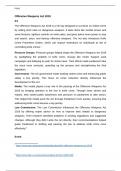
Offensive Weapons Act 2019
P1
The Offensive Weapons Act 2019 is a UK law designed to cut down on violent crime
by setting strict rules on dangerous weapons. It bans items like zombie knives and
some firearms, tightens controls on knife sales, and gives police more power to stop
and search, seize, and destroy offensive weapons. The Act also introduces Knife
Crime Prevention Orders, which can impose restrictions on individuals at risk of
committing knife crimes.1
Pressure Groups: Pressure groups helped shape the Offensive Weapons Act 2019
by spotlighting the problem of knife crime. Groups like Victim Support used
campaigns and lobbying to push for stricter laws. Their efforts made parliament take
the issue more seriously, speeding up the process and strengthening the final
legislation.
Government: The UK government made tackling violent crime and enhancing public
safety a key priority. This focus on crime reduction directly influenced the
development of the Act.
Media: The media played a key role in the passing of the Offensive Weapons Act
2019 by bringing attention to the rise in knife crime. Through news stories and
reports, they raised public awareness and pressure on parliament to take action.
This helped the media push the Act through Parliament more quickly, ensuring that
addressing knife crime became a top priority.
Law Commission: The Law Commission influenced the Offensive Weapons Act
2019 by offering expert advice on how to improve laws related to dangerous
weapons. Their research identified problems in existing regulations and suggested
changes. Although they didn’t write the Act directly, their recommendations helped
guide Parliament in drafting and passing the law to address knife crime more
effectively.2
Event
1
https://www.gov.uk/government/publications/the-offensive-weapons-act-2019
2
https://www.bbc.co.uk/news/uk-england-london-50452136
, P1M1
The tragic death of 17-year-old Jodie Chesney in March 2019, after being fatally
stabbed in a park, significantly influenced the campaign for tougher knife crime laws.
Her death drew media attention and highlighted the serious gaps in existing legal
measures. This public outcry played a crucial role in shaping and pushing for the
Offensive Weapons Act 2019. The Act aimed to address these weaknesses and
apply stronger measures to combat violent crime and improve public safety.3
M1
Pressure Groups: Pressure groups played a significant role in the creation of the
Offensive Weapons Act 2019. Organizations like Victim Support pushed for tougher
laws to protect people affected by violent crime. Their advocacy helped shape and
strengthen the legislation. When pressure groups raise awareness about an issue,
MPs may feel pressured to act and discuss the problem in parliament. Public
campaigns like protests, petitions, and media often lead changes to existing laws.
However, if members take illegal actions to promote their cause, it can damage their
reputation and make it harder for parliament to take it seriously. Leading to more
delay and limiting influence on addressing the issue.
Example:
Mumsnet organized a successful campaign justifying for better parental leave, which
included gathering public support through petitions and media. Their effort led to
further discussion and eventual changes in policy.
Pro-Life Alliance’s attempt to block abortion rights reforms were unsuccessful,
despite their extensive public campaigns against the reforms, they were unable to
prevent the legislation that expanded abortion access. Because most of the public
supported the abortion rights reforms, making it hard for the group to influence and
make a difference.
Media: Positive media coverage has shown successful police operations and the
seizure of illegal weapons under the Offensive Weapons Act 2019, demonstrating its
3
https://www.gov.uk/government/publications/the-offensive-weapons-act-2019/statutory-
guidance-offensive-weapons-act-2019-accessible-version
Offensive Weapons Act 2019
P1
The Offensive Weapons Act 2019 is a UK law designed to cut down on violent crime
by setting strict rules on dangerous weapons. It bans items like zombie knives and
some firearms, tightens controls on knife sales, and gives police more power to stop
and search, seize, and destroy offensive weapons. The Act also introduces Knife
Crime Prevention Orders, which can impose restrictions on individuals at risk of
committing knife crimes.1
Pressure Groups: Pressure groups helped shape the Offensive Weapons Act 2019
by spotlighting the problem of knife crime. Groups like Victim Support used
campaigns and lobbying to push for stricter laws. Their efforts made parliament take
the issue more seriously, speeding up the process and strengthening the final
legislation.
Government: The UK government made tackling violent crime and enhancing public
safety a key priority. This focus on crime reduction directly influenced the
development of the Act.
Media: The media played a key role in the passing of the Offensive Weapons Act
2019 by bringing attention to the rise in knife crime. Through news stories and
reports, they raised public awareness and pressure on parliament to take action.
This helped the media push the Act through Parliament more quickly, ensuring that
addressing knife crime became a top priority.
Law Commission: The Law Commission influenced the Offensive Weapons Act
2019 by offering expert advice on how to improve laws related to dangerous
weapons. Their research identified problems in existing regulations and suggested
changes. Although they didn’t write the Act directly, their recommendations helped
guide Parliament in drafting and passing the law to address knife crime more
effectively.2
Event
1
https://www.gov.uk/government/publications/the-offensive-weapons-act-2019
2
https://www.bbc.co.uk/news/uk-england-london-50452136
, P1M1
The tragic death of 17-year-old Jodie Chesney in March 2019, after being fatally
stabbed in a park, significantly influenced the campaign for tougher knife crime laws.
Her death drew media attention and highlighted the serious gaps in existing legal
measures. This public outcry played a crucial role in shaping and pushing for the
Offensive Weapons Act 2019. The Act aimed to address these weaknesses and
apply stronger measures to combat violent crime and improve public safety.3
M1
Pressure Groups: Pressure groups played a significant role in the creation of the
Offensive Weapons Act 2019. Organizations like Victim Support pushed for tougher
laws to protect people affected by violent crime. Their advocacy helped shape and
strengthen the legislation. When pressure groups raise awareness about an issue,
MPs may feel pressured to act and discuss the problem in parliament. Public
campaigns like protests, petitions, and media often lead changes to existing laws.
However, if members take illegal actions to promote their cause, it can damage their
reputation and make it harder for parliament to take it seriously. Leading to more
delay and limiting influence on addressing the issue.
Example:
Mumsnet organized a successful campaign justifying for better parental leave, which
included gathering public support through petitions and media. Their effort led to
further discussion and eventual changes in policy.
Pro-Life Alliance’s attempt to block abortion rights reforms were unsuccessful,
despite their extensive public campaigns against the reforms, they were unable to
prevent the legislation that expanded abortion access. Because most of the public
supported the abortion rights reforms, making it hard for the group to influence and
make a difference.
Media: Positive media coverage has shown successful police operations and the
seizure of illegal weapons under the Offensive Weapons Act 2019, demonstrating its
3
https://www.gov.uk/government/publications/the-offensive-weapons-act-2019/statutory-
guidance-offensive-weapons-act-2019-accessible-version