Othello Shakespeare
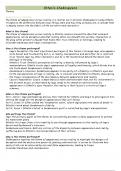
Plot Summary
Act 1, Scene 1
In Act 1, Scene 1 of William Shakespeare's "Othello," we are introduced to Roderigo and Iago
in the streets of Venice at night. Roderigo expresses his displeasure to Iago, who has been
managing his money and seemingly knows about a distressing situation. Iago confirms that
he despises Othello and explains how he feels wronged by him. Despite having influential
people advocate for Iago's promotion to lieutenant, Othello chose Michael Cassio, a mere
"arithmetician" with no battlefield experience. Iago is particularly resentful because he
believes his own military merits and experiences have been overlooked in favor of Cassio's
bookish knowledge. Iago goes on to criticize the system where promotions are based on
favoritism rather than merit. He reveals his plan to feign loyalty to Othello while secretly
plotting against him. This introduces Iago's duplicitous nature: he serves Othello only to
exploit him later. Roderigo, who despises Othello and desires Desdemona, Othello's wife, is
easily manipulated by Iago's cunning. The scene takes a dramatic turn when Iago suggests
they wake Brabantio, Desdemona's father, to inform him of her secret marriage to Othello.
Iago uses crude and racist imagery to incite Brabantio, suggesting that his daughter is with
an "old black ram" (Othello), provoking Brabantio's anger. As they call out to Brabantio, he
appears above, confused and alarmed by the commotion. Brabantio, initially not recognizing
Roderigo, is shocked and outraged when he learns of his daughter's actions. Despite
Roderigo's assurances that he means well, Brabantio is distraught and incredulous,
demanding to know if his daughter has indeed eloped with Othello. He questions how she
could be deceived and wonders if she has been charmed or bewitched. The scene culminates
with Brabantio summoning his household and preparing to confront Othello, fueled by the
belief that his daughter has been stolen from him through deceit or magic. Iago, having
planted the seeds of discord, subtly exits, not wanting to be seen as too directly involved in
the confrontation with Othello. Throughout this opening scene, Shakespeare sets the stage
for the ensuing tragedy by establishing key conflicts and character motivations. Iago's
manipulative nature and deep-seated hatred for Othello are made clear, as is Roderigo's
gullible and desperate infatuation with Desdemona. Brabantio's reaction underscores the
societal prejudices and tensions that will play a significant role in the unfolding drama.
The scene effectively introduces the themes of jealousy, betrayal, and racial tension, all of
which are central to the play's tragic trajectory. Iago's cunning and malicious intentions
are laid bare, foreshadowing the chaos and destruction he will bring to Othello's life. The
audience is drawn into the web of deceit and manipulation that will drive the narrative
forward, creating a sense of anticipation and foreboding.
Act 1, Scene 2
Othello and Iago enter with attendants carrying torches. Iago begins by talking about his
reluctance to commit murder despite being a soldier, expressing that he often finds it
difficult to resist harming others when provoked. He mentions a particular instance where
he restrained himself from stabbing someone who spoke ill of Othello. Othello, in response,
asserts that it's better not to have acted on such impulses. Iago continues, warning Othello
that Brabantio, Desdemona's father, is very influential and might try to annul Othello's
marriage to Desdemona or cause other troubles using his power. Othello remains confident,
, trusting in his own merits and the services he has rendered to the state to counter any
complaints Brabantio might bring. As they talk, they see lights approaching. Iago identifies
the newcomers as Brabantio and his friends, suggesting that Othello should hide, but
Othello refuses, saying he must be found and that his reputation will defend him. Cassio,
another officer, enters with news from the Duke, urgently summoning Othello to deal with
a matter concerning Cyprus. Othello agrees to go after speaking briefly with those inside
his house. Cassio and Iago exchange words, and Iago cryptically mentions that Othello is
now married, referring to his recent marriage to Desdemona. As they prepare to leave,
Brabantio, Roderigo, and officers with torches arrive. Brabantio, accusing Othello of
stealing his daughter, calls for Othello to be seized. Othello calmly tells his men to put
away their swords, asserting that Brabantio’s age and authority should command more
respect than his weapons. Brabantio, however, is enraged, accusing Othello of using
witchcraft and drugs to enchant Desdemona. He demands that Othello be arrested and
taken to answer these charges. Othello, maintaining his composure, agrees to go with them
but questions the validity of these accusations. An officer confirms that the Duke is
currently in council and has sent for Othello to address an urgent matter. Brabantio insists
on bringing Othello before the Duke, asserting that the Duke and other state officials will
surely sympathize with his plight and take action against Othello. Throughout this scene,
Othello's calm and dignified demeanor contrasts with Brabantio’s emotional and
accusatory outbursts. The scene sets up the conflict between Othello and Brabantio, driven
by racial and cultural tensions, and foreshadows the tragic events that will unfold as
Iago's manipulations take effect.
Act 1, Scene 3
Scene 3 of Othello opens with the Duke of Venice and his senators discussing conflicting
reports about the size of the Turkish fleet heading towards Cyprus. They are interrupted
by a sailor who confirms that the Turks are indeed preparing for an attack, though they
appear to be aiming for Rhodes instead. The Duke and his senators suspect this is a ruse and
conclude that Cyprus is the true target. As the discussion unfolds, Brabantio, Othello,
Cassio, Iago, Roderigo, and officers enter. The Duke immediately addresses Brabantio and
welcomes Othello, needing his military expertise against the Turks. Brabantio, however, is
preoccupied with personal matters and accuses Othello of enchanting his daughter,
Desdemona, with spells and witchcraft. Brabantio insists that Desdemona could not have
fallen for Othello naturally and demands justice. Othello, asked to defend himself, admits
he married Desdemona but denies using any magic. He explains that Desdemona fell in love
with him through the stories of his adventurous life that he told her. Othello suggests that
they call for Desdemona to confirm his account. Desdemona is brought in, and she
corroborates Othello's story, explaining that she fell in love with him for his bravery and
the trials he endured. She asserts her duty now lies with her husband, not her father.
Brabantio, though devastated, reluctantly accepts the marriage and warns Othello that
Desdemona might deceive him as she did her father. The Duke quickly turns the conversation
back to the urgent matter of the Turkish threat. He informs Othello that he must lead the
defense of Cyprus immediately. Othello requests arrangements for Desdemona's
accommodation during his absence. Desdemona insists on accompanying Othello to Cyprus,
stating that she cannot bear to be separated from him. The Duke agrees, and Othello assigns
Iago to escort Desdemona to Cyprus. After everyone else leaves, Iago and Roderigo remain.
Roderigo, despondent over losing Desdemona, declares he will drown himself. Iago mocks
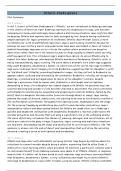
Plot Summary
Act 1, Scene 1
In Act 1, Scene 1 of William Shakespeare's "Othello," we are introduced to Roderigo and Iago
in the streets of Venice at night. Roderigo expresses his displeasure to Iago, who has been
managing his money and seemingly knows about a distressing situation. Iago confirms that
he despises Othello and explains how he feels wronged by him. Despite having influential
people advocate for Iago's promotion to lieutenant, Othello chose Michael Cassio, a mere
"arithmetician" with no battlefield experience. Iago is particularly resentful because he
believes his own military merits and experiences have been overlooked in favor of Cassio's
bookish knowledge. Iago goes on to criticize the system where promotions are based on
favoritism rather than merit. He reveals his plan to feign loyalty to Othello while secretly
plotting against him. This introduces Iago's duplicitous nature: he serves Othello only to
exploit him later. Roderigo, who despises Othello and desires Desdemona, Othello's wife, is
easily manipulated by Iago's cunning. The scene takes a dramatic turn when Iago suggests
they wake Brabantio, Desdemona's father, to inform him of her secret marriage to Othello.
Iago uses crude and racist imagery to incite Brabantio, suggesting that his daughter is with
an "old black ram" (Othello), provoking Brabantio's anger. As they call out to Brabantio, he
appears above, confused and alarmed by the commotion. Brabantio, initially not recognizing
Roderigo, is shocked and outraged when he learns of his daughter's actions. Despite
Roderigo's assurances that he means well, Brabantio is distraught and incredulous,
demanding to know if his daughter has indeed eloped with Othello. He questions how she
could be deceived and wonders if she has been charmed or bewitched. The scene culminates
with Brabantio summoning his household and preparing to confront Othello, fueled by the
belief that his daughter has been stolen from him through deceit or magic. Iago, having
planted the seeds of discord, subtly exits, not wanting to be seen as too directly involved in
the confrontation with Othello. Throughout this opening scene, Shakespeare sets the stage
for the ensuing tragedy by establishing key conflicts and character motivations. Iago's
manipulative nature and deep-seated hatred for Othello are made clear, as is Roderigo's
gullible and desperate infatuation with Desdemona. Brabantio's reaction underscores the
societal prejudices and tensions that will play a significant role in the unfolding drama.
The scene effectively introduces the themes of jealousy, betrayal, and racial tension, all of
which are central to the play's tragic trajectory. Iago's cunning and malicious intentions
are laid bare, foreshadowing the chaos and destruction he will bring to Othello's life. The
audience is drawn into the web of deceit and manipulation that will drive the narrative
forward, creating a sense of anticipation and foreboding.
Act 1, Scene 2
Othello and Iago enter with attendants carrying torches. Iago begins by talking about his
reluctance to commit murder despite being a soldier, expressing that he often finds it
difficult to resist harming others when provoked. He mentions a particular instance where
he restrained himself from stabbing someone who spoke ill of Othello. Othello, in response,
asserts that it's better not to have acted on such impulses. Iago continues, warning Othello
that Brabantio, Desdemona's father, is very influential and might try to annul Othello's
marriage to Desdemona or cause other troubles using his power. Othello remains confident,
, trusting in his own merits and the services he has rendered to the state to counter any
complaints Brabantio might bring. As they talk, they see lights approaching. Iago identifies
the newcomers as Brabantio and his friends, suggesting that Othello should hide, but
Othello refuses, saying he must be found and that his reputation will defend him. Cassio,
another officer, enters with news from the Duke, urgently summoning Othello to deal with
a matter concerning Cyprus. Othello agrees to go after speaking briefly with those inside
his house. Cassio and Iago exchange words, and Iago cryptically mentions that Othello is
now married, referring to his recent marriage to Desdemona. As they prepare to leave,
Brabantio, Roderigo, and officers with torches arrive. Brabantio, accusing Othello of
stealing his daughter, calls for Othello to be seized. Othello calmly tells his men to put
away their swords, asserting that Brabantio’s age and authority should command more
respect than his weapons. Brabantio, however, is enraged, accusing Othello of using
witchcraft and drugs to enchant Desdemona. He demands that Othello be arrested and
taken to answer these charges. Othello, maintaining his composure, agrees to go with them
but questions the validity of these accusations. An officer confirms that the Duke is
currently in council and has sent for Othello to address an urgent matter. Brabantio insists
on bringing Othello before the Duke, asserting that the Duke and other state officials will
surely sympathize with his plight and take action against Othello. Throughout this scene,
Othello's calm and dignified demeanor contrasts with Brabantio’s emotional and
accusatory outbursts. The scene sets up the conflict between Othello and Brabantio, driven
by racial and cultural tensions, and foreshadows the tragic events that will unfold as
Iago's manipulations take effect.
Act 1, Scene 3
Scene 3 of Othello opens with the Duke of Venice and his senators discussing conflicting
reports about the size of the Turkish fleet heading towards Cyprus. They are interrupted
by a sailor who confirms that the Turks are indeed preparing for an attack, though they
appear to be aiming for Rhodes instead. The Duke and his senators suspect this is a ruse and
conclude that Cyprus is the true target. As the discussion unfolds, Brabantio, Othello,
Cassio, Iago, Roderigo, and officers enter. The Duke immediately addresses Brabantio and
welcomes Othello, needing his military expertise against the Turks. Brabantio, however, is
preoccupied with personal matters and accuses Othello of enchanting his daughter,
Desdemona, with spells and witchcraft. Brabantio insists that Desdemona could not have
fallen for Othello naturally and demands justice. Othello, asked to defend himself, admits
he married Desdemona but denies using any magic. He explains that Desdemona fell in love
with him through the stories of his adventurous life that he told her. Othello suggests that
they call for Desdemona to confirm his account. Desdemona is brought in, and she
corroborates Othello's story, explaining that she fell in love with him for his bravery and
the trials he endured. She asserts her duty now lies with her husband, not her father.
Brabantio, though devastated, reluctantly accepts the marriage and warns Othello that
Desdemona might deceive him as she did her father. The Duke quickly turns the conversation
back to the urgent matter of the Turkish threat. He informs Othello that he must lead the
defense of Cyprus immediately. Othello requests arrangements for Desdemona's
accommodation during his absence. Desdemona insists on accompanying Othello to Cyprus,
stating that she cannot bear to be separated from him. The Duke agrees, and Othello assigns
Iago to escort Desdemona to Cyprus. After everyone else leaves, Iago and Roderigo remain.
Roderigo, despondent over losing Desdemona, declares he will drown himself. Iago mocks