EDUB LU2
04 Sep - 08 Sep
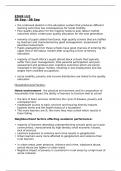
• the continued dualism in the education system that produces different
learning outcomes has consequences for social mobility
• Poor quality education for the majority leads to poor labour market
outcomes which create poor quality education for the next generation
• minority of pupils attend functional, high quality schools that are staffed
by teachers and characterised by good management, assessment of
parental involvement.
• Pupils graduating from these schools have good chances of entering the
upper end of the labour market after acquiring a form of tertiary
education.
• majority of South Africa’s pupils attend black schools that typically
suffer from poor management, little parental participation and poor
assessment and produce poor cognitive outcomes which are poorly
rewarded in the labour market, resulting in low employment and low
wages from unskilled occupations.
• social mobility, poverty and income distribution are linked to the quality
education
Household Level Factors:
Home environment - the physical environment and he composition of
households that impact the ability of learners to function well at school
• the lack of basic services reinforces the cycle of disease, poverty and
unemployment.
• Inadequate access to basic services and housing directly impacts
hygiene levels and the health status of a household
• The more learners are ill, the more they miss school which results in
them failing
Neighbourhood factors affecting academic performance:
• majority of learners attending underperforming schools grow up in poor
communities, characterised by high density small economic houses,
lack of services
• Learners exposure to violence and crime results in gangsterism
• Urban learners were more affected to gangsterism and violence than
rural learners
• in urban areas, peer pressure, violence and crime, substance abuse,
sexual abuse are higher in urban areas
• Negative impact of poverty is countered in rural areas by a high level of
social cohesion
04 Sep - 08 Sep
• the continued dualism in the education system that produces different
learning outcomes has consequences for social mobility
• Poor quality education for the majority leads to poor labour market
outcomes which create poor quality education for the next generation
• minority of pupils attend functional, high quality schools that are staffed
by teachers and characterised by good management, assessment of
parental involvement.
• Pupils graduating from these schools have good chances of entering the
upper end of the labour market after acquiring a form of tertiary
education.
• majority of South Africa’s pupils attend black schools that typically
suffer from poor management, little parental participation and poor
assessment and produce poor cognitive outcomes which are poorly
rewarded in the labour market, resulting in low employment and low
wages from unskilled occupations.
• social mobility, poverty and income distribution are linked to the quality
education
Household Level Factors:
Home environment - the physical environment and he composition of
households that impact the ability of learners to function well at school
• the lack of basic services reinforces the cycle of disease, poverty and
unemployment.
• Inadequate access to basic services and housing directly impacts
hygiene levels and the health status of a household
• The more learners are ill, the more they miss school which results in
them failing
Neighbourhood factors affecting academic performance:
• majority of learners attending underperforming schools grow up in poor
communities, characterised by high density small economic houses,
lack of services
• Learners exposure to violence and crime results in gangsterism
• Urban learners were more affected to gangsterism and violence than
rural learners
• in urban areas, peer pressure, violence and crime, substance abuse,
sexual abuse are higher in urban areas
• Negative impact of poverty is countered in rural areas by a high level of
social cohesion