Oefentoets voor CP2 Hoofdstuk 8 vwo5
Opgave 1
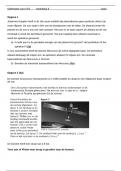
Johannes Keppler heeft in de 16e eeuw ontdekt dat planeetbanen geen perfecte cirkels zijn
maar ellipsen. De zon staat in één van de brandpunten van de ellips. De afstand tussen de
planeet en de zon is dus ook niet constant. Het punt in de baan waarin de afstand tot de zon
minimaal is wordt het perihelium genoemd. Het punt waarbij deze afstand maximaal is
wordt het aphelium genoemd.
a) In welk punt is de gravitatie-energie van de planeet het grootst? Het perihelium of het
aphelium? (1p)
In ons zonnestelsel heeft de planeet Mercurius de meest afgeplatte baan. De perihelium
afstand bedraagt 46 miljoen km, de aphelium afstand 70 miljoen km. De minimale
baansnelheid van Mercurius is 39 km/s.
b) Bereken de maximale baansnelheid van Mercurius.(3p)
Opgave 2 (3p)
De komeet Churyumov-Gerasimenko is in 1969 ontdekt en draait in een elliptische baan rondom
de zon.
De komeet heeft een straal van 2,9 km.
Toon aan of Philae weer terug is gevallen naar de komeet.
, Opgave 3 (4p)
Om een satelliet in een cirkelbaan rond de aarde te laten draaien is een bepaalde snelheid nodig.
Het ISS (massa 4,197*105 kg) draait rond op een hoogte van 342 km (boven het aardoppervlak)
met een snelheid van 7,7 km/s.
Om het ISS op deze hoogte te brengen vanaf het aardoppervlak, en het daarbij bovendien te
versnellen vanaf stilstand, is energie nodig.
Bereken de hiervoor benodigde hoeveelheid energie. Geef je antwoord in precies het juiste
aantal significante cijfers.
Opgave 4 (5p)
Opgave 1
Johannes Keppler heeft in de 16e eeuw ontdekt dat planeetbanen geen perfecte cirkels zijn
maar ellipsen. De zon staat in één van de brandpunten van de ellips. De afstand tussen de
planeet en de zon is dus ook niet constant. Het punt in de baan waarin de afstand tot de zon
minimaal is wordt het perihelium genoemd. Het punt waarbij deze afstand maximaal is
wordt het aphelium genoemd.
a) In welk punt is de gravitatie-energie van de planeet het grootst? Het perihelium of het
aphelium? (1p)
In ons zonnestelsel heeft de planeet Mercurius de meest afgeplatte baan. De perihelium
afstand bedraagt 46 miljoen km, de aphelium afstand 70 miljoen km. De minimale
baansnelheid van Mercurius is 39 km/s.
b) Bereken de maximale baansnelheid van Mercurius.(3p)
Opgave 2 (3p)
De komeet Churyumov-Gerasimenko is in 1969 ontdekt en draait in een elliptische baan rondom
de zon.
De komeet heeft een straal van 2,9 km.
Toon aan of Philae weer terug is gevallen naar de komeet.
, Opgave 3 (4p)
Om een satelliet in een cirkelbaan rond de aarde te laten draaien is een bepaalde snelheid nodig.
Het ISS (massa 4,197*105 kg) draait rond op een hoogte van 342 km (boven het aardoppervlak)
met een snelheid van 7,7 km/s.
Om het ISS op deze hoogte te brengen vanaf het aardoppervlak, en het daarbij bovendien te
versnellen vanaf stilstand, is energie nodig.
Bereken de hiervoor benodigde hoeveelheid energie. Geef je antwoord in precies het juiste
aantal significante cijfers.
Opgave 4 (5p)