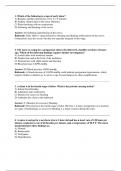
1. Which of the following is a sign of early labor?
A) Regular, painful contractions every 4 to 6 minutes
B) Sudden, intense pain in the lower abdomen
C) Water breaking with no contractions
D) Softening and thinning of the cervix
Answer: D) Softening and thinning of the cervix
Rationale: Early labor is characterized by softening and thinning (effacement) of the cervix.
Contractions may also occur, but they are typically irregular at this stage.
2. The nurse is caring for a postpartum client who delivered a healthy newborn 12 hours
ago. Which of the following findings requires further investigation?
A) Lochia rubra with moderate amount
B) Fundus firm and at the level of the umbilicus
C) Perineal area with slight edema and bruising
D) Blood pressure 140/90 mmHg
Answer: D) Blood pressure 140/90 mmHg
Rationale: A blood pressure of 140/90 mmHg could indicate postpartum hypertension, which
requires further evaluation as it can be a sign of preeclampsia or other complications.
3. A client is in the fourth stage of labor. What is the priority nursing action?
A) Initiate breastfeeding
B) Administer pain medication
C) Monitor for excessive bleeding
D) Ambulate the client to the bathroom
Answer: C) Monitor for excessive bleeding
Rationale: The priority in the fourth stage of labor (the first 1-2 hours postpartum) is to monitor
for signs of hemorrhage, as excessive bleeding is a major concern during this time.
4. A nurse is caring for a newborn who is 1 hour old and has a heart rate of 120 beats per
minute, respiratory rate of 40 breaths per minute, and a temperature of 98.5°F. The nurse
should interpret these findings as:
A) Normal
B) Bradycardia
C) Tachypnea
D) Hypothermia
, Answer: A) Normal
Rationale: The heart rate (120 bpm), respiratory rate (40 breaths/min), and temperature (98.5°F)
are all within normal ranges for a newborn.
5. A client at 28 weeks gestation reports sudden swelling of the hands and face. Which of
the following is the most appropriate action?
A) Recommend rest and elevation of the legs
B) Schedule an appointment with the healthcare provider
C) Check the client's blood pressure
D) Advise the client to drink more fluids
Answer: C) Check the client's blood pressure
Rationale: Sudden swelling of the hands and face can be a sign of preeclampsia, which is
characterized by high blood pressure. Immediate monitoring of the blood pressure is critical.
6. A nurse is teaching a client about the signs of preterm labor. Which of the following
signs should the nurse include in the teaching?
A) Absence of Braxton Hicks contractions
B) Regular contractions every 10 minutes
C) Persistent back pain or pressure in the pelvic area
D) Decreased fetal movement
Answer: C) Persistent back pain or pressure in the pelvic area
Rationale: Persistent back pain or pelvic pressure is a common sign of preterm labor, in addition
to regular contractions.
7. Which of the following actions should the nurse take when a newborn is in respiratory
distress?
A) Provide supplemental oxygen
B) Place the newborn under a warmer
C) Encourage breastfeeding immediately
D) Suction the airway gently if needed
Answer: D) Suction the airway gently if needed
Rationale: If the newborn is in respiratory distress, the first action is to clear the airway.
Suctioning is done carefully to remove any mucus or fluid that may obstruct breathing.
A) Regular, painful contractions every 4 to 6 minutes
B) Sudden, intense pain in the lower abdomen
C) Water breaking with no contractions
D) Softening and thinning of the cervix
Answer: D) Softening and thinning of the cervix
Rationale: Early labor is characterized by softening and thinning (effacement) of the cervix.
Contractions may also occur, but they are typically irregular at this stage.
2. The nurse is caring for a postpartum client who delivered a healthy newborn 12 hours
ago. Which of the following findings requires further investigation?
A) Lochia rubra with moderate amount
B) Fundus firm and at the level of the umbilicus
C) Perineal area with slight edema and bruising
D) Blood pressure 140/90 mmHg
Answer: D) Blood pressure 140/90 mmHg
Rationale: A blood pressure of 140/90 mmHg could indicate postpartum hypertension, which
requires further evaluation as it can be a sign of preeclampsia or other complications.
3. A client is in the fourth stage of labor. What is the priority nursing action?
A) Initiate breastfeeding
B) Administer pain medication
C) Monitor for excessive bleeding
D) Ambulate the client to the bathroom
Answer: C) Monitor for excessive bleeding
Rationale: The priority in the fourth stage of labor (the first 1-2 hours postpartum) is to monitor
for signs of hemorrhage, as excessive bleeding is a major concern during this time.
4. A nurse is caring for a newborn who is 1 hour old and has a heart rate of 120 beats per
minute, respiratory rate of 40 breaths per minute, and a temperature of 98.5°F. The nurse
should interpret these findings as:
A) Normal
B) Bradycardia
C) Tachypnea
D) Hypothermia
, Answer: A) Normal
Rationale: The heart rate (120 bpm), respiratory rate (40 breaths/min), and temperature (98.5°F)
are all within normal ranges for a newborn.
5. A client at 28 weeks gestation reports sudden swelling of the hands and face. Which of
the following is the most appropriate action?
A) Recommend rest and elevation of the legs
B) Schedule an appointment with the healthcare provider
C) Check the client's blood pressure
D) Advise the client to drink more fluids
Answer: C) Check the client's blood pressure
Rationale: Sudden swelling of the hands and face can be a sign of preeclampsia, which is
characterized by high blood pressure. Immediate monitoring of the blood pressure is critical.
6. A nurse is teaching a client about the signs of preterm labor. Which of the following
signs should the nurse include in the teaching?
A) Absence of Braxton Hicks contractions
B) Regular contractions every 10 minutes
C) Persistent back pain or pressure in the pelvic area
D) Decreased fetal movement
Answer: C) Persistent back pain or pressure in the pelvic area
Rationale: Persistent back pain or pelvic pressure is a common sign of preterm labor, in addition
to regular contractions.
7. Which of the following actions should the nurse take when a newborn is in respiratory
distress?
A) Provide supplemental oxygen
B) Place the newborn under a warmer
C) Encourage breastfeeding immediately
D) Suction the airway gently if needed
Answer: D) Suction the airway gently if needed
Rationale: If the newborn is in respiratory distress, the first action is to clear the airway.
Suctioning is done carefully to remove any mucus or fluid that may obstruct breathing.