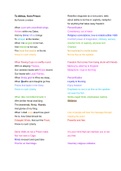
Penology
● Study of punishment of crime and of prison management
● Penologists seek to understand how corrections can prevent crime via the repression of
inhibition of criminal intent/treatment of prisoners and their rehabilitation as convicted
criminals
● Therefore, study different types of punishments, effects of sentencing, probation, and
prison
Purposes of Punishment (Greenberg & Ruback, 1984)
● General Deterrence
○ Punishment of an offender, and the subsequent publicity that comes with it, are
assumed to discourage other potential law-breakers
● Individual Deterrence
○ Punishment of the offender is presumed to keep that person from committing
other crimes in the future
○ If the individual cannot stop themselves from committing crimes, the society will
stop them
● Incapacitation
○ If a convicted offender is sent to prison, society can feel safe from that felon while
they are confined
● Retribution
○ Society believes that offenders should not benefit from your crime; rather, they
should receive their "just desserts".
○ Punishment should be proportionate to the harm caused by the crime
● Moral Outrage
○ Punishment can give society a means of catharsis and relief from the feelings of
frustration, hurt, loss, and anger that result from being victims of crime
● Rehabilitation
○ The goal of punishment is to help offenders recognize the error of their ways and
develop new skills, values, and lifestyles so that they can reintegrate back into
society and be law-abiding citizens
● Restitution
○ Wrongdoers should compensate victims for their damages and losses
Utilitarian Approaches to Punishment
● Goal: Right the wrongs of past misconduct and reduce the likelihood of future criminal
behavior
● High recidivism rates and Martinson's (1974) "Nothing Works" position
● Emergence of "get-tough" attitudes on crime
Retributive Approaches
● Goal: An offender deserves to be punished and their punishment should be
proportionate to the severity to the wrongdoing
● Includes retribution and moral outrage
● Study of punishment of crime and of prison management
● Penologists seek to understand how corrections can prevent crime via the repression of
inhibition of criminal intent/treatment of prisoners and their rehabilitation as convicted
criminals
● Therefore, study different types of punishments, effects of sentencing, probation, and
prison
Purposes of Punishment (Greenberg & Ruback, 1984)
● General Deterrence
○ Punishment of an offender, and the subsequent publicity that comes with it, are
assumed to discourage other potential law-breakers
● Individual Deterrence
○ Punishment of the offender is presumed to keep that person from committing
other crimes in the future
○ If the individual cannot stop themselves from committing crimes, the society will
stop them
● Incapacitation
○ If a convicted offender is sent to prison, society can feel safe from that felon while
they are confined
● Retribution
○ Society believes that offenders should not benefit from your crime; rather, they
should receive their "just desserts".
○ Punishment should be proportionate to the harm caused by the crime
● Moral Outrage
○ Punishment can give society a means of catharsis and relief from the feelings of
frustration, hurt, loss, and anger that result from being victims of crime
● Rehabilitation
○ The goal of punishment is to help offenders recognize the error of their ways and
develop new skills, values, and lifestyles so that they can reintegrate back into
society and be law-abiding citizens
● Restitution
○ Wrongdoers should compensate victims for their damages and losses
Utilitarian Approaches to Punishment
● Goal: Right the wrongs of past misconduct and reduce the likelihood of future criminal
behavior
● High recidivism rates and Martinson's (1974) "Nothing Works" position
● Emergence of "get-tough" attitudes on crime
Retributive Approaches
● Goal: An offender deserves to be punished and their punishment should be
proportionate to the severity to the wrongdoing
● Includes retribution and moral outrage