9/4/24
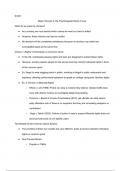
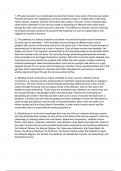
Basic Choices in the Psychological Study of Law
What do we mean by choices?
● As a society, we must decide which values we want our laws to reflect
● However, these choices can lead to conflict
● No decision will be completely satisfactory because no decision can attain two
incompatible goals at the same time
Choice 1: Rights of Individuals vs Common Good
● In the US, individuals possess rights and laws are designed to protect these rights
● However, society expects people to feel secure and may restrict individual rights in favor
of the common good
● Ex: illegal to wear sagging pants in public, smoking is illegal in public restaurants and
airplanes, allowing controversial speakers to speak on college campuses, abortion rights
● Ex. 2: Erosion of Miranda Rights
○ Whren v. US (1996): Police can stop a motorist they believe violated traffic laws
even with ulterior motives to investigate illegal drug dealing
○ Florence v. Board of Chosen Freeholders (2012): jail officials can strip search
petty offenders even if there is no suspicion that they are concealing weapons or
contraband
○ Vega v. Tekoh (2022): Failure of police to read a suspect Miranda rights does not
alone provide basis of civil liability claim.
Two Models of the Criminal Justice System
● The priorities of these two models are very different, leads to tension between individual
rights vs common good
● Due Process Model
○ Popular in 1960s
Basic Choices in the Psychological Study of Law
What do we mean by choices?
● As a society, we must decide which values we want our laws to reflect
● However, these choices can lead to conflict
● No decision will be completely satisfactory because no decision can attain two
incompatible goals at the same time
Choice 1: Rights of Individuals vs Common Good
● In the US, individuals possess rights and laws are designed to protect these rights
● However, society expects people to feel secure and may restrict individual rights in favor
of the common good
● Ex: illegal to wear sagging pants in public, smoking is illegal in public restaurants and
airplanes, allowing controversial speakers to speak on college campuses, abortion rights
● Ex. 2: Erosion of Miranda Rights
○ Whren v. US (1996): Police can stop a motorist they believe violated traffic laws
even with ulterior motives to investigate illegal drug dealing
○ Florence v. Board of Chosen Freeholders (2012): jail officials can strip search
petty offenders even if there is no suspicion that they are concealing weapons or
contraband
○ Vega v. Tekoh (2022): Failure of police to read a suspect Miranda rights does not
alone provide basis of civil liability claim.
Two Models of the Criminal Justice System
● The priorities of these two models are very different, leads to tension between individual
rights vs common good
● Due Process Model
○ Popular in 1960s