Dates
Part I: Ancient Near East and Greece
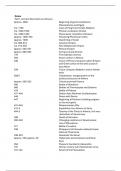
Approx. 3000 Beginning of great civilizations
Mesopotamia and Egypt
Ca. 1700 Laws of King Hammurabi, Babylon
Ca. 1800-1500 Minoan civilization (Crete)
Ca. 1600-1200 Mycenaean civilization (Greece)
Approx. 1000-750 Flowering Phoenician cities
Approx. 1000 David King of Israel
Ca. 900-612 Assyrian Empire
Ca. 612-550 Neo-Babylonian Empire
Approx. 550-331 Persian Empire
Approx. 800-500 Archaic period Greece
776 First Olympic Games
594 Solon archon in Athens
546 Cyrus of Persia conquers Lydian Empire
and Greek cities on the west coast of
Asia Minor
539 Cyrus conquers Babylon; end of Jewish
exile
508/7 Cleisthenes: reorganization of the
political structure of Athens
Approx. 500-323 Classical period Greece
490 Battle of Marathon
480 Battles of Thermopylae and Salamis
479 Battle of Plataea
477-404 Delian-Attic Maritime Confederation
449 Peace with Persia
447 Beginning of Pericles' building program
on the Acropolis
431-404 Peloponnesian War
415-3 Expedition from Athens to Sicily
404-3 Tyranny of the Thirty in Athens; civil war;
restoration of democracy
399 Death of Socrates
395-340 Changing coalitions of Greek poleis;
rise of Macedonia
371 Battle of Leuktra
338 Philippos II of Macedon defeats Greek
allies at Chaeronea
336-323 Alexander the Great
Approx. 330-approx. 30 Hellenistic period Greece and Near
East
294 Museum founded in Alexandria
197 Roman victory over Macedonian army
167-142 Revolt of the Maccabees
,146 Macedonia becomes Roman province;
Corinth destroyed
133 Pergamon bequeathed to the Roman
state in a will
86 Sulla destroys Athens
64 Seleucid Syria becomes Roman
province
30 Ptolemaic Egypt becomes Roman
province
Part II: Rome
'753' BC Foundation of the city-state of Rome
'715-509' BC Time of the Seven Kings
'509' BC Foundation of the Republic
451-449 BC Law of the Twelve Tables ( Lex
Duodecim Tabularum )
396 BC Fall of Veii and beginning of expansion
264-241 BC First Punic War: Expansion of Italy's
power
218-201 BC Second Punic War: expansion of
Spain's power
197. BC Greece's first victory: expansion of
power in the East
149-146 BC Third Punic War: destruction of
Carthage (and Corinth)
133 and 123-122 BC Internal conflicts: agrarian reforms of
the Gracchi
91-89 BC Social War
88-82 BC Civil war between Marius and Sulla
49-45 BC Civil war between Pompey and Caesar
44 BC Assassination of Caesar
44-31 BC Civil war between Octavian and others
31 BC Battle of Actium and annexation of
Egypt
27 BC-14 AD End of Republic and beginning of
Principate = Imperial period under
Octavian = Augustus
14 AD-68 AD Julian-Claudian Imperial House
1st century AD Establishment of Christianity
68-69 The Year of the Four Emperors
69-96 The Flavian Dynasty
96-180 The Adoptive Emperors
193-194 The Year of the Five Emperors
193-235 The Severan Imperial House
212 Roman Citizenship for All by Caracalla
235-284 The soldier emperors
,284-305 Early Late Antiquity: Diocletian and the
Tetrarchy
306-337 Constantine (the Great) + Christianity
337-363 Constantinian Dynasty
361-363 Julian the Apostate
364-476 Division of the Roman Empire into East
and West
410 Capture of the city of Rome by the
Western or Visigoths and political
disintegration of the Western Roman
Empire
476 Last Western Roman Emperor
Deposed: End of the Western Roman
Empire
476-552 Ostrogoths in Italy
527-565 Emperor Justinian + the reconquest of
Italy and North Africa
568 Invasion of Italy by the Lombards
ca. 6th-7th century Beginning of the Early Middle Ages
610-632 Establishment of Islam
1453 End of the Eastern Roman Empire
(Byzantium-Constantinople)
, Notes
Week 1: The Ancient Near East | Lecture 1.1: What is Ancient History
- Ancient history = world history (not European perspective, rather meridian
center) →geographical area
- Ancient history (= entire history of Afro-Eurasia) began with the introduction of
writing (3000 BC to ca. 650 AD)
- In Utrecht, the research focuses on the period from 500 BC to 500 AD
(Mediterranean, Middle East and Central Asia/India, see map below); themes
include →migration, religion, cities, empires, borders and cultural contact
- No clear boundaries, which interact with each other →cultural and social
exchange
- Many things (political, economic, religious, social and cultural) originated in
antiquity (ancient writing, complex forms of society, ideologies, etc.); modern
things are traced back →“Antiquity is the cultural foundation of modern
societies, from Western Europe to East Asia.”
- Globalization began in ancient times, with the emergence of cultural contact and
direct exchange between East Asia and the Mediterranean
- Antiquity has enormous influence on popular and high culture →most depicted
painting (and nowadays often in Young Adult books, read by the youth)
- National identity was often based on classical antiquity
- Silk Roads (modern term) connecting East and West, including the areas in
between →, perhaps military routes rather than trade routes
- The cities on the routes (see map below) are important, mainly through trade and
cultural contacts
Part I: Ancient Near East and Greece
Approx. 3000 Beginning of great civilizations
Mesopotamia and Egypt
Ca. 1700 Laws of King Hammurabi, Babylon
Ca. 1800-1500 Minoan civilization (Crete)
Ca. 1600-1200 Mycenaean civilization (Greece)
Approx. 1000-750 Flowering Phoenician cities
Approx. 1000 David King of Israel
Ca. 900-612 Assyrian Empire
Ca. 612-550 Neo-Babylonian Empire
Approx. 550-331 Persian Empire
Approx. 800-500 Archaic period Greece
776 First Olympic Games
594 Solon archon in Athens
546 Cyrus of Persia conquers Lydian Empire
and Greek cities on the west coast of
Asia Minor
539 Cyrus conquers Babylon; end of Jewish
exile
508/7 Cleisthenes: reorganization of the
political structure of Athens
Approx. 500-323 Classical period Greece
490 Battle of Marathon
480 Battles of Thermopylae and Salamis
479 Battle of Plataea
477-404 Delian-Attic Maritime Confederation
449 Peace with Persia
447 Beginning of Pericles' building program
on the Acropolis
431-404 Peloponnesian War
415-3 Expedition from Athens to Sicily
404-3 Tyranny of the Thirty in Athens; civil war;
restoration of democracy
399 Death of Socrates
395-340 Changing coalitions of Greek poleis;
rise of Macedonia
371 Battle of Leuktra
338 Philippos II of Macedon defeats Greek
allies at Chaeronea
336-323 Alexander the Great
Approx. 330-approx. 30 Hellenistic period Greece and Near
East
294 Museum founded in Alexandria
197 Roman victory over Macedonian army
167-142 Revolt of the Maccabees
,146 Macedonia becomes Roman province;
Corinth destroyed
133 Pergamon bequeathed to the Roman
state in a will
86 Sulla destroys Athens
64 Seleucid Syria becomes Roman
province
30 Ptolemaic Egypt becomes Roman
province
Part II: Rome
'753' BC Foundation of the city-state of Rome
'715-509' BC Time of the Seven Kings
'509' BC Foundation of the Republic
451-449 BC Law of the Twelve Tables ( Lex
Duodecim Tabularum )
396 BC Fall of Veii and beginning of expansion
264-241 BC First Punic War: Expansion of Italy's
power
218-201 BC Second Punic War: expansion of
Spain's power
197. BC Greece's first victory: expansion of
power in the East
149-146 BC Third Punic War: destruction of
Carthage (and Corinth)
133 and 123-122 BC Internal conflicts: agrarian reforms of
the Gracchi
91-89 BC Social War
88-82 BC Civil war between Marius and Sulla
49-45 BC Civil war between Pompey and Caesar
44 BC Assassination of Caesar
44-31 BC Civil war between Octavian and others
31 BC Battle of Actium and annexation of
Egypt
27 BC-14 AD End of Republic and beginning of
Principate = Imperial period under
Octavian = Augustus
14 AD-68 AD Julian-Claudian Imperial House
1st century AD Establishment of Christianity
68-69 The Year of the Four Emperors
69-96 The Flavian Dynasty
96-180 The Adoptive Emperors
193-194 The Year of the Five Emperors
193-235 The Severan Imperial House
212 Roman Citizenship for All by Caracalla
235-284 The soldier emperors
,284-305 Early Late Antiquity: Diocletian and the
Tetrarchy
306-337 Constantine (the Great) + Christianity
337-363 Constantinian Dynasty
361-363 Julian the Apostate
364-476 Division of the Roman Empire into East
and West
410 Capture of the city of Rome by the
Western or Visigoths and political
disintegration of the Western Roman
Empire
476 Last Western Roman Emperor
Deposed: End of the Western Roman
Empire
476-552 Ostrogoths in Italy
527-565 Emperor Justinian + the reconquest of
Italy and North Africa
568 Invasion of Italy by the Lombards
ca. 6th-7th century Beginning of the Early Middle Ages
610-632 Establishment of Islam
1453 End of the Eastern Roman Empire
(Byzantium-Constantinople)
, Notes
Week 1: The Ancient Near East | Lecture 1.1: What is Ancient History
- Ancient history = world history (not European perspective, rather meridian
center) →geographical area
- Ancient history (= entire history of Afro-Eurasia) began with the introduction of
writing (3000 BC to ca. 650 AD)
- In Utrecht, the research focuses on the period from 500 BC to 500 AD
(Mediterranean, Middle East and Central Asia/India, see map below); themes
include →migration, religion, cities, empires, borders and cultural contact
- No clear boundaries, which interact with each other →cultural and social
exchange
- Many things (political, economic, religious, social and cultural) originated in
antiquity (ancient writing, complex forms of society, ideologies, etc.); modern
things are traced back →“Antiquity is the cultural foundation of modern
societies, from Western Europe to East Asia.”
- Globalization began in ancient times, with the emergence of cultural contact and
direct exchange between East Asia and the Mediterranean
- Antiquity has enormous influence on popular and high culture →most depicted
painting (and nowadays often in Young Adult books, read by the youth)
- National identity was often based on classical antiquity
- Silk Roads (modern term) connecting East and West, including the areas in
between →, perhaps military routes rather than trade routes
- The cities on the routes (see map below) are important, mainly through trade and
cultural contacts