1
Geodesics
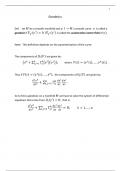
Def. Let 𝑀 be a smooth manifold and 𝛾: 𝐼 → 𝑀 a smooth curve. 𝛾 is called a
geodesic if ∇γ′ (𝛾 ′ ) = 0 (∇γ′ (𝛾 ′ ) is called the acceleration vector field of 𝛾).
Note: This definition depends on the parametrization of the curve.
The components of 𝐷𝑡 (𝑉 ) are given by:
(𝑣̇ 𝑘 + ∑𝑛𝑖,𝑗=1 Γ𝑖𝑗𝑘 (𝛾̇ 𝑖 )(𝑣 𝑗 )); where 𝑉 (𝑡) = (𝑣 1 (𝑡), … , 𝑣 𝑛 (𝑡)) .
Thus if 𝑉 (𝑡) = (𝛾̇ 1 (𝑡), … , 𝛾̇ 𝑛 ), the components of 𝐷𝑡 (𝑉 ) are given by:
𝑑2 𝛾𝑘 𝑛
𝑖
𝑘 𝑑𝛾 𝑑𝛾
𝑗
+ ∑𝑖,𝑗=1 Γ𝑖𝑗 .
𝑑𝑡 2 𝑑𝑡 𝑑𝑡
So to find a geodesic on a manifold 𝑀 we have to solve the system of differential
equations that come from 𝐷𝑡 (𝛾′) = 0; that is:
𝑑2 𝛾𝑘 𝑑𝛾𝑖 𝑑𝛾𝑗
+ ∑𝑛𝑖,𝑗=1 Γ𝑖𝑗𝑘 = 0; 𝑘 = 1, … , 𝑛.
𝑑𝑡 2 𝑑𝑡 𝑑𝑡
, 2
Ex. Let 𝐻 be the upper half plane, 𝐻 = {(𝑥, 𝑦)| 𝑦 > 0}, and let the metric
1 1 0
on 𝐻 be given as 𝑔 = [ ]. What are the geodesics in 𝐻?
𝑦2 0 1
From direct calculation (and an earlier HW problem) we know:
1 1 1
1
Γ12 1
= Γ21 =− , 2
Γ11 = , 2
Γ22 = − , all other Γ𝑖𝑗𝑘 = 0.
𝑦 𝑦 𝑦
Thus the differential equations for the geodesics are:
𝑑2 𝛾1 𝑛 1 𝑑𝛾𝑖 𝑑𝛾𝑗
𝑘=1 + ∑𝑖,𝑗=1 Γ𝑖𝑗 = 0.
𝑑𝑡 2 𝑑𝑡 𝑑𝑡
1 1 1 1 1
The only nonzero Γ𝑖𝑗 are Γ12 = Γ21 = − 𝑦 = − 𝛾2 ,
since 𝛾(𝑡) = (𝑥 (𝑡), 𝑦(𝑡)). Thus we have:
𝑑2 𝛾1 1
1 𝑑𝛾 𝑑𝛾
2 2
1 𝑑𝛾 𝑑𝛾
1
+ Γ12 𝑑𝑡 𝑑𝑡 + Γ21 𝑑𝑡 𝑑𝑡 =0
𝑑𝑡 2
𝑑2 𝛾1 2 𝑑𝛾1 𝑑𝛾2
− 𝛾2 = 0; or
𝑑𝑡 2 𝑑𝑡 𝑑𝑡
2 1
2𝑑 𝛾 𝑑𝛾1 𝑑𝛾2
𝛾 = 2 𝑑𝑡 𝑑𝑡 .
𝑑𝑡2
Geodesics
Def. Let 𝑀 be a smooth manifold and 𝛾: 𝐼 → 𝑀 a smooth curve. 𝛾 is called a
geodesic if ∇γ′ (𝛾 ′ ) = 0 (∇γ′ (𝛾 ′ ) is called the acceleration vector field of 𝛾).
Note: This definition depends on the parametrization of the curve.
The components of 𝐷𝑡 (𝑉 ) are given by:
(𝑣̇ 𝑘 + ∑𝑛𝑖,𝑗=1 Γ𝑖𝑗𝑘 (𝛾̇ 𝑖 )(𝑣 𝑗 )); where 𝑉 (𝑡) = (𝑣 1 (𝑡), … , 𝑣 𝑛 (𝑡)) .
Thus if 𝑉 (𝑡) = (𝛾̇ 1 (𝑡), … , 𝛾̇ 𝑛 ), the components of 𝐷𝑡 (𝑉 ) are given by:
𝑑2 𝛾𝑘 𝑛
𝑖
𝑘 𝑑𝛾 𝑑𝛾
𝑗
+ ∑𝑖,𝑗=1 Γ𝑖𝑗 .
𝑑𝑡 2 𝑑𝑡 𝑑𝑡
So to find a geodesic on a manifold 𝑀 we have to solve the system of differential
equations that come from 𝐷𝑡 (𝛾′) = 0; that is:
𝑑2 𝛾𝑘 𝑑𝛾𝑖 𝑑𝛾𝑗
+ ∑𝑛𝑖,𝑗=1 Γ𝑖𝑗𝑘 = 0; 𝑘 = 1, … , 𝑛.
𝑑𝑡 2 𝑑𝑡 𝑑𝑡
, 2
Ex. Let 𝐻 be the upper half plane, 𝐻 = {(𝑥, 𝑦)| 𝑦 > 0}, and let the metric
1 1 0
on 𝐻 be given as 𝑔 = [ ]. What are the geodesics in 𝐻?
𝑦2 0 1
From direct calculation (and an earlier HW problem) we know:
1 1 1
1
Γ12 1
= Γ21 =− , 2
Γ11 = , 2
Γ22 = − , all other Γ𝑖𝑗𝑘 = 0.
𝑦 𝑦 𝑦
Thus the differential equations for the geodesics are:
𝑑2 𝛾1 𝑛 1 𝑑𝛾𝑖 𝑑𝛾𝑗
𝑘=1 + ∑𝑖,𝑗=1 Γ𝑖𝑗 = 0.
𝑑𝑡 2 𝑑𝑡 𝑑𝑡
1 1 1 1 1
The only nonzero Γ𝑖𝑗 are Γ12 = Γ21 = − 𝑦 = − 𝛾2 ,
since 𝛾(𝑡) = (𝑥 (𝑡), 𝑦(𝑡)). Thus we have:
𝑑2 𝛾1 1
1 𝑑𝛾 𝑑𝛾
2 2
1 𝑑𝛾 𝑑𝛾
1
+ Γ12 𝑑𝑡 𝑑𝑡 + Γ21 𝑑𝑡 𝑑𝑡 =0
𝑑𝑡 2
𝑑2 𝛾1 2 𝑑𝛾1 𝑑𝛾2
− 𝛾2 = 0; or
𝑑𝑡 2 𝑑𝑡 𝑑𝑡
2 1
2𝑑 𝛾 𝑑𝛾1 𝑑𝛾2
𝛾 = 2 𝑑𝑡 𝑑𝑡 .
𝑑𝑡2