

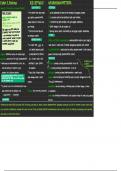
EXAM 2 Review RECEPTORS ! NEUROTRANSMITTERS
Chapter 4 The of behavior (Blochem ) ! I N TR PIC CRITERIA
chemistry
:
>
- lon channels that when bound 1) can be synthesized and stored in axon terminals of presynaptic neurons
Soups vs . Sparks :
,
soups-chemicals crossed the
by a specific neurotransmitter, It
2)
is released when action potentials reach axon terminals
synaptic cleft
change shape to let certain lons 3 is recognized by specific receptors on the post synaptic membrane
sparks electrical signals crossed
=
the synaptic cleft
. 4) causes changes
pass through. in the post synaptic cell
Otto Loewi : won 1936 nobel prize >
-
these are the most efficient 5) blocking release inhibits functionality of both pre/post synaptic membranes
for proving"soups" was the answer
stimulated a frog heart to TYPES
↳ he lon transport channels
to organs .
pump a nutrient solution
It worked proving "soups" and
,
METAB TR PIC
Amino acid/peptide neurotransmitters : Heurotransmitters made up of a single /or
discovered acetylcholine . >
-
a receptor that s
not an small chain of amino acids. Examples : acetylcholine dopamine and
, ,
serotonin
lon channel meaning when gas neurotransmitters soluble gases that diffuse between neurons to alter ongoing
:
,
exogenous substances outside the body (drugs) a neurotransmitter attaches processes (and defy many neurotransmitter criterial
:
endogenous :
substances in the body (neurotrasmitter) to it it must send a 2nd
,
SPECIFICS
&
all acid
Eutamate
amino
messenger to open specific
↳ both
drugs and neurotransmitters effect the primary excitatory neurotransmitter the CNs
:
in or amine
IPSP neurotransmitters
to receptors on
brain by binding post con channels. GABA : primary inhibitory neurotransmitterIn the CNS
>
-
synaptic cells , affecting behavior. these allow a slower response Acetylcholine primary excitatory
:
neurotransmitter in smooth muscle
Electrochemical process involves electricity
moving down the axon ,
thus releasing chems .
While conotropic allows a faster Dopamine
:
can be excitatory and inhibitory based on receptor subtypes and ,
is the
into the synaptic cleft.
response "Feel good" neurotransmitter.
>
-
have
2 processes occur once neurotransmitters Norepinephrine : can be excitatory or inhibitory based on receptor subtype ,
is known
*
been released into the synaptic cleft. Glycine PNS inhibitory transmitter adrenaline
:
as
1) degredation 2) Reuptake like mood ,
serotonin : an inhibitory neurotransmitter that regulates things sleep appetite
,
SUMMARY pain , etc.
Substances bothInside (endo) and outside (exo) of the body can affect our mental function. Neurotransmitted (endogenous substances) can bind to conotropic receptors which allow
a fast reaction or metabotropic receptors that cause slow ones. There are multiple different neurotransmitters that can cause all sorts of inhibitory or excitatory neural signaling ,
which causes our overall brain function .
, AN A IDD)
RECEPTOR TYPES RECEPTOR BINDING NTAGONISTS/ANTAGONISTS
DIRECT AGONISTS : binds to
GLUTAMATE :
AMPA/NMDA conotropic receptors specific receptors GLUTAMATE :
EPSP In CNS
↳ AMPA by mimicking endogenous neurotransmitten and Agonist NMDA
:
receptors are the most plentiful in
the brain but NMDA receptors play a
key directly affects the response of postsynaptic cell .
Antagonist alcohol/hallucinogens
:
DIRECT ANTAGONISTS :
binds to specific receptor GABD IPSP CNS
learning/memory
:
role in the excitation of In
GABAD (iono) GABAB (metal and occupies receptor sites directly block GDBDa agonist benzos barbituates , steroids
to
any
:
GABD :
,
,
↳
GABAP receptors mediate excitability in correct neurotransmitter to the postsynaptic cell. GABA a antagonist picrotoxin (induces seizures)
:
EXAMPLE TETRODOTOXIN GDBAB agonist baclofen (muscle relaxant
: :
the brain to prevent seizures.
E
↳
diff blocks Nat channels from allowing Nat to GLYCINE :
IPSP In PNS
GABAB is also
inhibitory but via a .
mechanism (slower) cross the BBB and prevents transmission Antagonist Strychnine (convulsions)
:
,
causes
# GABA) Glutamate In the PNS. lock jaw and inhibits GDBA release
receptors are the only ones
we need to know + Serotonin 51-Treceptor
for mood regulation but ,
no other will be
tested . EFFECTS ON NEURO -
T
AGONISTS Increases the effects of neurotransmitter
:
on a post-synaptic cell (MORE inhibitory/excitatory
ANTAGONISTS :
decreases the effects of a
neurotransmitter on a post-synaptic cell
CLESS inhibitory / excitatory
SUMMARY
Amino acids are the most common neurotransmitters and serve as building blocks for proteins. The 3 main ones areolutamate , gaba and glycine . Each
,
receptor has either an agonist (that increases the NTS effect) or an antagonist (that prevents the effect of specific NTs).
Chapter 4 The of behavior (Blochem ) ! I N TR PIC CRITERIA
chemistry
:
>
- lon channels that when bound 1) can be synthesized and stored in axon terminals of presynaptic neurons
Soups vs . Sparks :
,
soups-chemicals crossed the
by a specific neurotransmitter, It
2)
is released when action potentials reach axon terminals
synaptic cleft
change shape to let certain lons 3 is recognized by specific receptors on the post synaptic membrane
sparks electrical signals crossed
=
the synaptic cleft
. 4) causes changes
pass through. in the post synaptic cell
Otto Loewi : won 1936 nobel prize >
-
these are the most efficient 5) blocking release inhibits functionality of both pre/post synaptic membranes
for proving"soups" was the answer
stimulated a frog heart to TYPES
↳ he lon transport channels
to organs .
pump a nutrient solution
It worked proving "soups" and
,
METAB TR PIC
Amino acid/peptide neurotransmitters : Heurotransmitters made up of a single /or
discovered acetylcholine . >
-
a receptor that s
not an small chain of amino acids. Examples : acetylcholine dopamine and
, ,
serotonin
lon channel meaning when gas neurotransmitters soluble gases that diffuse between neurons to alter ongoing
:
,
exogenous substances outside the body (drugs) a neurotransmitter attaches processes (and defy many neurotransmitter criterial
:
endogenous :
substances in the body (neurotrasmitter) to it it must send a 2nd
,
SPECIFICS
&
all acid
Eutamate
amino
messenger to open specific
↳ both
drugs and neurotransmitters effect the primary excitatory neurotransmitter the CNs
:
in or amine
IPSP neurotransmitters
to receptors on
brain by binding post con channels. GABA : primary inhibitory neurotransmitterIn the CNS
>
-
synaptic cells , affecting behavior. these allow a slower response Acetylcholine primary excitatory
:
neurotransmitter in smooth muscle
Electrochemical process involves electricity
moving down the axon ,
thus releasing chems .
While conotropic allows a faster Dopamine
:
can be excitatory and inhibitory based on receptor subtypes and ,
is the
into the synaptic cleft.
response "Feel good" neurotransmitter.
>
-
have
2 processes occur once neurotransmitters Norepinephrine : can be excitatory or inhibitory based on receptor subtype ,
is known
*
been released into the synaptic cleft. Glycine PNS inhibitory transmitter adrenaline
:
as
1) degredation 2) Reuptake like mood ,
serotonin : an inhibitory neurotransmitter that regulates things sleep appetite
,
SUMMARY pain , etc.
Substances bothInside (endo) and outside (exo) of the body can affect our mental function. Neurotransmitted (endogenous substances) can bind to conotropic receptors which allow
a fast reaction or metabotropic receptors that cause slow ones. There are multiple different neurotransmitters that can cause all sorts of inhibitory or excitatory neural signaling ,
which causes our overall brain function .
, AN A IDD)
RECEPTOR TYPES RECEPTOR BINDING NTAGONISTS/ANTAGONISTS
DIRECT AGONISTS : binds to
GLUTAMATE :
AMPA/NMDA conotropic receptors specific receptors GLUTAMATE :
EPSP In CNS
↳ AMPA by mimicking endogenous neurotransmitten and Agonist NMDA
:
receptors are the most plentiful in
the brain but NMDA receptors play a
key directly affects the response of postsynaptic cell .
Antagonist alcohol/hallucinogens
:
DIRECT ANTAGONISTS :
binds to specific receptor GABD IPSP CNS
learning/memory
:
role in the excitation of In
GABAD (iono) GABAB (metal and occupies receptor sites directly block GDBDa agonist benzos barbituates , steroids
to
any
:
GABD :
,
,
↳
GABAP receptors mediate excitability in correct neurotransmitter to the postsynaptic cell. GABA a antagonist picrotoxin (induces seizures)
:
EXAMPLE TETRODOTOXIN GDBAB agonist baclofen (muscle relaxant
: :
the brain to prevent seizures.
E
↳
diff blocks Nat channels from allowing Nat to GLYCINE :
IPSP In PNS
GABAB is also
inhibitory but via a .
mechanism (slower) cross the BBB and prevents transmission Antagonist Strychnine (convulsions)
:
,
causes
# GABA) Glutamate In the PNS. lock jaw and inhibits GDBA release
receptors are the only ones
we need to know + Serotonin 51-Treceptor
for mood regulation but ,
no other will be
tested . EFFECTS ON NEURO -
T
AGONISTS Increases the effects of neurotransmitter
:
on a post-synaptic cell (MORE inhibitory/excitatory
ANTAGONISTS :
decreases the effects of a
neurotransmitter on a post-synaptic cell
CLESS inhibitory / excitatory
SUMMARY
Amino acids are the most common neurotransmitters and serve as building blocks for proteins. The 3 main ones areolutamate , gaba and glycine . Each
,
receptor has either an agonist (that increases the NTS effect) or an antagonist (that prevents the effect of specific NTs).


