APGO 13 Postpartum Care
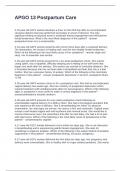
A 23-year-old G1P1 woman develops a fever on the third day after an uncomplicated
cesarean delivery that was performed secondary to arrest of descent. The only
significant finding on physical exam is moderate breast engorgement and mild uterine
fundal tenderness. What is the most likely diagnosis of this patient? - answer
postpartum fever mcc is endometritis
A 34-year-old G4P4 woman presents with a fever three days after a cesarean delivery.
On examination, her incision is healing well, and she has notable fundal tenderness.
Which of the following is the most likely cause of her symptoms? - answer staph and
strep, mix of anaerobic and aerobic
A 45-year-old G2P2 woman presents for a six-week postpartum check. She reports
crying spells, loss of appetite, difficulty sleeping and a feeling of low self-worth that
began one week after her delivery. She denies any suicidal or homicidal ideations. She
is frustrated because she has not been able to breastfeed and feels that she is a bad
mother. She has a previous history of anxiety. Which of the following is the most likely
diagnosis in this patient? - answer postpartum depression 2 wk-6mo, postpartum blues
<2 wk
A 35-year-old G4P3 woman comes in for a postpartum visit. She had an uncomplicated
vaginal delivery two weeks ago. She has a history of postpartum depression which
required treatment with antidepressants after her last pregnancy. Which of the following
signs or symptoms is most useful to make a correct diagnosis in this patient? -
answerambivalence towards newborn
A 28-year-old G2P2 presents for a six-week postpartum check following an
unremarkable vaginal delivery of a 3000 g infant. She had a first-degree laceration that
was repaired at the time of delivery. She is breastfeeding her infant. On physical
examination, her vital signs are normal. Her uterus is firm and nontender. Vaginal exam
reveals a well healed vagina with mild erythema and minimal lochia. She would like to
resume intercourse soon, but remembers that after her last baby, she had a lot of pain
with intercourse. Which of the following is the most likely cause of dyspareunia in this
patient? - answeratrophic vaginitis
A 17-year-old G1P1 female delivered a term infant two days ago. She is not interested
in breastfeeding and is experiencing painful breast engorgement. She asks for
something to suppress lactation. Which of the following is the safest method of lactation
suppression in this patient? - answerbreast binding, ice packs, analgesics
A 27-year-old G1P1 woman delivered her first baby two days ago. Her pregnancy and
delivery were unremarkable. She is healthy with no major medical problems. She wants
A 23-year-old G1P1 woman develops a fever on the third day after an uncomplicated
cesarean delivery that was performed secondary to arrest of descent. The only
significant finding on physical exam is moderate breast engorgement and mild uterine
fundal tenderness. What is the most likely diagnosis of this patient? - answer
postpartum fever mcc is endometritis
A 34-year-old G4P4 woman presents with a fever three days after a cesarean delivery.
On examination, her incision is healing well, and she has notable fundal tenderness.
Which of the following is the most likely cause of her symptoms? - answer staph and
strep, mix of anaerobic and aerobic
A 45-year-old G2P2 woman presents for a six-week postpartum check. She reports
crying spells, loss of appetite, difficulty sleeping and a feeling of low self-worth that
began one week after her delivery. She denies any suicidal or homicidal ideations. She
is frustrated because she has not been able to breastfeed and feels that she is a bad
mother. She has a previous history of anxiety. Which of the following is the most likely
diagnosis in this patient? - answer postpartum depression 2 wk-6mo, postpartum blues
<2 wk
A 35-year-old G4P3 woman comes in for a postpartum visit. She had an uncomplicated
vaginal delivery two weeks ago. She has a history of postpartum depression which
required treatment with antidepressants after her last pregnancy. Which of the following
signs or symptoms is most useful to make a correct diagnosis in this patient? -
answerambivalence towards newborn
A 28-year-old G2P2 presents for a six-week postpartum check following an
unremarkable vaginal delivery of a 3000 g infant. She had a first-degree laceration that
was repaired at the time of delivery. She is breastfeeding her infant. On physical
examination, her vital signs are normal. Her uterus is firm and nontender. Vaginal exam
reveals a well healed vagina with mild erythema and minimal lochia. She would like to
resume intercourse soon, but remembers that after her last baby, she had a lot of pain
with intercourse. Which of the following is the most likely cause of dyspareunia in this
patient? - answeratrophic vaginitis
A 17-year-old G1P1 female delivered a term infant two days ago. She is not interested
in breastfeeding and is experiencing painful breast engorgement. She asks for
something to suppress lactation. Which of the following is the safest method of lactation
suppression in this patient? - answerbreast binding, ice packs, analgesics
A 27-year-old G1P1 woman delivered her first baby two days ago. Her pregnancy and
delivery were unremarkable. She is healthy with no major medical problems. She wants