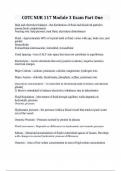
COTC NUR 117 Module 3 Exam Part One
fluid and electrolyte balance - the distribution of fluid and dissolved particles among body compartments Nursing role: help prevent; treat fluid, electrolyte disturbances Fluid - Approximately 60% of typical adult is fluid, varies with age, body size, and gender Intracellular Extracellular-intravascular, interstitial, transcellular Third Spacing - loss of ECF into space that does not contribute to equilibrium Electrolytes - Active chemicals that carry positive (cations), negative (anions) electrical charges. Major Cations - sodium, potassium, calcium, magnesium, hydrogen ions Major Anions - chloride, bicarbonate, phosphate, sulfate, proteinate ions electrolyte concentration - 1) controlled by hormones[made in kidney and adrenal glands] 2) thirst is stimulated to balance electrolyte imbalance due to dehydration Fluid Regulation - Movement of fluid through capillary walls depends on: hydrostatic pressure Osmotic pressure Hydrostatic pressure - the pressure within a blood vessel that tends to push water out of the vessel Osmotic Pressure - Pressure exerted by protein in plasma Fluid movement - Depends on differences in hydrostatic and osmotic pressure Edema - Abnormal accumulation of fluid in interstitial spaces of tissues. Develops with changes in normal hydrostatic pressure differences. Osmosis - Area of low solute concentration to area of high solute concentration Diffusion - Solutes move from area of higher concentration to one of lower concentration Filtration - Movement of water, solutes occurs from area of high hydrostatic pressure to area of low hydrostatic pressure Active Transport - Physiologic pump that moves fluid from area of lower concentration of one of higher concentration. Movement against concentration gradient sodium-potassium pump - Active transport that maintains higher concentration of extracellular sodium, intracellular potassium Requires adenosine (ATP) for energy Fluids Gains routes - Dietary intake of fluid, food or enteral feeding parental fluids Fluid losses routes - Kidney: urine output Skin losses: sensible, insensible Lungs GI tract other Hormones that regulate fluid balance - Aldosterone Antidiuretic hormone (ADH) Natriuretic peptides (NP) Gerontologic Consideration Fluid Electrolyte Balance - Reduced homeostatic mechanisms: cardiac, renal, respiratory function Decreased body fluid percentage Medication uses Presence of concomitant conditions Fluid volume Imbalances - Fluid volume deficit (FVD): hypovolemia Fluid volume excess (FVE): hypervolemia Fluid Volume Deficit (FVD) - - Loss of extracellular fluid exceeds intake ratio of water - Electrolytes lost in same proportion as they exist in normal body fluids - Dehydration: loss of water along with increased serum sodium level - May occur in combination with other imbalances - lost in blood and interstitual compartments Causes of Dehydration - fluid loss from vomiting, diarrhea, GI suctioning, sweating, decreased intake, inability to gain access to fluid Risk factors for Fluid Volume Deficit - diabetes insipidus, adrenal insufficiency, osmotic diuresis, hemorrhage, coma, third-space shifts Dehydration - fluid intake of the body is not sufficient to meet the fluid needs of the body, results in fluid volume deficit considerations for older adults Manifestations of Fluid Volume Deficit - rapid weight loss, decreased skin turgor, oliguria, concentrated urine, postural hypotension, rapid weak pulse, increased temperature, cool clammy skin due to vasoconstriction, lassitude, thirst, nausea, muscle weakness, cramps Laboratory Data Fluid Volume Deficits - Elevated BUN in relation to serum creatinine, increased hematocrit Serum electrolyte changes may occur Medical management for fluid volume deficit - Oral fluids IV solutions Interventions for dehydrations - Patient Safety Fluid Replacement Drug Therapy Nursing Management Fluid Volume Management - I&O, daily weight, vital signs Monitor for symptoms: skin and tongue turgor, mucosa, urine output, mental status Measures to minimize fluid loss oral care Administration of oral fluids Administration of parenteral fluids Fluid Volume Excess - Due to fluid overload or diminished homeostatic mechanisms Risk factors for Fluid Volume Excess - heart failure, renal failure, cirhosis of liver Contributing factors Fluid Volume Excess - excessive dietary sodium or sodiumcontaining IV solutions Manifestations of Fluid Volume Excess - edema, distended neck veins, abnormal lung sounds, tachycardia, increased BP pulse presure and CVP, increased weight, increased urinary output, SOB, wheezing Medical management of fluid volume excess - directed at cause, restriction of fluids and sodium, administration of diuretics Nursing Management of fluid volume excess - I&O and daily weights; assess lung sounds, edema, other symptoms Monitor responses to medications-diuretics Promote adherence to fluid restrictions, patient teaching related to sodium and fluid restrictions Monitor, avoid sources of excessive sodium, including medications Promote rest Semi-fowlers position for orthopnea Skin care and positioning/turning Electrolyte Imbalances - change in labs, change in lOC, neuro functions, cardiac arrhythmias, VS changes Hyponatremia - low sodium in the blood Serum sodium <135 mEq/L Hypernatremia - high sodium Serum Sodium >145 mEq/L hypokalemia - low potassium serum levels <3.5 hyperkalemia - high potassium serum levels >5 Hypocalcemia - Low Calcium Serum level <8.6 mg/dL and must be considered in conjunction with serum albumin level hypercalcemia - High calcium muscle weakness, lack of coordination, abdominal pain, confusion, absent tendon reflexes, shallow respirations, emergency! Hypomagnesemia - Serum magnesium level lower than 1.3 mg/dL evaluate in conjunction with serum levels of albumin Hypermagnesemia - A serum magnesium level that exceeds 2.6 mg/dL. Hypophosphatemia - serum phosphorous level that is LESS than 2.7 mg/dL Hyperphosphatemia - a serum phosphorus level that exceeds 4.5 mg/dL Hypochloremia - low chloride Hyperchoremia - High chloride occurs with hyperatremia or bicarbonate deficit -usually secondary to pathophysiologic processes -managed by treating underlying disorders Hyponatremia causes - adrenal insufficiency, water intoxication, SIADH or losses by vomiting, diarrhea, sweating, diuretics Manifestations of Hyponatremia - Poor skin turgor, dry mucosa, headache, nausea/vomiting, decreased salivation, decreased BP, abdominal cramping and neurological changes Medical Management of Hyponatremia - Water Restriction, sodium replacement Nursing Management hyponatremia - assessment and prevention, dietary sodium and fluid intake, identify and monitor at-risk patients, effects of medications (diuretics, lithium) Causes of Hypernatremia - excess water loss, excess sodium administration, diabetes insipidus, heat stroke, hypertonic IV solutions Manifestations of Hypernatremia - thirst; elevated temperature; dry, swollen tongue; sticky mucosa; neurologic symptoms; restlessness; weakness Note for thirst - thirst may be impaired in elderly or the ill Nursing management of hypernatremia - assessment and prevention, assess for OTC sources of sodium, offer and encourage fluids to meet patient needs, provide sufficient water with tube feedings Causes of hypokalemia - GI losses, medications, alterations of acid-base balance, hyperaldosterism, poor dietary intake Manifestations of hypokalemia - fatigue, anorexia, nausea, vomiting, dysrhythmias, muscle weakness and cramps, paresthesias, glucose intolerance, decreased muscle strength, DTRs Medical management of hypokalemia - increased dietary potassium, potassium replacement, IV for severe deficit Nursing management of hypokalemia - assessment, severe hypokalemia is lifethreatening, monitor ECG and ABGs, dietary potassium, nursing care related to IV potassium administration Causes of Hyperkalemia - usually treatment related, impaired renal function, hypoaldosteronism, tissue trauma, acidosis Manifestation of hyperkalemia - cardiac changes and dysrhythmias, muscle weakness with potential respiratory impairment, paresthesias, anxiety, GI manifestations Medical management of hyperkalemia - Monitor ECG, limitation of dietary potassium, cation-exchange resin (Kayexalate), Intravenous sodium bicarbonate, calcium gluconate, regular insulin and hypertonic dextrose Intravenous , beta-2 agonists, dialysis Nursing management of hyperkalemia - assessment of serum potassium levels, mix IVs containing K+ well, monitor medication affects, dietary potassium restriction/dietary teaching for patients at risk False lab results from - hemolysis of blood specimen or drawing blood above IV site Salt substitutes and medications - may contain potassium K+ Potassium sparing diuretics may cause... - elevation of serum potassium, and should not be used in patients with renal dysfunction Causes of Hypocalcemia - hypoparathyroidism, malabsorption, pancreatitis, alkalosis, massive transfusion of citrated blood, renal failure, medications, other Manifestations of Hypocalcemia - tetany, circumoral numbness, paresthesias, hyperactive DTRs, Trousseau's sign, Chovstek's sign, seizures, respiratory symptoms of dyspnea and laryngospasm, abnormal clotting, anxiety Medical management of hypocalcemia - IV of calcium gluconate, calcium and vitamin D supplements; diet Nursing management of hypocalcemia - assessment, severe hypocalcemia is lifethreatening, weight-bearing exercises to decrease bone calcium loss, patient teaching related to diet and medications, and nursing care related to IV calcium administration Trousseau's sign - A sign of hypocalcemia . Carpal spasm caused by inflating a blood pressure cuff above the client's systolic pressure and leaving it in place for 3 minutes. Chvostek's sign - Cheek, facial spasm when Cheek is tapped associates with hypocalcemia Causes of hypercalcemia - malignancy and hyperparathyroidism, bone loss related to immobility Manifestations of hypercalcemia - muscle weakness, incoordination, anorexia, constipation, nausea and vomiting, abdominal and bone pain, polyuria, thirst, ECG changes, dysrhythmias Medical management of hypercalcemia - treat underlying cause, fluids, furosemide, phosphates, calcitonin, biphosphonates Nursing management of hypercalcemia - assessment, hypercalcemic crisis has high mortality, encourage ambulation, fluids of 3 to 4 L/d, provide fluids containing sodium unless contraindicated, fiber for constipation, ensure safety causes of hypomagnesemia - alcoholism, GI losses, enteral or parenteral feeding deficient in magnesium, medications, rapid administration of citrated blood; contributing causes include diabetic ketoacidosis, sepsis, burns, hypothermia Manifestations of hypomagnesemia - neuromuscular irritability, muscle weakness, tremors, athetoid movements, ECG changes and dysrhythmias, alterations in mood and level of consciousness Nursing management hypomagnesemia - assessment, ensure safety, patient teaching related to diet, medications, alcohol use, and nursing care related to IV magnesium sulfate hypomagnesemia often accompanied by... - Hypocalcemia. need to monitor and treat potential hypocalcemia Dysphagia common in... - magnesium-depleted patients Assess ability to swallow with water prior to administering food or medications causes of hypermagnesemia - renal failure, diabetic ketoacidosis, excessive administration of magnesium manifestations of hypermagnesemia - flushing, lowered BP, nausea, vomiting, hypoactive reflexes, drowsiness, muscle weakness, depressed respirations, ECG changes, dysrhythmias Medical management hypermagnesemia - IV calcium gluconate, loop diuretics, IV NS of RL, hemodialysis Nursing management of hypermagnesemia - assessment, do not administer medications containing magnesium, patient teaching regarding magnesiumcontaining OTC medications Causes of hypophosphatemia - alcoholism, refeeding of patients after starvation, pain, heat stroke, respiratory alkalosis, hyperventilation, diabetic ketoacidosis, hepatic encephalopathy, major burns, hyperparathyroidism, low magnesium, low potassium, diarrhea, vitamin D deficiency, use of diuretic and antacids manifestations of hypophosphatemia - neurologic symptoms, confusion, muscle weakness, tissue hypoxia, muscle and bone pain, increased susceptibility to infection
Written for
- Institution
- Air Methods Medications
- Course
- Air Methods Medications
Document information
- Uploaded on
- December 30, 2024
- Number of pages
- 17
- Written in
- 2024/2025
- Type
- Exam (elaborations)
- Contains
- Questions & answers
Subjects
- cotc
- nur 117
- cotc nur 117 module 3
-
cotc nur 117 module 3 exam part one

Also available in package deal