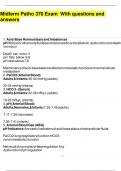
Midterm Patho 370 Exam With questions and
answers
1. Acid-Base Homeostasis and Imbalances jl jl jl
pH:If blood or other body fluids become too acidic or too alkalotic, dysfunction and death
jl jl jl jl jl jl jl jl jl jl jl jl jl jl jl
can occur
jl jl
Death can occur if jl jl jl
pH falls below 6.9
jl jl jl jl
pH rises above 7.8
jl jl jl jl
Maintenance of acid-base balance reflects homeostatic functions of normal cellular jl jl jl jl jl jl jl jl jl
metabolism
jl
2. PaCO2 (Arterial Blood) jl jl
Adults & Infants: 36-44 mmHg (adults) jl jl jl jl jl
30-34 mmHg (infants) jl jl
3. HCO 3 - (Serum) jl jl jl
Adults & Infants: 22-26 mRq/L (adults) jl jl jl jl jl
19-23 mRq/L (infants) jl jl
4. pH (Arterial Blood) jl jl
Adults,Neonates,& Infants:7.35-7.45 (adults) jl jl jl jl jl
jl 7.11-7.36 (neonates) jl
7.36-7.41 (infants) jl
5. Arterial Blood Gas (ABG) jl jl jl
pH Indicators:Are useful indicators of acid-base status of extracellular fluids.
jl jl jl jl jl jl jl jl jl jl
PaCO2:lung(respiratory)function HCO3: jl jl jl jl
renal (metabolic) function
jl jl jl
Net result of normal acid-base regulation Any
jl jl jl jl jl jl
dysfunction of pH regulation
jl jl jl jl
jl jl
,Body's compensatory responses
jl jl
Does not reflect pH inside the cell or cerebrospinal fluid
jl jl jl jl jl jl jl jl jl
6. What are the 3 major mechanisms that regulate acid-base statuses of the
jl jl jl jl jl jl jl jl jl jl jl
body?: Buffers
jl jl
Respiratory System jl
Renal System
jl jl
jl jl
, 7. What is the 1st line of defense? jl jl jl jl jl jl
What chemicals help control pH of body fluids?:Buffer System First
jl jl jl jl jl jl jl jl jl jl
line of defense against pH changes in all body fluids.
jl jl jl jl jl jl jl jl jl jl
Base:bicarbonate ions (HCO3-) takes up hydrogen when fluid is too acidic
jl jl jl jl jl jl jl jl jl jl jl
Weakacid:carbonicacid(H2CO3)releasehydrogenionswhenafluidistooalkaline
jl jl jl jl jl jl jl jl jl jl jl jl jl
8. What are the 4 types of Buffers?:Bicarbonate buffers jl jl jl jl jl jl jl jl
Phosphate buffers
jl jl
Hemoglobinbuffers jl
Protein buffers
jl jl
9. What is the Primary Defense against acid-base disorders?:Bicarbonate
jl jl jl jl jl jl jl jl
Buffer System
jl jl
Most Important buffer in extracellular fluid (ECF)
jl jl jl jl jl jl
Compents
H2O + CO‚ H2CO3 Hz + HCO3- jl jl jl j l jl jl
10. Respiratory Contribution:PaCO2 level jl jl jl
Indicates how effectively the respiratory system is excreting carbonic acid Respiratory
jl jl jl jl jl jl jl jl jl jl
response
jl
The lungs can excrete only carbonic acid;they cannot excrete nonvolatile acids
jl jl jl jl jl jl jl jl jl jl jl
Lactic acid and acetoacetic acid:nonvolatile acids
jl jl jl jl jl jl
Metabolic response (compensatory)
jl jl jl
11. What is the Respiratory Acidosis Response?:Stimulus - Increased PaCO2;
jl jl jl jl jl jl jl jl jl
Decreased pH
jl jl
RR - Hnyperventilation
jl jl
Result - Correction of imbalance jl jl jl jl
12. WhatistheRespiratoryAlkalosisResponse?: Stimulus-DecreasedPaCO2; jl jl jl jl jl jl jl jl jl
Increased pH
jl jl
RR - Hypoventilation
jl jl
Result - Correction of imbalance jl jl jl jl
jl jl
answers
1. Acid-Base Homeostasis and Imbalances jl jl jl
pH:If blood or other body fluids become too acidic or too alkalotic, dysfunction and death
jl jl jl jl jl jl jl jl jl jl jl jl jl jl jl
can occur
jl jl
Death can occur if jl jl jl
pH falls below 6.9
jl jl jl jl
pH rises above 7.8
jl jl jl jl
Maintenance of acid-base balance reflects homeostatic functions of normal cellular jl jl jl jl jl jl jl jl jl
metabolism
jl
2. PaCO2 (Arterial Blood) jl jl
Adults & Infants: 36-44 mmHg (adults) jl jl jl jl jl
30-34 mmHg (infants) jl jl
3. HCO 3 - (Serum) jl jl jl
Adults & Infants: 22-26 mRq/L (adults) jl jl jl jl jl
19-23 mRq/L (infants) jl jl
4. pH (Arterial Blood) jl jl
Adults,Neonates,& Infants:7.35-7.45 (adults) jl jl jl jl jl
jl 7.11-7.36 (neonates) jl
7.36-7.41 (infants) jl
5. Arterial Blood Gas (ABG) jl jl jl
pH Indicators:Are useful indicators of acid-base status of extracellular fluids.
jl jl jl jl jl jl jl jl jl jl
PaCO2:lung(respiratory)function HCO3: jl jl jl jl
renal (metabolic) function
jl jl jl
Net result of normal acid-base regulation Any
jl jl jl jl jl jl
dysfunction of pH regulation
jl jl jl jl
jl jl
,Body's compensatory responses
jl jl
Does not reflect pH inside the cell or cerebrospinal fluid
jl jl jl jl jl jl jl jl jl
6. What are the 3 major mechanisms that regulate acid-base statuses of the
jl jl jl jl jl jl jl jl jl jl jl
body?: Buffers
jl jl
Respiratory System jl
Renal System
jl jl
jl jl
, 7. What is the 1st line of defense? jl jl jl jl jl jl
What chemicals help control pH of body fluids?:Buffer System First
jl jl jl jl jl jl jl jl jl jl
line of defense against pH changes in all body fluids.
jl jl jl jl jl jl jl jl jl jl
Base:bicarbonate ions (HCO3-) takes up hydrogen when fluid is too acidic
jl jl jl jl jl jl jl jl jl jl jl
Weakacid:carbonicacid(H2CO3)releasehydrogenionswhenafluidistooalkaline
jl jl jl jl jl jl jl jl jl jl jl jl jl
8. What are the 4 types of Buffers?:Bicarbonate buffers jl jl jl jl jl jl jl jl
Phosphate buffers
jl jl
Hemoglobinbuffers jl
Protein buffers
jl jl
9. What is the Primary Defense against acid-base disorders?:Bicarbonate
jl jl jl jl jl jl jl jl
Buffer System
jl jl
Most Important buffer in extracellular fluid (ECF)
jl jl jl jl jl jl
Compents
H2O + CO‚ H2CO3 Hz + HCO3- jl jl jl j l jl jl
10. Respiratory Contribution:PaCO2 level jl jl jl
Indicates how effectively the respiratory system is excreting carbonic acid Respiratory
jl jl jl jl jl jl jl jl jl jl
response
jl
The lungs can excrete only carbonic acid;they cannot excrete nonvolatile acids
jl jl jl jl jl jl jl jl jl jl jl
Lactic acid and acetoacetic acid:nonvolatile acids
jl jl jl jl jl jl
Metabolic response (compensatory)
jl jl jl
11. What is the Respiratory Acidosis Response?:Stimulus - Increased PaCO2;
jl jl jl jl jl jl jl jl jl
Decreased pH
jl jl
RR - Hnyperventilation
jl jl
Result - Correction of imbalance jl jl jl jl
12. WhatistheRespiratoryAlkalosisResponse?: Stimulus-DecreasedPaCO2; jl jl jl jl jl jl jl jl jl
Increased pH
jl jl
RR - Hypoventilation
jl jl
Result - Correction of imbalance jl jl jl jl
jl jl