1
Some Substitution Methods and Exact Equations
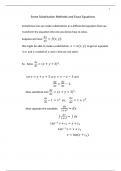
Sometimes one can make substitutions in a differential equation that can
transform the equation into one you know how to solve.
𝑑𝑦
Suppose we have: = 𝑓(𝑥, 𝑦).
𝑑𝑥
We might be able to make a substitution 𝑣 = 𝛼(𝑥, 𝑦) to get an equation
in 𝑣 and 𝑥 instead of 𝑦 and 𝑥 that we can solve.
𝑑𝑦
Ex. Solve = (𝑥 + 𝑦 + 3)2 .
𝑑𝑥
Let 𝑣 = 𝑥 + 𝑦 + 3 so 𝑦 = 𝑣 − 𝑥 − 3 and
𝑑𝑦 𝑑𝑣
= − 1.
𝑑𝑥 𝑑𝑥
𝑑𝑦
Now substitute into = (𝑥 + 𝑦 + 3)2 :
𝑑𝑥
𝑑𝑣 𝑑𝑣
−1 = 𝑣 2 so, = 1 + 𝑣2 .
𝑑𝑥 𝑑𝑥
𝑑𝑣
Now separate the variables: = 𝑑𝑥
1+𝑣 2
𝑑𝑣
∫ 1+𝑣2 = ∫ 𝑑𝑥
tan−1 𝑣 + 𝑐1 = 𝑥 + 𝑐2
tan−1 𝑣 = 𝑥 + 𝑐3
𝑣 = tan(𝑥 + 𝑐3 ).
, 2
𝑣 = 𝑥 + 𝑦 + 3 so,
𝑥 + 𝑦 + 3 = tan(𝑥 + 𝑐3 )
or 𝑦 = tan(𝑥 + 𝑐3 ) − 𝑥 − 3.
𝑑𝑦
So differential equations of the form = 𝐹(𝑎𝑥 + 𝑏𝑦 + 𝑐) can be
𝑑𝑥
transformed into separable equations by making the substitution
𝑣 = 𝑎𝑥 + 𝑏𝑦 + 𝑐.
Homogeneous Equations
𝑓(𝑥, 𝑦) is a homogeneous function if 𝑓(𝑡𝑥, 𝑡𝑦) = 𝑓(𝑥, 𝑦).
𝑥2 +2𝑦2
Ex. 𝑓(𝑥, 𝑦) = is homogeneous since:
3𝑥2 −5𝑥𝑦
(𝑡𝑥)2 +2(𝑡𝑦)2 𝑡2 (𝑥2 +2𝑦2 ) 𝑥2 +2𝑦2
𝑓(𝑡𝑥, 𝑡𝑦) = 2 = = = 𝑓(𝑥, 𝑦).
3(𝑡𝑥) −5(𝑡𝑥)(𝑡𝑦) 𝑡2 (3𝑥2 −5𝑥𝑦) 3𝑥2 −5𝑥𝑦
𝑦
Another way of saying this is that we can write 𝑓 (𝑥, 𝑦) = 𝐹( ).
𝑥
𝑦2 𝑦 2
𝑥2 +2𝑦2 𝑥2 (1+2 2 ) (1+2(𝑥) )
𝑥
Ex. 𝑓(𝑥, 𝑦) = = 𝑦 = 𝑦
3𝑥2 −5𝑥𝑦 2
𝑥 (3−5(𝑥)) 3−5(𝑥)
𝑦 1+2𝑣2
So if 𝑣 = , 𝑓(𝑥, 𝑦) = 𝐹 (𝑣) = .
𝑥 3−5𝑣
Some Substitution Methods and Exact Equations
Sometimes one can make substitutions in a differential equation that can
transform the equation into one you know how to solve.
𝑑𝑦
Suppose we have: = 𝑓(𝑥, 𝑦).
𝑑𝑥
We might be able to make a substitution 𝑣 = 𝛼(𝑥, 𝑦) to get an equation
in 𝑣 and 𝑥 instead of 𝑦 and 𝑥 that we can solve.
𝑑𝑦
Ex. Solve = (𝑥 + 𝑦 + 3)2 .
𝑑𝑥
Let 𝑣 = 𝑥 + 𝑦 + 3 so 𝑦 = 𝑣 − 𝑥 − 3 and
𝑑𝑦 𝑑𝑣
= − 1.
𝑑𝑥 𝑑𝑥
𝑑𝑦
Now substitute into = (𝑥 + 𝑦 + 3)2 :
𝑑𝑥
𝑑𝑣 𝑑𝑣
−1 = 𝑣 2 so, = 1 + 𝑣2 .
𝑑𝑥 𝑑𝑥
𝑑𝑣
Now separate the variables: = 𝑑𝑥
1+𝑣 2
𝑑𝑣
∫ 1+𝑣2 = ∫ 𝑑𝑥
tan−1 𝑣 + 𝑐1 = 𝑥 + 𝑐2
tan−1 𝑣 = 𝑥 + 𝑐3
𝑣 = tan(𝑥 + 𝑐3 ).
, 2
𝑣 = 𝑥 + 𝑦 + 3 so,
𝑥 + 𝑦 + 3 = tan(𝑥 + 𝑐3 )
or 𝑦 = tan(𝑥 + 𝑐3 ) − 𝑥 − 3.
𝑑𝑦
So differential equations of the form = 𝐹(𝑎𝑥 + 𝑏𝑦 + 𝑐) can be
𝑑𝑥
transformed into separable equations by making the substitution
𝑣 = 𝑎𝑥 + 𝑏𝑦 + 𝑐.
Homogeneous Equations
𝑓(𝑥, 𝑦) is a homogeneous function if 𝑓(𝑡𝑥, 𝑡𝑦) = 𝑓(𝑥, 𝑦).
𝑥2 +2𝑦2
Ex. 𝑓(𝑥, 𝑦) = is homogeneous since:
3𝑥2 −5𝑥𝑦
(𝑡𝑥)2 +2(𝑡𝑦)2 𝑡2 (𝑥2 +2𝑦2 ) 𝑥2 +2𝑦2
𝑓(𝑡𝑥, 𝑡𝑦) = 2 = = = 𝑓(𝑥, 𝑦).
3(𝑡𝑥) −5(𝑡𝑥)(𝑡𝑦) 𝑡2 (3𝑥2 −5𝑥𝑦) 3𝑥2 −5𝑥𝑦
𝑦
Another way of saying this is that we can write 𝑓 (𝑥, 𝑦) = 𝐹( ).
𝑥
𝑦2 𝑦 2
𝑥2 +2𝑦2 𝑥2 (1+2 2 ) (1+2(𝑥) )
𝑥
Ex. 𝑓(𝑥, 𝑦) = = 𝑦 = 𝑦
3𝑥2 −5𝑥𝑦 2
𝑥 (3−5(𝑥)) 3−5(𝑥)
𝑦 1+2𝑣2
So if 𝑣 = , 𝑓(𝑥, 𝑦) = 𝐹 (𝑣) = .
𝑥 3−5𝑣