Conservative Vector Fields
Def. If 𝐹⃗ = ∇𝑓, where 𝑓 is a 𝐶 1 function from ℝ3 (or ℝ𝑛 ) to ℝ, we say 𝐹⃗ is a
Gradient vector field or a Conservative vector field.
Recall that if 𝐹⃗ is a gradient vector field, ie 𝐹⃗ = ∇𝑓, then:
∫𝑐 𝐹⃗ ∙ 𝑑𝑠⃗ = ∫𝑐 ∇𝑓 ∙ 𝑑𝑠⃗ = 𝑓(𝑐⃗(𝑏)) − 𝑓(𝑐⃗(𝑎 ));
Where the 𝐶 1 path 𝑐 begins at 𝑐⃗(𝑎) and ends at 𝑐⃗(𝑏 ). Thus, in this case, the
value of the line integral ∫𝑐 𝐹⃗ ∙ 𝑑𝑠⃗ depends only on the endpoints of the path 𝑐
and NOT on the 𝐶 1 path itself. In this case we say the line integral is path
independent.
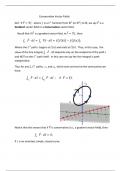
Thus for any 2, 𝐶 1 paths, 𝑐1 and 𝑐2 , which start and end at the same points we
have:
∫𝑐 𝐹⃗ ∙ 𝑑𝑠⃗ = ∫𝑐 𝐹⃗ ∙ 𝑑𝑠⃗ ; if 𝐹⃗ = ∇𝑓.
1 2
𝑐2
𝑐1
Notice that this means that if 𝐹⃗ is conservative (i.e., a gradient vector field), then
∫𝑐 𝐹⃗ ∙ 𝑑𝑠⃗ = 0;
If 𝑐 is an oriented, simple, closed curve.
, 2
Recall also that we saw that if 𝐹⃗ = ∇𝑓, Then ∇ × 𝐹⃗ = 0.
This leads us to the following theorem.
Theorem (Conservative Vector Field): Let 𝐹⃗ be a 𝐶 1 vector field defined on ℝ3 ,
except possibly for a finite number of points. The following conditions on 𝐹⃗ are
all equivalent.
1. For any oriented simple closed curve c, ∫𝑐 𝐹⃗ ∙ 𝑑𝑠⃗ = 0.
2. For any 2 oriented simple curves 𝑐1 and 𝑐2 , which start and end at the same
points, ∫𝑐 𝐹⃗ ∙ 𝑑𝑠⃗ = ∫𝑐 𝐹⃗ ∙ 𝑑𝑠⃗.
1 2
3. 𝐹⃗ is the gradient of some function 𝑓; ie 𝐹⃗ = ∇𝑓 (and if 𝐹⃗ has one or more
exceptional points where if fails to be defined, 𝑓 is also undefined).
4. ∇ × 𝐹⃗ = 0.
Proof: Show that 1⇒ 2 ⇒ 3 ⇒ 4 ⇒ 1.
1⇒ 2: Since 𝑐1 and 𝑐2 are oriented simple curves which start and end at the
same points, 𝑐 = 𝑐1 + (−𝑐2 ) is an oriented closed curve. If it’s not a simple
closed curve break it up into a sum of simple closed curves.
−𝑐2
𝑐1 𝑐2
𝑐1
, 3
By “1” we know that
0 = ∫𝑐 𝐹⃗ ∙ 𝑑𝑠⃗ = ∫𝑐 𝐹⃗ ∙ 𝑑𝑠⃗ − ∫𝑐 𝐹⃗ ∙ 𝑑𝑠⃗
1 2
So we have: ∫𝑐 𝐹⃗ ∙ 𝑑𝑠⃗ = ∫𝑐 𝐹⃗ ∙ 𝑑𝑠⃗.
1 2
2⇒ 3: Suppose 𝐹⃗ (𝑥, 𝑦, 𝑧) =< 𝐹1 (𝑥, 𝑦, 𝑧), 𝐹2 (𝑥, 𝑦, 𝑧), 𝐹3 (𝑥, 𝑦, 𝑧) >.
Let’s show that assuming ∫𝑐 𝐹⃗ ∙ 𝑑𝑠⃗ = ∫𝑐 𝐹⃗ ∙ 𝑑𝑠⃗ for any two oriented
1 2
simple curves which start and end at the same point that we can find a function
𝑓(𝑥, 𝑦, 𝑧), such that 𝐹⃗ = ∇𝑓.
Let 𝑐 be any oriented simple curve joining the points (0,0,0) and (𝑥, 𝑦, 𝑧).
Let’s define a function, 𝑓(𝑥, 𝑦, 𝑧) by
𝑓 (𝑥, 𝑦, 𝑧) = ∫𝑐 𝐹⃗ ∙ 𝑑𝑠 = ∫𝑐 𝐹1 𝑑𝑥 + 𝐹2 𝑑𝑦 + 𝐹3 𝑑𝑧 .
By assumption this function doesn’t depend on which oriented simple curve 𝑐
that we use. For any fixed point (𝑥, 𝑦, 𝑧) let’s choose 𝑐 to be defined as the union
of three line segments given by;
𝑑𝑥 𝑑𝑦 𝑑𝑧
𝑐⃗1 (𝑡 ) =< 𝑡, 0, 0 >; 0 ≤ 𝑡 ≤ 𝑥; = 1, = =0
𝑑𝑡 𝑑𝑡 𝑑𝑡
𝑑𝑦 𝑑𝑥 𝑑𝑧
𝑐⃗2 (𝑡) =< 𝑥, 𝑡, 0 >; 0≤𝑡≤𝑦 = 1, = =0
𝑑𝑡 𝑑𝑡 𝑑𝑡
𝑑𝑧 𝑑𝑥 𝑑𝑦
𝑐⃗3 (𝑡) =< 𝑥, 𝑦, 𝑡 >; 0≤𝑡≤𝑧 = 1, = = 0.
𝑑𝑡 𝑑𝑡 𝑑𝑡
𝑐
𝑐3
𝑐2
𝑐1
Def. If 𝐹⃗ = ∇𝑓, where 𝑓 is a 𝐶 1 function from ℝ3 (or ℝ𝑛 ) to ℝ, we say 𝐹⃗ is a
Gradient vector field or a Conservative vector field.
Recall that if 𝐹⃗ is a gradient vector field, ie 𝐹⃗ = ∇𝑓, then:
∫𝑐 𝐹⃗ ∙ 𝑑𝑠⃗ = ∫𝑐 ∇𝑓 ∙ 𝑑𝑠⃗ = 𝑓(𝑐⃗(𝑏)) − 𝑓(𝑐⃗(𝑎 ));
Where the 𝐶 1 path 𝑐 begins at 𝑐⃗(𝑎) and ends at 𝑐⃗(𝑏 ). Thus, in this case, the
value of the line integral ∫𝑐 𝐹⃗ ∙ 𝑑𝑠⃗ depends only on the endpoints of the path 𝑐
and NOT on the 𝐶 1 path itself. In this case we say the line integral is path
independent.
Thus for any 2, 𝐶 1 paths, 𝑐1 and 𝑐2 , which start and end at the same points we
have:
∫𝑐 𝐹⃗ ∙ 𝑑𝑠⃗ = ∫𝑐 𝐹⃗ ∙ 𝑑𝑠⃗ ; if 𝐹⃗ = ∇𝑓.
1 2
𝑐2
𝑐1
Notice that this means that if 𝐹⃗ is conservative (i.e., a gradient vector field), then
∫𝑐 𝐹⃗ ∙ 𝑑𝑠⃗ = 0;
If 𝑐 is an oriented, simple, closed curve.
, 2
Recall also that we saw that if 𝐹⃗ = ∇𝑓, Then ∇ × 𝐹⃗ = 0.
This leads us to the following theorem.
Theorem (Conservative Vector Field): Let 𝐹⃗ be a 𝐶 1 vector field defined on ℝ3 ,
except possibly for a finite number of points. The following conditions on 𝐹⃗ are
all equivalent.
1. For any oriented simple closed curve c, ∫𝑐 𝐹⃗ ∙ 𝑑𝑠⃗ = 0.
2. For any 2 oriented simple curves 𝑐1 and 𝑐2 , which start and end at the same
points, ∫𝑐 𝐹⃗ ∙ 𝑑𝑠⃗ = ∫𝑐 𝐹⃗ ∙ 𝑑𝑠⃗.
1 2
3. 𝐹⃗ is the gradient of some function 𝑓; ie 𝐹⃗ = ∇𝑓 (and if 𝐹⃗ has one or more
exceptional points where if fails to be defined, 𝑓 is also undefined).
4. ∇ × 𝐹⃗ = 0.
Proof: Show that 1⇒ 2 ⇒ 3 ⇒ 4 ⇒ 1.
1⇒ 2: Since 𝑐1 and 𝑐2 are oriented simple curves which start and end at the
same points, 𝑐 = 𝑐1 + (−𝑐2 ) is an oriented closed curve. If it’s not a simple
closed curve break it up into a sum of simple closed curves.
−𝑐2
𝑐1 𝑐2
𝑐1
, 3
By “1” we know that
0 = ∫𝑐 𝐹⃗ ∙ 𝑑𝑠⃗ = ∫𝑐 𝐹⃗ ∙ 𝑑𝑠⃗ − ∫𝑐 𝐹⃗ ∙ 𝑑𝑠⃗
1 2
So we have: ∫𝑐 𝐹⃗ ∙ 𝑑𝑠⃗ = ∫𝑐 𝐹⃗ ∙ 𝑑𝑠⃗.
1 2
2⇒ 3: Suppose 𝐹⃗ (𝑥, 𝑦, 𝑧) =< 𝐹1 (𝑥, 𝑦, 𝑧), 𝐹2 (𝑥, 𝑦, 𝑧), 𝐹3 (𝑥, 𝑦, 𝑧) >.
Let’s show that assuming ∫𝑐 𝐹⃗ ∙ 𝑑𝑠⃗ = ∫𝑐 𝐹⃗ ∙ 𝑑𝑠⃗ for any two oriented
1 2
simple curves which start and end at the same point that we can find a function
𝑓(𝑥, 𝑦, 𝑧), such that 𝐹⃗ = ∇𝑓.
Let 𝑐 be any oriented simple curve joining the points (0,0,0) and (𝑥, 𝑦, 𝑧).
Let’s define a function, 𝑓(𝑥, 𝑦, 𝑧) by
𝑓 (𝑥, 𝑦, 𝑧) = ∫𝑐 𝐹⃗ ∙ 𝑑𝑠 = ∫𝑐 𝐹1 𝑑𝑥 + 𝐹2 𝑑𝑦 + 𝐹3 𝑑𝑧 .
By assumption this function doesn’t depend on which oriented simple curve 𝑐
that we use. For any fixed point (𝑥, 𝑦, 𝑧) let’s choose 𝑐 to be defined as the union
of three line segments given by;
𝑑𝑥 𝑑𝑦 𝑑𝑧
𝑐⃗1 (𝑡 ) =< 𝑡, 0, 0 >; 0 ≤ 𝑡 ≤ 𝑥; = 1, = =0
𝑑𝑡 𝑑𝑡 𝑑𝑡
𝑑𝑦 𝑑𝑥 𝑑𝑧
𝑐⃗2 (𝑡) =< 𝑥, 𝑡, 0 >; 0≤𝑡≤𝑦 = 1, = =0
𝑑𝑡 𝑑𝑡 𝑑𝑡
𝑑𝑧 𝑑𝑥 𝑑𝑦
𝑐⃗3 (𝑡) =< 𝑥, 𝑦, 𝑡 >; 0≤𝑡≤𝑧 = 1, = = 0.
𝑑𝑡 𝑑𝑡 𝑑𝑡
𝑐
𝑐3
𝑐2
𝑐1