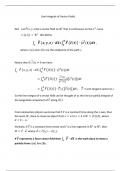
Line Integrals of Vector Fields
Def. Let 𝐹⃗ (𝑥, 𝑦, 𝑧)be a vector field on ℝ3 that is continuous on the 𝐶 1 curve
𝑐: [𝑎, 𝑏] → ℝ3. We define
𝒃
∫𝒄 ⃗𝑭⃗ (𝒙, 𝒚, 𝒛) ∙ 𝒅𝒔
⃗⃗=∫𝒂 ⃗𝑭⃗ (𝒄 ⃗⃗⃗⃗′ (𝒕))𝒅𝒕 ,
⃗⃗(𝒕)) ∙ (𝒄
where 𝑐(𝑎) and 𝑐(𝑏) are the endpoints of the path 𝑐.
Notice that if ⃗⃗⃗⃗
𝑐 ′ (𝑡) ≠ 0 we have:
𝑏
∫𝑐 𝐹⃗ (𝑥, 𝑦, 𝑧) ∙ 𝑑𝑠⃗=∫𝑎 𝐹⃗ (𝑐⃗(𝑡)) ∙ (𝑐⃗⃗⃗⃗′ (𝑡))𝑑𝑡
𝑏 ⃗⃗⃗⃗
𝑐 ′ (𝑡 )
= ∫𝑎 (𝐹⃗ (𝑐⃗(𝑡 )) ∙ ⃗⃗⃗⃗′(𝑡 )|
)(|𝑐⃗⃗⃗⃗′ (𝑡 )|)𝑑𝑡
|𝑐
𝑏
⃗⃗) (|𝑐⃗⃗⃗⃗′ (𝑡 )|)𝑑𝑡;
= ∫𝑎 𝐹⃗ (𝑐⃗(𝑡)) ∙ 𝑇 ⃗⃗ =unit tangent vector to 𝑐.
𝑇
So the line integral of a vector field can be thought of as the line (or path)) integral of
the tangential component of 𝐹⃗ along 𝑐⃗(𝑡 ).
From elementary physics we know that if 𝐹 is a constant force along the 𝑥-axis, then
the work, 𝑊, done to move an object from 𝑥 = 𝑎 to 𝑥 = 𝑏 is 𝑊 = (𝐹)(𝑑), where
𝑑 = 𝑏 − 𝑎.
Similarly, if 𝐹⃗ is a constant force vector and 𝑐⃗ is a line segment in ℝ2 or ℝ3 , then
𝑊 = 𝐹⃗ ∙ 𝑑⃗ , where 𝑑⃗ = 𝑐⃗(𝑡2 ) − 𝑐⃗(𝑡1 ).
⃗⃗ represents a force vector field then ∫ 𝑭
If 𝑭 ⃗⃗ ∙ 𝒅𝒔
⃗⃗ is the work done to move a
𝒄
particle from 𝒄(𝒂) 𝒕𝒐 𝒄(𝒃).
, 2
Ex. Evaluate ∫𝑐 𝐹⃗ ∙ 𝑑𝑠⃗ where 𝐹⃗ (𝑥, 𝑦, 𝑧) = (𝑥𝑦)𝑖⃗ + (𝑦𝑧)𝑗⃗ + (𝑥𝑧)𝑘⃗⃗ , and 𝑐 is given by:
𝑐: [0,1] → ℝ3 , 𝑡 →< 𝑡, 𝑡 2 , 𝑡 3 >.
𝑏
∫𝑐 𝐹⃗ ∙ 𝑑𝑠⃗=∫𝑎 𝐹⃗ (𝑐⃗(𝑡 )) ∙ (𝑐⃗⃗⃗⃗′ (𝑡))𝑑𝑡
𝑐⃗(𝑡 ) =< 𝑡, 𝑡 2 , 𝑡 3 >, so ⃗⃗⃗⃗
𝑐 ′ (𝑡 ) =< 1, 2𝑡, 3𝑡 2 > , where 0 ≤ 𝑡 ≤ 1, and
𝐹⃗ (𝑐⃗(𝑡)) =< 𝑡 (𝑡 2 ), 𝑡 2 (𝑡 3 ), 𝑡(𝑡 3 ) >=< 𝑡 3 , 𝑡 5 , 𝑡 4 >.
So plugging in we get:
1
∫𝑐 𝐹⃗ ∙ 𝑑𝑠⃗ = ∫0 < 𝑡 3 , 𝑡 5 , 𝑡 4 >∙< 1, 2𝑡, 3𝑡 2 > 𝑑𝑡
1 1 1 5 1 27
= ∫0 (𝑡 3 + 2𝑡 6 + 3𝑡 6)𝑑𝑡 = ∫0 (𝑡 3 + 5𝑡 6 )𝑑𝑡 = 4 𝑡 4 + 7 𝑡 7 | = .
0 28
Ex. Consider a force field 𝐹⃗ =< 𝑠𝑖𝑛𝑧, 𝑐𝑜𝑠√𝑦, 𝑥 3 >, find the work done to move a
particle along the line segment from (1,0,0) to (0,0,3).
First we need to find a parametrization for the curve (a line segment) 𝑐. The line that
goes through (1,0,0) and (0,0,3) has a direction vector:
𝑣⃗ =< 0 − 1, 0 − 0, 3 − 0 >=< −1, 0, 3 > ;
using the point (1,0,0), we get an equation for a line:
𝑥 = 1 − 𝑡, 𝑦 = 0, 𝑧 = 3𝑡 ; or equivalently: 𝑐⃗(𝑡 ) =< 1 − 𝑡, 0, 3𝑡 >.
Def. Let 𝐹⃗ (𝑥, 𝑦, 𝑧)be a vector field on ℝ3 that is continuous on the 𝐶 1 curve
𝑐: [𝑎, 𝑏] → ℝ3. We define
𝒃
∫𝒄 ⃗𝑭⃗ (𝒙, 𝒚, 𝒛) ∙ 𝒅𝒔
⃗⃗=∫𝒂 ⃗𝑭⃗ (𝒄 ⃗⃗⃗⃗′ (𝒕))𝒅𝒕 ,
⃗⃗(𝒕)) ∙ (𝒄
where 𝑐(𝑎) and 𝑐(𝑏) are the endpoints of the path 𝑐.
Notice that if ⃗⃗⃗⃗
𝑐 ′ (𝑡) ≠ 0 we have:
𝑏
∫𝑐 𝐹⃗ (𝑥, 𝑦, 𝑧) ∙ 𝑑𝑠⃗=∫𝑎 𝐹⃗ (𝑐⃗(𝑡)) ∙ (𝑐⃗⃗⃗⃗′ (𝑡))𝑑𝑡
𝑏 ⃗⃗⃗⃗
𝑐 ′ (𝑡 )
= ∫𝑎 (𝐹⃗ (𝑐⃗(𝑡 )) ∙ ⃗⃗⃗⃗′(𝑡 )|
)(|𝑐⃗⃗⃗⃗′ (𝑡 )|)𝑑𝑡
|𝑐
𝑏
⃗⃗) (|𝑐⃗⃗⃗⃗′ (𝑡 )|)𝑑𝑡;
= ∫𝑎 𝐹⃗ (𝑐⃗(𝑡)) ∙ 𝑇 ⃗⃗ =unit tangent vector to 𝑐.
𝑇
So the line integral of a vector field can be thought of as the line (or path)) integral of
the tangential component of 𝐹⃗ along 𝑐⃗(𝑡 ).
From elementary physics we know that if 𝐹 is a constant force along the 𝑥-axis, then
the work, 𝑊, done to move an object from 𝑥 = 𝑎 to 𝑥 = 𝑏 is 𝑊 = (𝐹)(𝑑), where
𝑑 = 𝑏 − 𝑎.
Similarly, if 𝐹⃗ is a constant force vector and 𝑐⃗ is a line segment in ℝ2 or ℝ3 , then
𝑊 = 𝐹⃗ ∙ 𝑑⃗ , where 𝑑⃗ = 𝑐⃗(𝑡2 ) − 𝑐⃗(𝑡1 ).
⃗⃗ represents a force vector field then ∫ 𝑭
If 𝑭 ⃗⃗ ∙ 𝒅𝒔
⃗⃗ is the work done to move a
𝒄
particle from 𝒄(𝒂) 𝒕𝒐 𝒄(𝒃).
, 2
Ex. Evaluate ∫𝑐 𝐹⃗ ∙ 𝑑𝑠⃗ where 𝐹⃗ (𝑥, 𝑦, 𝑧) = (𝑥𝑦)𝑖⃗ + (𝑦𝑧)𝑗⃗ + (𝑥𝑧)𝑘⃗⃗ , and 𝑐 is given by:
𝑐: [0,1] → ℝ3 , 𝑡 →< 𝑡, 𝑡 2 , 𝑡 3 >.
𝑏
∫𝑐 𝐹⃗ ∙ 𝑑𝑠⃗=∫𝑎 𝐹⃗ (𝑐⃗(𝑡 )) ∙ (𝑐⃗⃗⃗⃗′ (𝑡))𝑑𝑡
𝑐⃗(𝑡 ) =< 𝑡, 𝑡 2 , 𝑡 3 >, so ⃗⃗⃗⃗
𝑐 ′ (𝑡 ) =< 1, 2𝑡, 3𝑡 2 > , where 0 ≤ 𝑡 ≤ 1, and
𝐹⃗ (𝑐⃗(𝑡)) =< 𝑡 (𝑡 2 ), 𝑡 2 (𝑡 3 ), 𝑡(𝑡 3 ) >=< 𝑡 3 , 𝑡 5 , 𝑡 4 >.
So plugging in we get:
1
∫𝑐 𝐹⃗ ∙ 𝑑𝑠⃗ = ∫0 < 𝑡 3 , 𝑡 5 , 𝑡 4 >∙< 1, 2𝑡, 3𝑡 2 > 𝑑𝑡
1 1 1 5 1 27
= ∫0 (𝑡 3 + 2𝑡 6 + 3𝑡 6)𝑑𝑡 = ∫0 (𝑡 3 + 5𝑡 6 )𝑑𝑡 = 4 𝑡 4 + 7 𝑡 7 | = .
0 28
Ex. Consider a force field 𝐹⃗ =< 𝑠𝑖𝑛𝑧, 𝑐𝑜𝑠√𝑦, 𝑥 3 >, find the work done to move a
particle along the line segment from (1,0,0) to (0,0,3).
First we need to find a parametrization for the curve (a line segment) 𝑐. The line that
goes through (1,0,0) and (0,0,3) has a direction vector:
𝑣⃗ =< 0 − 1, 0 − 0, 3 − 0 >=< −1, 0, 3 > ;
using the point (1,0,0), we get an equation for a line:
𝑥 = 1 − 𝑡, 𝑦 = 0, 𝑧 = 3𝑡 ; or equivalently: 𝑐⃗(𝑡 ) =< 1 − 𝑡, 0, 3𝑡 >.