1
Derivatives of Trigonometric Functions
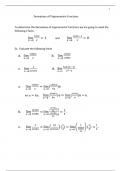
To determine the derivatives of trigonometric functions we are going to need the
following 2 facts:
𝑠𝑖𝑛𝑥 𝑐𝑜𝑠𝑥−1
lim =1 and lim = 0.
𝑥→0 𝑥 𝑥→0 𝑥
Ex. Evaluate the following limits
𝑠𝑖𝑛6𝑥 𝑠𝑖𝑛3𝑥
a. lim b. lim 𝑠𝑖𝑛8𝑥
𝑥→0 𝑥 𝑥→0
𝑥 tan(𝑥−1)
c. lim 𝑠𝑖𝑛4𝑥 d. lim .
𝑥→0 𝑥→1 𝑥 2 −1
𝑠𝑖𝑛6𝑥 𝑠𝑖𝑛6𝑥
a. lim = lim ( )6
𝑥→0 𝑥 𝑥→0 6𝑥
𝑠𝑖𝑛6𝑥 𝑠𝑖𝑛𝑢
let 𝑢 = 6𝑥; lim ( )6 = lim ( )6 = 6.
𝑥→0 6𝑥 𝑢→0 𝑢
𝑠𝑖𝑛3𝑥
𝑠𝑖𝑛3𝑥 ( )3 3
3𝑥
b. lim 𝑠𝑖𝑛8𝑥 = lim 𝑠𝑖𝑛8𝑥 =8.
𝑥→0 𝑥→0 ( )8
8𝑥
𝑥 4𝑥 1 1 1 1
c. lim 𝑠𝑖𝑛4𝑥 = lim (𝑠𝑖𝑛4𝑥) (4) = lim ( 𝑠𝑖𝑛4𝑥 ) (4) = 4.
𝑥→0 𝑥→0 𝑥→0
4𝑥
, 2
sin(𝑥−1)
tan(𝑥−1) tan(𝑥−1) cos(𝑥−1)
d. lim = lim (𝑥−1)(𝑥+1) = lim
𝑥→1 𝑥 2 −1 𝑥→1 𝑥→1 (𝑥−1)(𝑥+1)
sin(x−1) 1
= lim [ ] [ ]; Let 𝑢 = 𝑥 − 1
𝑥→1 (𝑥−1) (𝑥+1) cos(𝑥−1)
sin(u) 1 1 1
= lim [ ] [ ] = 1( ) = .
𝑢→0 (𝑢) (𝑢+2) cos(𝑢) 2(1) 2
Derivatives of 𝑠𝑖𝑛𝑥 and 𝑐𝑜𝑠𝑥
Let 𝑓 (𝑥 ) = 𝑠𝑖𝑛𝑥 , recall that
sin(𝑥 + ℎ) = (𝑠𝑖𝑛𝑥)(cos(ℎ)) + (sin(ℎ))(cos 𝑥 ).
𝑓(𝑥+ℎ)−𝑓(𝑥) sin(𝑥+ℎ)−𝑠𝑖𝑛𝑥
𝑓 ′ (𝑥 ) = lim = lim
ℎ→0 ℎ ℎ→0 ℎ
(𝑠𝑖𝑛𝑥)(cos(ℎ))+(sin(ℎ))(cos 𝑥)−𝑠𝑖𝑛𝑥
= lim
ℎ→0 ℎ
sinx(cos(h)−1)+(sin(h))(cosx)
= lim
ℎ→0 ℎ
(sinx)(cos(h)−1) (sin(h))(cosx)
= lim [ ] + lim .
ℎ→0 ℎ ℎ→0 ℎ
𝑐𝑜𝑠𝑥−1 𝑠𝑖𝑛𝑥
on the first limit we use lim = 0 and on the second lim = 1.
𝑥→0 𝑥 𝑥→0 𝑥
𝑓 ′ (𝑥 ) = 0 + 𝑐𝑜𝑠𝑥 = 𝑐𝑜𝑠𝑥.
Derivatives of Trigonometric Functions
To determine the derivatives of trigonometric functions we are going to need the
following 2 facts:
𝑠𝑖𝑛𝑥 𝑐𝑜𝑠𝑥−1
lim =1 and lim = 0.
𝑥→0 𝑥 𝑥→0 𝑥
Ex. Evaluate the following limits
𝑠𝑖𝑛6𝑥 𝑠𝑖𝑛3𝑥
a. lim b. lim 𝑠𝑖𝑛8𝑥
𝑥→0 𝑥 𝑥→0
𝑥 tan(𝑥−1)
c. lim 𝑠𝑖𝑛4𝑥 d. lim .
𝑥→0 𝑥→1 𝑥 2 −1
𝑠𝑖𝑛6𝑥 𝑠𝑖𝑛6𝑥
a. lim = lim ( )6
𝑥→0 𝑥 𝑥→0 6𝑥
𝑠𝑖𝑛6𝑥 𝑠𝑖𝑛𝑢
let 𝑢 = 6𝑥; lim ( )6 = lim ( )6 = 6.
𝑥→0 6𝑥 𝑢→0 𝑢
𝑠𝑖𝑛3𝑥
𝑠𝑖𝑛3𝑥 ( )3 3
3𝑥
b. lim 𝑠𝑖𝑛8𝑥 = lim 𝑠𝑖𝑛8𝑥 =8.
𝑥→0 𝑥→0 ( )8
8𝑥
𝑥 4𝑥 1 1 1 1
c. lim 𝑠𝑖𝑛4𝑥 = lim (𝑠𝑖𝑛4𝑥) (4) = lim ( 𝑠𝑖𝑛4𝑥 ) (4) = 4.
𝑥→0 𝑥→0 𝑥→0
4𝑥
, 2
sin(𝑥−1)
tan(𝑥−1) tan(𝑥−1) cos(𝑥−1)
d. lim = lim (𝑥−1)(𝑥+1) = lim
𝑥→1 𝑥 2 −1 𝑥→1 𝑥→1 (𝑥−1)(𝑥+1)
sin(x−1) 1
= lim [ ] [ ]; Let 𝑢 = 𝑥 − 1
𝑥→1 (𝑥−1) (𝑥+1) cos(𝑥−1)
sin(u) 1 1 1
= lim [ ] [ ] = 1( ) = .
𝑢→0 (𝑢) (𝑢+2) cos(𝑢) 2(1) 2
Derivatives of 𝑠𝑖𝑛𝑥 and 𝑐𝑜𝑠𝑥
Let 𝑓 (𝑥 ) = 𝑠𝑖𝑛𝑥 , recall that
sin(𝑥 + ℎ) = (𝑠𝑖𝑛𝑥)(cos(ℎ)) + (sin(ℎ))(cos 𝑥 ).
𝑓(𝑥+ℎ)−𝑓(𝑥) sin(𝑥+ℎ)−𝑠𝑖𝑛𝑥
𝑓 ′ (𝑥 ) = lim = lim
ℎ→0 ℎ ℎ→0 ℎ
(𝑠𝑖𝑛𝑥)(cos(ℎ))+(sin(ℎ))(cos 𝑥)−𝑠𝑖𝑛𝑥
= lim
ℎ→0 ℎ
sinx(cos(h)−1)+(sin(h))(cosx)
= lim
ℎ→0 ℎ
(sinx)(cos(h)−1) (sin(h))(cosx)
= lim [ ] + lim .
ℎ→0 ℎ ℎ→0 ℎ
𝑐𝑜𝑠𝑥−1 𝑠𝑖𝑛𝑥
on the first limit we use lim = 0 and on the second lim = 1.
𝑥→0 𝑥 𝑥→0 𝑥
𝑓 ′ (𝑥 ) = 0 + 𝑐𝑜𝑠𝑥 = 𝑐𝑜𝑠𝑥.