1
The Derivative of a Function
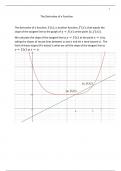
The derivative of a function, 𝑓(𝑥), is another function, 𝑓′(𝑥), that equals the
slope of the tangent line to the graph of 𝑦 = 𝑓(𝑥) at the point (𝑥, 𝑓(𝑥)).
We calculate the slope of the tangent line to 𝑦 = 𝑓(𝑥) at the point 𝑥 = 𝑎 by
taking the slopes of secant lines between 𝑎 and 𝑥 and let 𝑥 tend toward 𝑎 . The
limit of these slopes (if it exists) is what we call the slope of the tangent line to
𝑦 = 𝑓(𝑥) at 𝑥 = 𝑎
(𝑥, 𝑓(𝑥))
(𝑎, 𝑓(𝑎))
𝑥
, 2
𝒇(𝒙)−𝒇(𝒂)
Def. 𝒇′ (𝒂) = 𝐥𝐢𝐦 if the limit exists.
𝒙→𝒂 𝒙−𝒂
𝑓 (𝑥)−𝑓(𝑎)
Notice that 𝑚𝑠𝑒𝑐 = is the average rate of change of the function
𝑥−𝑎
𝑦 = 𝑓(𝑥) on the interval [𝑎, 𝑥].
𝑓(𝑥)−𝑓(𝑎)
𝑚𝑡𝑎𝑛 = 𝑓 ′ (𝑎) = lim is the instantaneous rate of change of the
𝑥→𝑎 𝑥−𝑎
function 𝑦 = 𝑓(𝑥) at the point 𝑥 = 𝑎.
(𝑎, 𝑓(𝑎))
The Derivative of a Function
The derivative of a function, 𝑓(𝑥), is another function, 𝑓′(𝑥), that equals the
slope of the tangent line to the graph of 𝑦 = 𝑓(𝑥) at the point (𝑥, 𝑓(𝑥)).
We calculate the slope of the tangent line to 𝑦 = 𝑓(𝑥) at the point 𝑥 = 𝑎 by
taking the slopes of secant lines between 𝑎 and 𝑥 and let 𝑥 tend toward 𝑎 . The
limit of these slopes (if it exists) is what we call the slope of the tangent line to
𝑦 = 𝑓(𝑥) at 𝑥 = 𝑎
(𝑥, 𝑓(𝑥))
(𝑎, 𝑓(𝑎))
𝑥
, 2
𝒇(𝒙)−𝒇(𝒂)
Def. 𝒇′ (𝒂) = 𝐥𝐢𝐦 if the limit exists.
𝒙→𝒂 𝒙−𝒂
𝑓 (𝑥)−𝑓(𝑎)
Notice that 𝑚𝑠𝑒𝑐 = is the average rate of change of the function
𝑥−𝑎
𝑦 = 𝑓(𝑥) on the interval [𝑎, 𝑥].
𝑓(𝑥)−𝑓(𝑎)
𝑚𝑡𝑎𝑛 = 𝑓 ′ (𝑎) = lim is the instantaneous rate of change of the
𝑥→𝑎 𝑥−𝑎
function 𝑦 = 𝑓(𝑥) at the point 𝑥 = 𝑎.
(𝑎, 𝑓(𝑎))