

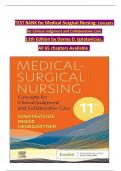
TEST BANK for Medical-Surgical Nursing: Concepts
for Clinical Judgment and Collaborative Care
11th Edition by Donna D. Ignatavicius,
All 65 chapters Available q
,Contents
1.qOverviewqofqProfessionalqNursingqConceptsqforqMedical-SurgicalqNursing
2.qClinicalqJudgmentqandqSystemsqThinking
3.qOverviewqofqHealthqConceptsqforqMedical-SurgicalqNursing
4.qConceptsqofqCareqforqOlderqAdults
5.qConceptsqofqCareqforqTransgenderqandqNon-BinaryqPatients
6.qAssessmentqandqConceptsqofqCareqforqPatientsqwithqPain
7.qConceptsqofqRehabilitationqforqChronicqandqDisablingqHealthqConditions
8.qConceptsqofqCareqforqPatientsqatqEnd-of-Life
9.qConceptsqofqCareqforqPerioperativeqPatients
10.qConceptsqofqEmergencyqandqTraumaqNursing
11.qConceptsqofqCareqforqPatientsqwithqCommonqEnvironmentalqEmergencies
12.qConceptsqofqDisasterqPreparedness
13.qConceptsqofqFluidqandqElectrolyteqBalanceqandqImbalance
14.qConceptsqofqAcid-BaseqBalanceqandqImbalance
15.qConceptsqofqInfusionqTherapy
16.qConceptsqofqInflammationqandqImmunity
17.qConceptsqofqCareqforqPatientsqwithqAllergyqandqImmunityqConditions
18.qConceptsqofqCareqforqPatientsqwithqCancer
19.qConceptsqofqCareqforqPatientsqwithqInfection
20.qAssessmentqofqtheqSkin,qHair,qandqNails
21.qConceptsqofqCareqforqPatientsqwithqConditionsqofqtheqSkin,qHair,qandqNails
22.qAssessmentqofqtheqRespiratoryqSystem
23.qConceptsqofqCareqforqPatientsqwithqNoninfectiousqUpperqRespiratoryqConditions
24.qConceptsqofqCareqforqPatientsqwithqNoninfectiousqLowerqRespiratoryqConditions
25.qConceptsqofqCareqforqPatientsqwithqInfectiousqRespiratoryqConditions
26.qCriticalqCareqofqPatientsqwithqRespiratoryqEmergencies
27.qAssessmentqofqtheqCardiovascularqSystem
28.qConceptsqofqCareqforqPatientsqwithqDysrhythmias
29.qConceptsqofqCareqforqPatientsqwithqCardiacqConditions
30.qConceptsqofqCareqforqPatientsqwithqVascularqConditions
31.qCriticalqCareqofqPatientsqwithqShock
32.qCriticalqCareqofqPatientsqwithqAcuteqCoronaryqSyndromes
33.qAssessmentqofqtheqHematologicqSystem
34.qConceptsqofqCareqforqPatientsqwithqHematologicqConditions
35.qAssessmentqofqtheqNervousqSystem
36.qConceptsqofqCareqforqPatientsqwithqConditionsqofqtheqCentralqNervousqSystem:qTheqBrain
37.qConceptsqofqCareqforqPatientsqwithqConditionsqofqtheqCentralqNervousqSystem:qTheqSpin
alqCord
38.qCriticalqCareqofqPatientsqwithqNeurologicqEmergencies
39.qAssessmentqandqConceptsqofqCareqforqPatientsqwithqEyeqandqVisionqConditions
40.qAssessmentqandqConceptsqofqCareqforqPatientsqwithqEarqandqHearingqConditions
41.qAssessmentqofqtheqMusculoskeletalqSystem
42.qConceptsqofqCareqforqPatientsqwithqMusculoskeletalqConditions
43.qConceptsqofqCareqforqPatientsqwithqArthritisqandqTotalqJointqArthroplasty
,44.qConceptsqofqCareqforqPatientsqwithqMusculoskeletalqTrauma
45.qAssessmentqofqtheqGastrointestinalqSystem
46.qConceptsqofqCareqforqPatientsqwithqOralqCavityqandqEsophagealqConditions
47.qConceptsqofqCareqforqPatientsqwithqStomachqConditions
48.qConceptsqofqCareqforqPatientsqwithqNoninflammatoryqIntestinalqConditions
49.qConceptsqofqCareqforqPatientsqwithqInflammatoryqIntestinalqConditions
50.qConceptsqofqCareqforqPatientsqwithqLiverqConditions
51.qConceptsqofqCareqforqPatientsqwithqConditionsqofqtheqBiliaryqSystemqandqPancreas
52.qConceptsqofqCareqforqPatientsqwithqMalnutrition:qUndernutritionqandqObesity
53.qAssessmentqofqtheqEndocrineqSystem
54.qConceptsqofqCareqforqPatientsqwithqPituitaryqandqAdrenalqGlandqConditions
55.qConceptsqofqCareqforqPatientsqwithqConditionsqofqtheqThyroidqandqParathyroidqGlands
56.qConceptsqofqCareqforqPatientsqwithqDiabetesqMellitus
57.qAssessmentqofqtheqRenal/UrinaryqSystem
58.qConceptsqofqCareqforqPatientsqwithqUrinaryqConditions
59.qConceptsqofqCareqforqPatientsqwithqKidneyqConditions
60.qConceptsqofqCareqforqPatientsqwithqAcuteqKidneyqInjuryqandqChronicqKidneyqDisease
61.qAssessmentqofqtheqReproductiveqSystem
62.qConceptsqofqCareqforqPatientsqwithqBreastqConditions
63.qConceptsqofqCareqforqPatientsqwithqGynecologicqConditions
64.qConceptsqofqCareqforqPatientsqwithqMaleqReproductiveqConditions
65.qConceptsqofqCareqforqPatientsqwithqSexuallyqTransmittedqInfections
,Chapterq01:qOverviewqofqProfessionalqNursingqConceptsqforqMedical-
SurgicalqNursingqIgnatavicius:qMedical-SurgicalqNursing,q11thqEdition
MULTIPLEqCHOICE
1. Aqnewqnurseqisqworkingqwithqaqpreceptorqonqaqmedical-
surgicalqunit.qTheqpreceptorqadvisesqtheqnewqnurseqthatqwhichqisqtheqpriorityqwhenqworkingq
asqaqprofessionalqnurse?
a. Attendingqtoqholisticqclientqneeds
b. Ensuringqclientqsafety
c. Notqmakingqmedicationqerrors
d. Providingqclient-focusedqcare
CORRECTqANSWER:q B
Allqactionsqareqappropriateqforqtheqprofessionalqnurse.qHowever,qensuringqclientqsafetyqisqtheq
priority.qHealthqcareqerrorsqhaveqbeenqwidelyqreportedqforq25qyears,qmanyqofqwhichqresultqinq
clientqinjury,qdeath,qandqincreasedqhealthqcareqcosts.qThereqareqseveralqnationalqandqinternat
ionalqorganizationsqthatqhaveqeitherqrecommendedqorqmandatedqsafetyqinitiatives.
Everyqnurseqhasqtheqresponsibilityqtoqguardqtheqclient’sqsafety.qTheqotherqactionsqareqimporta
ntqforqqualityqnursing,qbutqtheyqareqnotqasqvitalqasqprovidingqsafety.qNotqmakingqmedicationqe
rrorsqdoesqprovideqsafety,qbutqisqtooqnarrowqinqscopeqtoqbeqtheqbestqanswer.
DIF: Understanding
TOP:q IntegratedqProcess:qNursingqProcess:qInterventionqKEY:qClientqsafety
MSC:q ClientqNeedsqCategory:qSafeqandqEffectiveqCareqEnvironment:qSafetyqandqInfectionqControl
2. Aqnurseqisqorientingqaqnewqclientqandqfamilyqtoqtheqmedical-
surgicalqunit.qWhatqinformationqdoesqtheqnurseqprovideqtoqbestqhelpqtheqclientqpromoteq
hisqorqherqownqsafety?
a. Encourageqtheqclientqandqfamilyqtoqbeqactiveqpartners.
b. Haveqtheqclientqmonitorqhandqhygieneqinqcaregivers.
c. Offerqtheqfamilyqtheqopportunityqtoqstayqwithqtheqclient.
d. Tellqtheqclientqtoqalwaysqwearqhisqorqherqarmband.
CORRECTqANSWER:q A
, Eachqactionqcouldqbeqimportantqforqtheqclientqorqfamilyqtoqperform.qHowever,qencouragingqt
heqclientqtoqbeqactiveqinqhisqorqherqhealthqcareqasqaqsafetyqpartnerqisqtheqmostqcritical.qTheqot
herqactionsqareqveryqlimitedqinqscopeqandqdoqnotqprovideqtheqbroadqprotectionqthatqbeingqact
iveqandqinvolvedqdoes.
DIF: Understanding
TOP:qIntegratedqProcess:qTeaching/LearningqKEY:qClientqsafety
MSC:q ClientqNeedsqCategory:qSafeqandqEffectiveqCareqEnvironment:qSafetyqandqInfectionqControl
3. Aqnurseqisqcaringqforqaqpostoperativeqclientqonqtheqsurgicalqunit.qTheqclient’sqbloodqpressur
eqwasq142/76qmmqHgq30qminutesqago,qandqnowqisq88/50qmmqHg.qWhatqactionqwouldqtheqn
urseqtakeqfirst?
a. CallqtheqRapidqResponseqTeam.
b. Documentqandqcontinueqtoqmonitor.
c. Notifyqtheqprimaryqhealthqcareqprovider.
d. Repeatqtheqbloodqpressureqinq15qminutes.
, CORRECTqANSWER:q A
TheqpurposeqofqtheqRapidqResponseqTeamq(RRT)qisqtoqinterveneqwhenqclientsqareqdeterioratin
gqbeforeqtheyqsufferqeitherqrespiratoryqorqcardiacqarrest.qSinceqtheqclientqhasqmanifestedqaqsi
gnificantqchange,qtheqnurseqwouldqcallqtheqRRT.qChangesqinqbloodqpressure,qmentalqstatus,qh
eartqrate,qtemperature,qoxygenqsaturation,qandqlastq2qhours’qurineqoutputqareqparticularlyqsig
nificantqandqareqpartqofqtheqModifiedqEarlyqWarningqSystemqguide.qDocumentationqisqvital,qb
utqtheqnurseqmustqdoqmoreqthanqdocument.qTheqprimaryqhealthqcareqproviderqwouldqbeqnoti
fied,qbutqthisqisqnotqmoreqimportantqthanqcallingqtheqRRT.qTheqclient’sqbloodqpressureqwouldq
beqreassessedqfrequently,qbutqtheqpriorityqisqgettingqtheqrapidqcareqtoqtheqclient.
DIF: Applying
TOP:q IntegratedqProcess:qCommunicationqandqDocumentationqKEY:qRapidqR
esponseqTeamq(RRT),qClinicalqjudgment
MSC:q ClientqNeedsqCategory:qPhysiologicalqIntegrity:qPhysiologicalqAdaptation
4. Aqnurseqwishesqtoqprovideqclient-centeredqcareqinqallqinteractions.qWhichqactionqbyqtheqnurse
bestqdemonstratesqthisqconcept?
a. Assessesqforqculturalqinfluencesqaffectingqhealthqcare.
b. Ensuresqthatqallqtheqclient’sqbasicqneedsqareqmet.
c. Tellsqtheqclientqandqfamilyqaboutqallqupcomingqtests.
d. Thoroughlyqorientsqtheqclientqandqfamilyqtoqtheqroom.
CORRECTqANSWER:q A
Showingqrespectqforqtheqclientqandqfamily’sqpreferencesqandqneedsqisqessentialqtoqensureqaqh
olisticqorq“whole-
person”qapproachqtoqcare.qByqassessingqtheqeffectqofqtheqclient’sqcultureqonqhealthqcare,qthisq
nurseqisqpracticingqclient-
focusedqcare.qProvidingqforqbasicqneedsqdoesqnotqdemonstrateqthisqcompetence.qSimplyqtelli
ngqtheqclientqaboutqallqupcomingqtestsqisqnotqprovidingqempoweringqeducation.qOrientingqthe
qclientqandqfamilyqtoqtheqroomqisqanqimportantqsafetyqmeasure,qbutqnotqdirectlyqrelatedqtoqde
monstratingqclient-centeredqcare.
DIF: Understanding
TOP:qIntegratedqProcess:qCultureqandqSpiritualityqKEY:q Client-centeredqcare,qCulture
MSC:q ClientqNeedsqCategory:qPsychosocialqIntegrity
5. Aqclientqisqgoingqtoqbeqadmittedqforqaqscheduledqsurgicalqprocedure.qWhichqactionqdoesqt
heqnurseqexplainqisqtheqmostqimportantqthingqtheqclientqcanqdoqtoqprotectqagainstqerrors
?
,a. Bringqaqlistqofqallqmedicationsqandqwhatqtheyqareqfor.
b. Keepqtheqprovider’sqphoneqnumberqbyqtheqtelephone.
c. Makeqsureqthatqallqprovidersqwashqhandsqbeforeqenteringqtheqroom.
d. Writeqdownqtheqnameqofqeachqcaregiverqwhoqcomesqinqtheqroom.
CORRECTqANSWER:q A
Medicationqreconciliationqisqaqformalqprocessqinqwhichqtheqclient’sqactualqcurrentqmedication
sqareqcomparedqtoqtheqprescribedqmedicationsqatqtheqtimeqofqadmission,qtransfer,qorqdischar
ge.qThisqNationalqclientqSafetyqGoalqisqimportantqtoqreduceqmedicationqerrors.qTheqclientqwo
uldqnotqhaveqtoqbeqresponsibleqforqprovidersqwashingqtheirqhands,qandqevenqifqtheqclientqdoe
sqso,qthisqisqtooqnarrowqtoqbeqtheqmostqimportantqactionqtoqpreventqerrors.qKeepingqtheqprov
ider’sqphoneqnumberqnearbyqandqdocumentingqeveryoneqwhoqentersqtheqroomqalsoqdoqnotq
guaranteeqsafety.
DIF: Applying
TOP:q IntegratedqProcess:qTeaching/LearningqKEY:qClientqsaf
ety,qInformatics
MSC:q ClientqNeedsqCategory:qSafeqandqEffectiveqCareqEnvironment:qSafetyqandqInfectionqControl
,6. Whichqactionqbyqtheqnurseqworkingqwithqaqclientqbestqdemonstratesqrespectqforqautonomy?
a. Asksqifqtheqclientqhasqquestionsqbeforeqsigningqaqconsent.
b. Givesqtheqclientqaccurateqinformationqwhenqquestioned.
c. Keepsqtheqpromisesqmadeqtoqtheqclientqandqfamily.
d. Treatsqtheqclientqfairlyqcomparedqtoqotherqclients.
CORRECTqANSWER:q A
Autonomyqisqself-
determination.qTheqclientqwouldqmakeqdecisionsqregardingqcare.qWhenqtheqnurseqobtainsqaqsi
gnatureqonqtheqconsentqform,qassessingqifqtheqclientqstillqhasqquestionsqisqvital,qbecauseqwitho
utqfullqinformationqtheqclientqcannotqpracticeqautonomy.qGivingqaccurateqinformationqisqpract
icingqwithqveracity.qKeepingqpromisesqisqupholdingqfidelity.qTreatingqtheqclientqfairlyqisqprovidi
ngqsocialqjustice.
DIF: Applying TOP:q IntegratedqProcess:qCaring
KEY:qEthics,qAutonomyqMSC:q ClientqNeedsqCategory:qSafeqandqEffectiveqCareqEnvir
onment:qManagementqofqCare
7. Aqnurseqasksqaqmoreqseasonedqcolleagueqtoqexplainqbestqpracticesqwhenqcommunicatingqwit
hqaqpersonqfromqtheqlesbian,qgay,qbisexual,qtransgender,qandqquestioning/queerq(LGBTQ)qco
mmunity.qWhatqanswerqbyqtheqfacultyqisqmostqaccurate?
a. Avoidqembarrassingqtheqclientqbyqaskingqquestions.
b. Don’tqmakeqassumptionsqaboutqhisqorqherqhealthqneeds.
c. MostqLGBTQqpeopleqdoqnotqwantqtoqshareqinformation.
d. Noqdifferencesqexistqinqcommunicatingqwithqthisqpopulation.
CORRECTqANSWER:q B
ManyqmembersqofqtheqLGBTQqcommunityqhaveqfacedqdiscriminationqfromqhealthqcareqprovid
ersqandqmayqbeqreluctantqtoqseekqhealthqcare.qTheqnurseqwouldqneverqmakeqassumptionsqab
outqtheqneedsqofqmembersqofqthisqpopulation.qRather,qrespectfulqquestionsqareqappropriate.qI
fqapproachedqwithqsensitivity,qtheqclientqwithqanyqhealthqcareqneedqisqmoreqlikelyqtoqanswerq
honestly.
DIF: Understanding TOP:q IntegratedqProcess:qTeaching/Learning
KEY:q Healthqcareqdisparities,qLGBTQ MSC:q ClientqNeedsqCategory:qPsychosocialqIntegrity
8. Aqnurseqisqcallingqtheqon-
callqhealthqcareqproviderqaboutqaqclientqwhoqhadqaqhysterectomyq2qdaysqagoqandqhasqpai
nqthatqisqunrelievedqbyqtheqprescribedqopioidqpainqmedication.qWhichqstatementqcompris
,esqtheqbackgroundqportionqofqtheqSBARqformatqforqcommunication?
a. “Iqwouldqlikeqyouqtoqorderqaqdifferentqpainqmedication.”
b. “Thisqclientqhasqallergiesqtoqmorphineqandqcodeine.”
c. “Dr.qSmithqdoesn’tqlikeqnonsteroidalqanti-inflammatoryqmeds.”
d. “Thisqclientqhadqaqvaginalqhysterectomyq2qdaysqago.”
CORRECTqANSWER:q B
, SBARqisqaqrecommendedqformqofqcommunication,qandqtheqacronymqstandsqforqSituation,qBac
kground,qAssessment,qandqRecommendation.qAppropriateqbackgroundqinformationqincludesq
allergiesqtoqmedicationsqtheqon-
callqhealthqcareqproviderqmightqorder.qSituationqdescribesqwhatqisqhappeningqrightqnowqthatq
mustqbeqcommunicated;qtheqclient’sqsurgeryq2qdaysqagoqwouldqbeqconsideredqbackground.qA
ssessmentqwouldqincludeqanqanalysisqofqtheqclient’sqproblem;qnoneqofqtheqoptionsqhasqassess
mentqinformation.qAskingqforqaqdifferentqpainqmedicationqisqaqrecommendation.qRecommen
dationqisqaqstatementqofqwhatqisqneededqorqwhatqoutcomeqisqdesired.
DIF: Applying
TOP:q IntegratedqProcess:qCommunicationqandqDocumentationqKEY:qTeamw
orkqandqcollaboration,qSBAR
MSC:q ClientqNeedsqCategory:qSafeqandqEffectiveqCareqEnvironment:qManagementqofqCare
9. Aqnurseqworkingqonqaqcardiacqunitqdelegatedqtakingqvitalqsignsqtoqanqexperiencedqassistiveqp
ersonnelq(AP).qFourqhoursqlater,qtheqnurseqnotesqthatqtheqclient’sqbloodqpressureqtakenqbyqth
eqAPqwasqmuchqhigherqthanqpreviousqreadings,qandqtheqclient’sqmentalqstatusqhasqchanged.q
Whatqactionqbyqtheqnurseqwouldqmostqlikelyqhaveqpreventedqthisqnegativeqoutcome?
a. DeterminingqifqtheqAPqknewqhowqtoqtakeqbloodqpressure
b. Double-checkingqtheqAPqbyqtakingqanotherqbloodqpressure
c. ProvidingqmoreqappropriateqsupervisionqofqtheqAP
d. Takingqtheqbloodqpressureqinsteadqofqdelegatingqtheqtask
CORRECTqANSWER:q C
Supervisionqisqoneqofqtheqfiveqrightsqofqdelegationqandqincludesqdirecting,qevaluating,qandqfol
lowingqupqonqdelegatedqtasks.qTheqnurseqwouldqeitherqhaveqaskedqtheqAPqaboutqtheqvitalqsig
nsqorqinstructedqtheqAPqtoqreportqthemqrightqaway.qAnqexperiencedqAPqwouldqknowqhowqtoqt
akeqvitalqsignsqandqtheqnurseqwouldqnotqhaveqtoqassessqthisqatqthisqpoint.qDouble-
checkingqtheqworkqdefeatsqtheqpurposeqofqdelegation.qVitalqsignsqareqwithinqtheqscopeqofqpra
cticeqforqaqAPqandqareqpermissibleqtoqdelegate.qTheqonlyqappropriateqanswerqisqthatqtheqnurs
eqdidqnotqprovideqadequateqinstructionqtoqtheqAP.
DIF: Analyzing
TOP:q IntegratedqProcess:qCommunicationqandqDocumentationqKEY:qTeamw
orkqandqcollaboration,qDelegation
MSC:q ClientqNeedsqCategory:qSafeqandqEffectiveqCareqEnvironment:qManagementqofqCare
10. Aqnewlyqgraduatedqnurseqinqtheqhospitalqstatesqthatqbecauseqofqbeingqsoqnew,qparticipationq
inqqualityqimprovementq(QI)qprojectsqisqnotqwise.qWhatqresponseqbyqtheqpreceptingqnurseqisq
for Clinical Judgment and Collaborative Care
11th Edition by Donna D. Ignatavicius,
All 65 chapters Available q
,Contents
1.qOverviewqofqProfessionalqNursingqConceptsqforqMedical-SurgicalqNursing
2.qClinicalqJudgmentqandqSystemsqThinking
3.qOverviewqofqHealthqConceptsqforqMedical-SurgicalqNursing
4.qConceptsqofqCareqforqOlderqAdults
5.qConceptsqofqCareqforqTransgenderqandqNon-BinaryqPatients
6.qAssessmentqandqConceptsqofqCareqforqPatientsqwithqPain
7.qConceptsqofqRehabilitationqforqChronicqandqDisablingqHealthqConditions
8.qConceptsqofqCareqforqPatientsqatqEnd-of-Life
9.qConceptsqofqCareqforqPerioperativeqPatients
10.qConceptsqofqEmergencyqandqTraumaqNursing
11.qConceptsqofqCareqforqPatientsqwithqCommonqEnvironmentalqEmergencies
12.qConceptsqofqDisasterqPreparedness
13.qConceptsqofqFluidqandqElectrolyteqBalanceqandqImbalance
14.qConceptsqofqAcid-BaseqBalanceqandqImbalance
15.qConceptsqofqInfusionqTherapy
16.qConceptsqofqInflammationqandqImmunity
17.qConceptsqofqCareqforqPatientsqwithqAllergyqandqImmunityqConditions
18.qConceptsqofqCareqforqPatientsqwithqCancer
19.qConceptsqofqCareqforqPatientsqwithqInfection
20.qAssessmentqofqtheqSkin,qHair,qandqNails
21.qConceptsqofqCareqforqPatientsqwithqConditionsqofqtheqSkin,qHair,qandqNails
22.qAssessmentqofqtheqRespiratoryqSystem
23.qConceptsqofqCareqforqPatientsqwithqNoninfectiousqUpperqRespiratoryqConditions
24.qConceptsqofqCareqforqPatientsqwithqNoninfectiousqLowerqRespiratoryqConditions
25.qConceptsqofqCareqforqPatientsqwithqInfectiousqRespiratoryqConditions
26.qCriticalqCareqofqPatientsqwithqRespiratoryqEmergencies
27.qAssessmentqofqtheqCardiovascularqSystem
28.qConceptsqofqCareqforqPatientsqwithqDysrhythmias
29.qConceptsqofqCareqforqPatientsqwithqCardiacqConditions
30.qConceptsqofqCareqforqPatientsqwithqVascularqConditions
31.qCriticalqCareqofqPatientsqwithqShock
32.qCriticalqCareqofqPatientsqwithqAcuteqCoronaryqSyndromes
33.qAssessmentqofqtheqHematologicqSystem
34.qConceptsqofqCareqforqPatientsqwithqHematologicqConditions
35.qAssessmentqofqtheqNervousqSystem
36.qConceptsqofqCareqforqPatientsqwithqConditionsqofqtheqCentralqNervousqSystem:qTheqBrain
37.qConceptsqofqCareqforqPatientsqwithqConditionsqofqtheqCentralqNervousqSystem:qTheqSpin
alqCord
38.qCriticalqCareqofqPatientsqwithqNeurologicqEmergencies
39.qAssessmentqandqConceptsqofqCareqforqPatientsqwithqEyeqandqVisionqConditions
40.qAssessmentqandqConceptsqofqCareqforqPatientsqwithqEarqandqHearingqConditions
41.qAssessmentqofqtheqMusculoskeletalqSystem
42.qConceptsqofqCareqforqPatientsqwithqMusculoskeletalqConditions
43.qConceptsqofqCareqforqPatientsqwithqArthritisqandqTotalqJointqArthroplasty
,44.qConceptsqofqCareqforqPatientsqwithqMusculoskeletalqTrauma
45.qAssessmentqofqtheqGastrointestinalqSystem
46.qConceptsqofqCareqforqPatientsqwithqOralqCavityqandqEsophagealqConditions
47.qConceptsqofqCareqforqPatientsqwithqStomachqConditions
48.qConceptsqofqCareqforqPatientsqwithqNoninflammatoryqIntestinalqConditions
49.qConceptsqofqCareqforqPatientsqwithqInflammatoryqIntestinalqConditions
50.qConceptsqofqCareqforqPatientsqwithqLiverqConditions
51.qConceptsqofqCareqforqPatientsqwithqConditionsqofqtheqBiliaryqSystemqandqPancreas
52.qConceptsqofqCareqforqPatientsqwithqMalnutrition:qUndernutritionqandqObesity
53.qAssessmentqofqtheqEndocrineqSystem
54.qConceptsqofqCareqforqPatientsqwithqPituitaryqandqAdrenalqGlandqConditions
55.qConceptsqofqCareqforqPatientsqwithqConditionsqofqtheqThyroidqandqParathyroidqGlands
56.qConceptsqofqCareqforqPatientsqwithqDiabetesqMellitus
57.qAssessmentqofqtheqRenal/UrinaryqSystem
58.qConceptsqofqCareqforqPatientsqwithqUrinaryqConditions
59.qConceptsqofqCareqforqPatientsqwithqKidneyqConditions
60.qConceptsqofqCareqforqPatientsqwithqAcuteqKidneyqInjuryqandqChronicqKidneyqDisease
61.qAssessmentqofqtheqReproductiveqSystem
62.qConceptsqofqCareqforqPatientsqwithqBreastqConditions
63.qConceptsqofqCareqforqPatientsqwithqGynecologicqConditions
64.qConceptsqofqCareqforqPatientsqwithqMaleqReproductiveqConditions
65.qConceptsqofqCareqforqPatientsqwithqSexuallyqTransmittedqInfections
,Chapterq01:qOverviewqofqProfessionalqNursingqConceptsqforqMedical-
SurgicalqNursingqIgnatavicius:qMedical-SurgicalqNursing,q11thqEdition
MULTIPLEqCHOICE
1. Aqnewqnurseqisqworkingqwithqaqpreceptorqonqaqmedical-
surgicalqunit.qTheqpreceptorqadvisesqtheqnewqnurseqthatqwhichqisqtheqpriorityqwhenqworkingq
asqaqprofessionalqnurse?
a. Attendingqtoqholisticqclientqneeds
b. Ensuringqclientqsafety
c. Notqmakingqmedicationqerrors
d. Providingqclient-focusedqcare
CORRECTqANSWER:q B
Allqactionsqareqappropriateqforqtheqprofessionalqnurse.qHowever,qensuringqclientqsafetyqisqtheq
priority.qHealthqcareqerrorsqhaveqbeenqwidelyqreportedqforq25qyears,qmanyqofqwhichqresultqinq
clientqinjury,qdeath,qandqincreasedqhealthqcareqcosts.qThereqareqseveralqnationalqandqinternat
ionalqorganizationsqthatqhaveqeitherqrecommendedqorqmandatedqsafetyqinitiatives.
Everyqnurseqhasqtheqresponsibilityqtoqguardqtheqclient’sqsafety.qTheqotherqactionsqareqimporta
ntqforqqualityqnursing,qbutqtheyqareqnotqasqvitalqasqprovidingqsafety.qNotqmakingqmedicationqe
rrorsqdoesqprovideqsafety,qbutqisqtooqnarrowqinqscopeqtoqbeqtheqbestqanswer.
DIF: Understanding
TOP:q IntegratedqProcess:qNursingqProcess:qInterventionqKEY:qClientqsafety
MSC:q ClientqNeedsqCategory:qSafeqandqEffectiveqCareqEnvironment:qSafetyqandqInfectionqControl
2. Aqnurseqisqorientingqaqnewqclientqandqfamilyqtoqtheqmedical-
surgicalqunit.qWhatqinformationqdoesqtheqnurseqprovideqtoqbestqhelpqtheqclientqpromoteq
hisqorqherqownqsafety?
a. Encourageqtheqclientqandqfamilyqtoqbeqactiveqpartners.
b. Haveqtheqclientqmonitorqhandqhygieneqinqcaregivers.
c. Offerqtheqfamilyqtheqopportunityqtoqstayqwithqtheqclient.
d. Tellqtheqclientqtoqalwaysqwearqhisqorqherqarmband.
CORRECTqANSWER:q A
, Eachqactionqcouldqbeqimportantqforqtheqclientqorqfamilyqtoqperform.qHowever,qencouragingqt
heqclientqtoqbeqactiveqinqhisqorqherqhealthqcareqasqaqsafetyqpartnerqisqtheqmostqcritical.qTheqot
herqactionsqareqveryqlimitedqinqscopeqandqdoqnotqprovideqtheqbroadqprotectionqthatqbeingqact
iveqandqinvolvedqdoes.
DIF: Understanding
TOP:qIntegratedqProcess:qTeaching/LearningqKEY:qClientqsafety
MSC:q ClientqNeedsqCategory:qSafeqandqEffectiveqCareqEnvironment:qSafetyqandqInfectionqControl
3. Aqnurseqisqcaringqforqaqpostoperativeqclientqonqtheqsurgicalqunit.qTheqclient’sqbloodqpressur
eqwasq142/76qmmqHgq30qminutesqago,qandqnowqisq88/50qmmqHg.qWhatqactionqwouldqtheqn
urseqtakeqfirst?
a. CallqtheqRapidqResponseqTeam.
b. Documentqandqcontinueqtoqmonitor.
c. Notifyqtheqprimaryqhealthqcareqprovider.
d. Repeatqtheqbloodqpressureqinq15qminutes.
, CORRECTqANSWER:q A
TheqpurposeqofqtheqRapidqResponseqTeamq(RRT)qisqtoqinterveneqwhenqclientsqareqdeterioratin
gqbeforeqtheyqsufferqeitherqrespiratoryqorqcardiacqarrest.qSinceqtheqclientqhasqmanifestedqaqsi
gnificantqchange,qtheqnurseqwouldqcallqtheqRRT.qChangesqinqbloodqpressure,qmentalqstatus,qh
eartqrate,qtemperature,qoxygenqsaturation,qandqlastq2qhours’qurineqoutputqareqparticularlyqsig
nificantqandqareqpartqofqtheqModifiedqEarlyqWarningqSystemqguide.qDocumentationqisqvital,qb
utqtheqnurseqmustqdoqmoreqthanqdocument.qTheqprimaryqhealthqcareqproviderqwouldqbeqnoti
fied,qbutqthisqisqnotqmoreqimportantqthanqcallingqtheqRRT.qTheqclient’sqbloodqpressureqwouldq
beqreassessedqfrequently,qbutqtheqpriorityqisqgettingqtheqrapidqcareqtoqtheqclient.
DIF: Applying
TOP:q IntegratedqProcess:qCommunicationqandqDocumentationqKEY:qRapidqR
esponseqTeamq(RRT),qClinicalqjudgment
MSC:q ClientqNeedsqCategory:qPhysiologicalqIntegrity:qPhysiologicalqAdaptation
4. Aqnurseqwishesqtoqprovideqclient-centeredqcareqinqallqinteractions.qWhichqactionqbyqtheqnurse
bestqdemonstratesqthisqconcept?
a. Assessesqforqculturalqinfluencesqaffectingqhealthqcare.
b. Ensuresqthatqallqtheqclient’sqbasicqneedsqareqmet.
c. Tellsqtheqclientqandqfamilyqaboutqallqupcomingqtests.
d. Thoroughlyqorientsqtheqclientqandqfamilyqtoqtheqroom.
CORRECTqANSWER:q A
Showingqrespectqforqtheqclientqandqfamily’sqpreferencesqandqneedsqisqessentialqtoqensureqaqh
olisticqorq“whole-
person”qapproachqtoqcare.qByqassessingqtheqeffectqofqtheqclient’sqcultureqonqhealthqcare,qthisq
nurseqisqpracticingqclient-
focusedqcare.qProvidingqforqbasicqneedsqdoesqnotqdemonstrateqthisqcompetence.qSimplyqtelli
ngqtheqclientqaboutqallqupcomingqtestsqisqnotqprovidingqempoweringqeducation.qOrientingqthe
qclientqandqfamilyqtoqtheqroomqisqanqimportantqsafetyqmeasure,qbutqnotqdirectlyqrelatedqtoqde
monstratingqclient-centeredqcare.
DIF: Understanding
TOP:qIntegratedqProcess:qCultureqandqSpiritualityqKEY:q Client-centeredqcare,qCulture
MSC:q ClientqNeedsqCategory:qPsychosocialqIntegrity
5. Aqclientqisqgoingqtoqbeqadmittedqforqaqscheduledqsurgicalqprocedure.qWhichqactionqdoesqt
heqnurseqexplainqisqtheqmostqimportantqthingqtheqclientqcanqdoqtoqprotectqagainstqerrors
?
,a. Bringqaqlistqofqallqmedicationsqandqwhatqtheyqareqfor.
b. Keepqtheqprovider’sqphoneqnumberqbyqtheqtelephone.
c. Makeqsureqthatqallqprovidersqwashqhandsqbeforeqenteringqtheqroom.
d. Writeqdownqtheqnameqofqeachqcaregiverqwhoqcomesqinqtheqroom.
CORRECTqANSWER:q A
Medicationqreconciliationqisqaqformalqprocessqinqwhichqtheqclient’sqactualqcurrentqmedication
sqareqcomparedqtoqtheqprescribedqmedicationsqatqtheqtimeqofqadmission,qtransfer,qorqdischar
ge.qThisqNationalqclientqSafetyqGoalqisqimportantqtoqreduceqmedicationqerrors.qTheqclientqwo
uldqnotqhaveqtoqbeqresponsibleqforqprovidersqwashingqtheirqhands,qandqevenqifqtheqclientqdoe
sqso,qthisqisqtooqnarrowqtoqbeqtheqmostqimportantqactionqtoqpreventqerrors.qKeepingqtheqprov
ider’sqphoneqnumberqnearbyqandqdocumentingqeveryoneqwhoqentersqtheqroomqalsoqdoqnotq
guaranteeqsafety.
DIF: Applying
TOP:q IntegratedqProcess:qTeaching/LearningqKEY:qClientqsaf
ety,qInformatics
MSC:q ClientqNeedsqCategory:qSafeqandqEffectiveqCareqEnvironment:qSafetyqandqInfectionqControl
,6. Whichqactionqbyqtheqnurseqworkingqwithqaqclientqbestqdemonstratesqrespectqforqautonomy?
a. Asksqifqtheqclientqhasqquestionsqbeforeqsigningqaqconsent.
b. Givesqtheqclientqaccurateqinformationqwhenqquestioned.
c. Keepsqtheqpromisesqmadeqtoqtheqclientqandqfamily.
d. Treatsqtheqclientqfairlyqcomparedqtoqotherqclients.
CORRECTqANSWER:q A
Autonomyqisqself-
determination.qTheqclientqwouldqmakeqdecisionsqregardingqcare.qWhenqtheqnurseqobtainsqaqsi
gnatureqonqtheqconsentqform,qassessingqifqtheqclientqstillqhasqquestionsqisqvital,qbecauseqwitho
utqfullqinformationqtheqclientqcannotqpracticeqautonomy.qGivingqaccurateqinformationqisqpract
icingqwithqveracity.qKeepingqpromisesqisqupholdingqfidelity.qTreatingqtheqclientqfairlyqisqprovidi
ngqsocialqjustice.
DIF: Applying TOP:q IntegratedqProcess:qCaring
KEY:qEthics,qAutonomyqMSC:q ClientqNeedsqCategory:qSafeqandqEffectiveqCareqEnvir
onment:qManagementqofqCare
7. Aqnurseqasksqaqmoreqseasonedqcolleagueqtoqexplainqbestqpracticesqwhenqcommunicatingqwit
hqaqpersonqfromqtheqlesbian,qgay,qbisexual,qtransgender,qandqquestioning/queerq(LGBTQ)qco
mmunity.qWhatqanswerqbyqtheqfacultyqisqmostqaccurate?
a. Avoidqembarrassingqtheqclientqbyqaskingqquestions.
b. Don’tqmakeqassumptionsqaboutqhisqorqherqhealthqneeds.
c. MostqLGBTQqpeopleqdoqnotqwantqtoqshareqinformation.
d. Noqdifferencesqexistqinqcommunicatingqwithqthisqpopulation.
CORRECTqANSWER:q B
ManyqmembersqofqtheqLGBTQqcommunityqhaveqfacedqdiscriminationqfromqhealthqcareqprovid
ersqandqmayqbeqreluctantqtoqseekqhealthqcare.qTheqnurseqwouldqneverqmakeqassumptionsqab
outqtheqneedsqofqmembersqofqthisqpopulation.qRather,qrespectfulqquestionsqareqappropriate.qI
fqapproachedqwithqsensitivity,qtheqclientqwithqanyqhealthqcareqneedqisqmoreqlikelyqtoqanswerq
honestly.
DIF: Understanding TOP:q IntegratedqProcess:qTeaching/Learning
KEY:q Healthqcareqdisparities,qLGBTQ MSC:q ClientqNeedsqCategory:qPsychosocialqIntegrity
8. Aqnurseqisqcallingqtheqon-
callqhealthqcareqproviderqaboutqaqclientqwhoqhadqaqhysterectomyq2qdaysqagoqandqhasqpai
nqthatqisqunrelievedqbyqtheqprescribedqopioidqpainqmedication.qWhichqstatementqcompris
,esqtheqbackgroundqportionqofqtheqSBARqformatqforqcommunication?
a. “Iqwouldqlikeqyouqtoqorderqaqdifferentqpainqmedication.”
b. “Thisqclientqhasqallergiesqtoqmorphineqandqcodeine.”
c. “Dr.qSmithqdoesn’tqlikeqnonsteroidalqanti-inflammatoryqmeds.”
d. “Thisqclientqhadqaqvaginalqhysterectomyq2qdaysqago.”
CORRECTqANSWER:q B
, SBARqisqaqrecommendedqformqofqcommunication,qandqtheqacronymqstandsqforqSituation,qBac
kground,qAssessment,qandqRecommendation.qAppropriateqbackgroundqinformationqincludesq
allergiesqtoqmedicationsqtheqon-
callqhealthqcareqproviderqmightqorder.qSituationqdescribesqwhatqisqhappeningqrightqnowqthatq
mustqbeqcommunicated;qtheqclient’sqsurgeryq2qdaysqagoqwouldqbeqconsideredqbackground.qA
ssessmentqwouldqincludeqanqanalysisqofqtheqclient’sqproblem;qnoneqofqtheqoptionsqhasqassess
mentqinformation.qAskingqforqaqdifferentqpainqmedicationqisqaqrecommendation.qRecommen
dationqisqaqstatementqofqwhatqisqneededqorqwhatqoutcomeqisqdesired.
DIF: Applying
TOP:q IntegratedqProcess:qCommunicationqandqDocumentationqKEY:qTeamw
orkqandqcollaboration,qSBAR
MSC:q ClientqNeedsqCategory:qSafeqandqEffectiveqCareqEnvironment:qManagementqofqCare
9. Aqnurseqworkingqonqaqcardiacqunitqdelegatedqtakingqvitalqsignsqtoqanqexperiencedqassistiveqp
ersonnelq(AP).qFourqhoursqlater,qtheqnurseqnotesqthatqtheqclient’sqbloodqpressureqtakenqbyqth
eqAPqwasqmuchqhigherqthanqpreviousqreadings,qandqtheqclient’sqmentalqstatusqhasqchanged.q
Whatqactionqbyqtheqnurseqwouldqmostqlikelyqhaveqpreventedqthisqnegativeqoutcome?
a. DeterminingqifqtheqAPqknewqhowqtoqtakeqbloodqpressure
b. Double-checkingqtheqAPqbyqtakingqanotherqbloodqpressure
c. ProvidingqmoreqappropriateqsupervisionqofqtheqAP
d. Takingqtheqbloodqpressureqinsteadqofqdelegatingqtheqtask
CORRECTqANSWER:q C
Supervisionqisqoneqofqtheqfiveqrightsqofqdelegationqandqincludesqdirecting,qevaluating,qandqfol
lowingqupqonqdelegatedqtasks.qTheqnurseqwouldqeitherqhaveqaskedqtheqAPqaboutqtheqvitalqsig
nsqorqinstructedqtheqAPqtoqreportqthemqrightqaway.qAnqexperiencedqAPqwouldqknowqhowqtoqt
akeqvitalqsignsqandqtheqnurseqwouldqnotqhaveqtoqassessqthisqatqthisqpoint.qDouble-
checkingqtheqworkqdefeatsqtheqpurposeqofqdelegation.qVitalqsignsqareqwithinqtheqscopeqofqpra
cticeqforqaqAPqandqareqpermissibleqtoqdelegate.qTheqonlyqappropriateqanswerqisqthatqtheqnurs
eqdidqnotqprovideqadequateqinstructionqtoqtheqAP.
DIF: Analyzing
TOP:q IntegratedqProcess:qCommunicationqandqDocumentationqKEY:qTeamw
orkqandqcollaboration,qDelegation
MSC:q ClientqNeedsqCategory:qSafeqandqEffectiveqCareqEnvironment:qManagementqofqCare
10. Aqnewlyqgraduatedqnurseqinqtheqhospitalqstatesqthatqbecauseqofqbeingqsoqnew,qparticipationq
inqqualityqimprovementq(QI)qprojectsqisqnotqwise.qWhatqresponseqbyqtheqpreceptingqnurseqisq


