AAOS EMT Chapter 12: Pharmacology pt2
UPDATED Questions and CORRECT
Answers
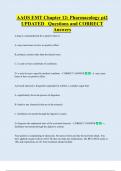
A drug is contraindicated for a patient when it:
A. may cause harm or have no positive effect.
B. produces actions other than the desired ones.
C. is used to treat a multitude of conditions.
D. is used to treat a specific medical condition. - CORRECT ANSWER - A. may cause
harm or have no positive effect.
Activated charcoal is frequently suspended in sorbitol, a complex sugar that:
A. significantly slows the process of digestion.
B. binds to any chemicals that are in the stomach.
C. facilitates movement through the digestive system.
D. disguises the unpleasant taste of the activated charcoal. - CORRECT ANSWER - c.
facilitates movement through the digestive system.
Your patient is complaining of chest pain. He states it feels just like his last heart attack. You
have applied oxygen with no relief. He does not take any medications. His BP is 88/64, pulse is
100, and respirations are 20. Your treatment should include.
, A. Asprin
B. Nitroglycerin
C. albuterol MDI
D. epinephrine - CORRECT ANSWER - A. aspirin
You are dispatched to a movie theater for a 39-year-old female with signs and symptoms of an
allergic reaction. As you are assessing her, she pulls an epinephrine auto-injector out of her purse
and hands it to you. After confirming the drug's name and expiration date, you should:
A. administer the drug.
B. contact medical control.
C. ask her if she takes other medications.
D. request an ALS ambulance to administer the drug. - CORRECT ANSWER - B. contact
medical control
EMTs arrive at the scene of a patient who was "found down." A family member states that she
gave naloxone (Narcan) to the patient before the ambulance arrived. The EMTs should suspect
that the patient: - CORRECT ANSWER - overdosed on an opioid drug.
A medication with antagonistic properties is one that:
A. blocks receptor sites and prevents other chemicals from attaching to them.
UPDATED Questions and CORRECT
Answers
A drug is contraindicated for a patient when it:
A. may cause harm or have no positive effect.
B. produces actions other than the desired ones.
C. is used to treat a multitude of conditions.
D. is used to treat a specific medical condition. - CORRECT ANSWER - A. may cause
harm or have no positive effect.
Activated charcoal is frequently suspended in sorbitol, a complex sugar that:
A. significantly slows the process of digestion.
B. binds to any chemicals that are in the stomach.
C. facilitates movement through the digestive system.
D. disguises the unpleasant taste of the activated charcoal. - CORRECT ANSWER - c.
facilitates movement through the digestive system.
Your patient is complaining of chest pain. He states it feels just like his last heart attack. You
have applied oxygen with no relief. He does not take any medications. His BP is 88/64, pulse is
100, and respirations are 20. Your treatment should include.
, A. Asprin
B. Nitroglycerin
C. albuterol MDI
D. epinephrine - CORRECT ANSWER - A. aspirin
You are dispatched to a movie theater for a 39-year-old female with signs and symptoms of an
allergic reaction. As you are assessing her, she pulls an epinephrine auto-injector out of her purse
and hands it to you. After confirming the drug's name and expiration date, you should:
A. administer the drug.
B. contact medical control.
C. ask her if she takes other medications.
D. request an ALS ambulance to administer the drug. - CORRECT ANSWER - B. contact
medical control
EMTs arrive at the scene of a patient who was "found down." A family member states that she
gave naloxone (Narcan) to the patient before the ambulance arrived. The EMTs should suspect
that the patient: - CORRECT ANSWER - overdosed on an opioid drug.
A medication with antagonistic properties is one that:
A. blocks receptor sites and prevents other chemicals from attaching to them.