Nursing Fundamentals Final Exam Study Guide
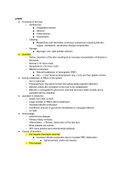
1.Effective Communication Techniques: -Introduction
-Use attentive skills/Active listening
-Open-ended questions
-Share Observations with client
-Clarification
-Summarizing
-Use of Silence
2.Barriers to Effective Communication: -Giving advice
-Giving false reassurance
-Changing the subject
-Asking "why" questions
-Offering personal opinions
3.Nonverbal Communication Techniques: -Appearance
-Posture
-Movement
-Gestures
-Facial Expressions
-Eye Contact
4.SBAR: S:
Situation B:
Background
A: Assessment
R: Recommendation
5.ADPIE - Nursing Process: Assessment, Diagnosis, Plan, Intervention,
Evalua- tion
6.Pain experience: Involves physical, emotional, and cognitive
components
7.acute pain: short-term, self-limiting, often predictable trajectory; stops
after injury heals
8.chronic pain: episode of pain that lasts for 6 months or longer; may be
intermit- tent or continuous
9.Factors that affect pain experience: -Age
-fatigue
-genetic sensitivity
-cognitive function
-prior experiences
-anxiety and fear
-support systems and coping styles
,-culture
10.Pain Assessment Scales: -Simple descriptive
-Numeric Pain Intensity Scale (most common)
-Visual Analog Scale
-Faces scale (used for kids)
11. Nursing Diagnosis: used to evaluate the response of the whole
person to actual or potential health problems
12.Nonpharmacologic interventions: feeling comfortable, bedtime routine,
priva- cy, noise, bedtime snacks, exercise, relaxation, a back rub; non-
medications
13.Pharmacologic Interventions: -opioid analgesics
-adjuvant (coanalgesics) medications
14.Misconceptions about pain: -Pain is a normal part of the aging process
-All patients taking pain medications will become addicted
-If the skin is not broken, I shouldn't have pain
-If I bother the nurse he/she will become angry
-Others will think I am weak if I c/o pain
15.Basic Principles of Pharmacology: Study of drugs, Action, Dosage,
Thera- peutic uses, Adverse effects
16.Mechanism of Action: how a drug produces its physiological effect in
the body
17.Adverse drug reactions: Unexpected, unintended, or excessive
responses to medications given at therapeutic dosages (as opposed to
overdose); one type of adverse drug event.
18.Medication orders must include: -The patient's full name
-Name of the medication (brand, generic)
-Dose, route, frequency of administration
-Date, time, signature of the prescriber
19.Types of Orders: market order, limit order, stop-loss order
20. How to prevent med errors: -Nurse's role= chart meds, verify pt,
dosage timing, 6 rights, triple check, barcode
-Pt role= be involved, ask questions, handouts,
21.Medication Safety (6 Rights): 1. Right person
2.Right time
3.Right dose
4.Right drug
5.Right route
6.Right documentation
22.Preventing Injury: Efforts to prevent or reduce the severity of bodily
,injuries caused by external mechanisms.
23.Cycle of Infection: Infectious agent, reservoir, portal of exit, means of
transmis- sion, portal of entry and susceptible host.
, 24.Body's defenses: -normal body flora
-inflammatory response
-immune response
25.Stages of Infection: incubation, prodromal, illness, decline,
convalescence
26.Break the Cycle of Infection: - Locate and remove the reservoir of
infection.
- Identify and restrict access to contaminated
- Reduce contact between infected persons and others
- Block portals of exit and entry.
- Reduce host susceptibility by immunizations, adequate nutrition,
and access to health care.
27.Hand Hygiene (Hand Washing): Lathers all surfaces of wrists, hands,
and fingers producing friction, for at least 20 seconds, keeping hands
lower than the elbows and the fingertips down. Rinse all surfaces of
wrists, hands, and fingers, keeping hands lower than the elbows and
the fingertips down.
28.Medical & surgical asepsis: Refers to those measures that render
supplies and equipment totally free of microorganisms. Sterile.
29.Wound Healing Process: -
Regeneration In epidermal wounds
No scar
-Primary intention
Clean surgical incision/edges approximated
Minimal scarring
-Secondary intention
Wound edges not approximated
Tissue loss
Heals from inner layer to surface
-Tertiary intention
Granulating tissue brought
together Delayed closure of
wound edges
30.Factors that affect wound healing: nutritional
status blood flow and oxygen delivery
impaired inflammatory & immune response
1.Effective Communication Techniques: -Introduction
-Use attentive skills/Active listening
-Open-ended questions
-Share Observations with client
-Clarification
-Summarizing
-Use of Silence
2.Barriers to Effective Communication: -Giving advice
-Giving false reassurance
-Changing the subject
-Asking "why" questions
-Offering personal opinions
3.Nonverbal Communication Techniques: -Appearance
-Posture
-Movement
-Gestures
-Facial Expressions
-Eye Contact
4.SBAR: S:
Situation B:
Background
A: Assessment
R: Recommendation
5.ADPIE - Nursing Process: Assessment, Diagnosis, Plan, Intervention,
Evalua- tion
6.Pain experience: Involves physical, emotional, and cognitive
components
7.acute pain: short-term, self-limiting, often predictable trajectory; stops
after injury heals
8.chronic pain: episode of pain that lasts for 6 months or longer; may be
intermit- tent or continuous
9.Factors that affect pain experience: -Age
-fatigue
-genetic sensitivity
-cognitive function
-prior experiences
-anxiety and fear
-support systems and coping styles
,-culture
10.Pain Assessment Scales: -Simple descriptive
-Numeric Pain Intensity Scale (most common)
-Visual Analog Scale
-Faces scale (used for kids)
11. Nursing Diagnosis: used to evaluate the response of the whole
person to actual or potential health problems
12.Nonpharmacologic interventions: feeling comfortable, bedtime routine,
priva- cy, noise, bedtime snacks, exercise, relaxation, a back rub; non-
medications
13.Pharmacologic Interventions: -opioid analgesics
-adjuvant (coanalgesics) medications
14.Misconceptions about pain: -Pain is a normal part of the aging process
-All patients taking pain medications will become addicted
-If the skin is not broken, I shouldn't have pain
-If I bother the nurse he/she will become angry
-Others will think I am weak if I c/o pain
15.Basic Principles of Pharmacology: Study of drugs, Action, Dosage,
Thera- peutic uses, Adverse effects
16.Mechanism of Action: how a drug produces its physiological effect in
the body
17.Adverse drug reactions: Unexpected, unintended, or excessive
responses to medications given at therapeutic dosages (as opposed to
overdose); one type of adverse drug event.
18.Medication orders must include: -The patient's full name
-Name of the medication (brand, generic)
-Dose, route, frequency of administration
-Date, time, signature of the prescriber
19.Types of Orders: market order, limit order, stop-loss order
20. How to prevent med errors: -Nurse's role= chart meds, verify pt,
dosage timing, 6 rights, triple check, barcode
-Pt role= be involved, ask questions, handouts,
21.Medication Safety (6 Rights): 1. Right person
2.Right time
3.Right dose
4.Right drug
5.Right route
6.Right documentation
22.Preventing Injury: Efforts to prevent or reduce the severity of bodily
,injuries caused by external mechanisms.
23.Cycle of Infection: Infectious agent, reservoir, portal of exit, means of
transmis- sion, portal of entry and susceptible host.
, 24.Body's defenses: -normal body flora
-inflammatory response
-immune response
25.Stages of Infection: incubation, prodromal, illness, decline,
convalescence
26.Break the Cycle of Infection: - Locate and remove the reservoir of
infection.
- Identify and restrict access to contaminated
- Reduce contact between infected persons and others
- Block portals of exit and entry.
- Reduce host susceptibility by immunizations, adequate nutrition,
and access to health care.
27.Hand Hygiene (Hand Washing): Lathers all surfaces of wrists, hands,
and fingers producing friction, for at least 20 seconds, keeping hands
lower than the elbows and the fingertips down. Rinse all surfaces of
wrists, hands, and fingers, keeping hands lower than the elbows and
the fingertips down.
28.Medical & surgical asepsis: Refers to those measures that render
supplies and equipment totally free of microorganisms. Sterile.
29.Wound Healing Process: -
Regeneration In epidermal wounds
No scar
-Primary intention
Clean surgical incision/edges approximated
Minimal scarring
-Secondary intention
Wound edges not approximated
Tissue loss
Heals from inner layer to surface
-Tertiary intention
Granulating tissue brought
together Delayed closure of
wound edges
30.Factors that affect wound healing: nutritional
status blood flow and oxygen delivery
impaired inflammatory & immune response