OB Outline
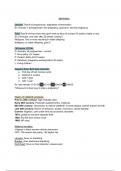
Gravida: Total # of pregnancies, regardless of termination
Ex: Gravida 1 (primigravida): first pregnancy, gravida 2: second pregnancy
Para: Total # of times client has given birth to fetus of at least 20 weeks (viable or not)
Ex: Primioara: one birth after 20 weeks (“primip”)
Multipara: Two or more resulting in viable offspring
Nullipara: no viable offspring, para 0
OB history: GTPAL
G: Gravida; all pregnancies + current
T: Term births >37 weeks
P: Preterm births 20-37 weeks
A: Abortions; pregnancy ending before 20 weeks
L: Living children
Nagele’s Rule: Birth date calculator
● First day of last menses cycle
● Subtract 3 months
● Add 7 days
● Add 1 year
Ex: last menses 11/21/24→ 8/21/24→ 8/28/24 →8/28/25
*Ultrasound is best way to date a pregnancy*
History of childbirth practices:
Prior to 20th century: high mortality rates
Early 20th century: Physician assisted births, midwives
Mid 20th century: introduction to natural childbirth, la leche league, partner present at birth
Late 20th century: Return of midwives, doulas, rooming in, breast feeding
Current: litigation, care under time and economic restraints
1870: pediatrics became separate field
1902: first full time school nurse
1960: NP roles
Maternal mortality:
-Highest in black women/ african americans
CDC: 700 women die yearly, >40 higher risk
Lamaze: focus on breathing
Bradley: slow, abdominal breathing
Dick Read: focus on fear reduction; lessens pain
, Legal/ethical:
● Abortion
● Substance abuse
● Intrauterine therapy
● Maternal fetal conflict
● Stem cell
● Umbilical cord banking
● Informed consent
Elective abortion:
1: surgical
- Vacuum aspiration
- Dilation and evacuation (D&C)
2. Medication
- Vaginally or orally
- Mifepristone + misoprostol
Exceptions to parental consent:
● Mature minor (some states can be >14)
● Emancipated minor, court determined
● Armed services member
● Married
● Financially living apart from parents
● Mother <18 but pregnant can consent to procedures
Intellectual age to make decisions: >7
Dissent: child disagrees to medical decision; can be overridden
Refusal of treatment parental autonomy: in best interest of child “paren patriae”
Primary prevention: preconception education, contraception
Secondary prevention: pregnancy testing/ “screening”
Tertiary prevention: Prevention of pregnancy complications
, Contraception:
Fertility Awareness:
Cervical mucus method: assess characteristics of cervical mucus.
As ovulation approaches; clear, stretchy, slippery (most fertile days; avoid unprotected sex)
Thick and dry: ovulation is over (progesterone rises)
Basal Body temperature: Takes body temp upon rising, before eating/drinking
Temperature rises a day or two AFTER ovulation;
AVOID unprotected sex until BBT has been elevated for 3 days
(illness, drugs, alcohol can affect these readings)
Barrier:
Diaphragm: nonhormonal, requires accurate fitting by PCP
Inserted before intercoarse
Avoid if allergy to latex or rubber, risk for TSS
Cervical cap: nonhormonal, requires accurate fitting by PCP
Can cause abnormal PAP results, risk for TSS
Contraceptive sponge: nonhormonal
OTC, immediate protection for 24 hours
Hormonal:
Oral contraceptives:
Reduce incidence of endometrial and cervical cancer
Take at same time everyday; if missed take another pill ASAP
NOT indicated for patients who smoke, have thromboembolic disease
S/E: dizzy, nausea, weight gain, mood changes, HTN, MI, blood clots
Transdermal:
apply patch for 3 weeks, take of for 4th week
Less effective in women who are overweight
IUD:
Inserted into uterus by PCP; releases copper, progesterone, or levonorgestrel
Results in dysmenorrhea
One or two strings protrude into vagina so owner can check its placement
Longer strings then normal can indicate displacement in uterus
Plan B:
Take within 72 hours
Risk of ectopic if it fails
Can cause N/V, headaches, fatigue, abdominal pain
, Pregnancy:
Stages:
-Zygote
-Blastocyst
-Embryo; starts making amniotic fluid around 2-8 weeks
-Fetus; 8-40 weeks
Ampulla: the outer third of fallopian tube, where egg is first fertilized
Hormones:
Estrogen: enlarges the uterus
Progesterone: Maintains pregnancy, relaxes smooth muscle and prevent uterine contractions
Prostaglandins: dilate and thin out cervix
Oxytocin: uterine contractions, letdown reflex
Amniotic fluid:
2 layers; protects the embryo
Amnion (inner layer): expands to meet the chorion (outer layer)
Approximately 1L fluid at term, composted of maternal blood and fetal urine
If low amniotic fluid= renal problem with fetus
● Maintains fetal body temperature
● Permits symmetric growth
● 98% water, 2% organic matter
● Promotes fetal movement
● Cushions from trauma
● Aids in umbilical cord from not compressing
Amniocentesis: aspiration needle used to collect fluid (fetal skin cells) and diagnose genetic
issues and physical abnormalities of fetus
Placenta:
● Interface between mother and fetus; passess oxygen and nutrients
● Produces hormones
● Protection from immune attack by mother
● Removes waste products
Umbilical cord:
● Formed from the amnion
● Lifeline from mother to fetus; passess oxygen and nutrients
● Contains 1 large vein, 2 small arteries
● “Wharton Jelly” surrounds vein and arteries; prevents compression
● At term: cord is 22” inches long, 1” inch wide
Gravida: Total # of pregnancies, regardless of termination
Ex: Gravida 1 (primigravida): first pregnancy, gravida 2: second pregnancy
Para: Total # of times client has given birth to fetus of at least 20 weeks (viable or not)
Ex: Primioara: one birth after 20 weeks (“primip”)
Multipara: Two or more resulting in viable offspring
Nullipara: no viable offspring, para 0
OB history: GTPAL
G: Gravida; all pregnancies + current
T: Term births >37 weeks
P: Preterm births 20-37 weeks
A: Abortions; pregnancy ending before 20 weeks
L: Living children
Nagele’s Rule: Birth date calculator
● First day of last menses cycle
● Subtract 3 months
● Add 7 days
● Add 1 year
Ex: last menses 11/21/24→ 8/21/24→ 8/28/24 →8/28/25
*Ultrasound is best way to date a pregnancy*
History of childbirth practices:
Prior to 20th century: high mortality rates
Early 20th century: Physician assisted births, midwives
Mid 20th century: introduction to natural childbirth, la leche league, partner present at birth
Late 20th century: Return of midwives, doulas, rooming in, breast feeding
Current: litigation, care under time and economic restraints
1870: pediatrics became separate field
1902: first full time school nurse
1960: NP roles
Maternal mortality:
-Highest in black women/ african americans
CDC: 700 women die yearly, >40 higher risk
Lamaze: focus on breathing
Bradley: slow, abdominal breathing
Dick Read: focus on fear reduction; lessens pain
, Legal/ethical:
● Abortion
● Substance abuse
● Intrauterine therapy
● Maternal fetal conflict
● Stem cell
● Umbilical cord banking
● Informed consent
Elective abortion:
1: surgical
- Vacuum aspiration
- Dilation and evacuation (D&C)
2. Medication
- Vaginally or orally
- Mifepristone + misoprostol
Exceptions to parental consent:
● Mature minor (some states can be >14)
● Emancipated minor, court determined
● Armed services member
● Married
● Financially living apart from parents
● Mother <18 but pregnant can consent to procedures
Intellectual age to make decisions: >7
Dissent: child disagrees to medical decision; can be overridden
Refusal of treatment parental autonomy: in best interest of child “paren patriae”
Primary prevention: preconception education, contraception
Secondary prevention: pregnancy testing/ “screening”
Tertiary prevention: Prevention of pregnancy complications
, Contraception:
Fertility Awareness:
Cervical mucus method: assess characteristics of cervical mucus.
As ovulation approaches; clear, stretchy, slippery (most fertile days; avoid unprotected sex)
Thick and dry: ovulation is over (progesterone rises)
Basal Body temperature: Takes body temp upon rising, before eating/drinking
Temperature rises a day or two AFTER ovulation;
AVOID unprotected sex until BBT has been elevated for 3 days
(illness, drugs, alcohol can affect these readings)
Barrier:
Diaphragm: nonhormonal, requires accurate fitting by PCP
Inserted before intercoarse
Avoid if allergy to latex or rubber, risk for TSS
Cervical cap: nonhormonal, requires accurate fitting by PCP
Can cause abnormal PAP results, risk for TSS
Contraceptive sponge: nonhormonal
OTC, immediate protection for 24 hours
Hormonal:
Oral contraceptives:
Reduce incidence of endometrial and cervical cancer
Take at same time everyday; if missed take another pill ASAP
NOT indicated for patients who smoke, have thromboembolic disease
S/E: dizzy, nausea, weight gain, mood changes, HTN, MI, blood clots
Transdermal:
apply patch for 3 weeks, take of for 4th week
Less effective in women who are overweight
IUD:
Inserted into uterus by PCP; releases copper, progesterone, or levonorgestrel
Results in dysmenorrhea
One or two strings protrude into vagina so owner can check its placement
Longer strings then normal can indicate displacement in uterus
Plan B:
Take within 72 hours
Risk of ectopic if it fails
Can cause N/V, headaches, fatigue, abdominal pain
, Pregnancy:
Stages:
-Zygote
-Blastocyst
-Embryo; starts making amniotic fluid around 2-8 weeks
-Fetus; 8-40 weeks
Ampulla: the outer third of fallopian tube, where egg is first fertilized
Hormones:
Estrogen: enlarges the uterus
Progesterone: Maintains pregnancy, relaxes smooth muscle and prevent uterine contractions
Prostaglandins: dilate and thin out cervix
Oxytocin: uterine contractions, letdown reflex
Amniotic fluid:
2 layers; protects the embryo
Amnion (inner layer): expands to meet the chorion (outer layer)
Approximately 1L fluid at term, composted of maternal blood and fetal urine
If low amniotic fluid= renal problem with fetus
● Maintains fetal body temperature
● Permits symmetric growth
● 98% water, 2% organic matter
● Promotes fetal movement
● Cushions from trauma
● Aids in umbilical cord from not compressing
Amniocentesis: aspiration needle used to collect fluid (fetal skin cells) and diagnose genetic
issues and physical abnormalities of fetus
Placenta:
● Interface between mother and fetus; passess oxygen and nutrients
● Produces hormones
● Protection from immune attack by mother
● Removes waste products
Umbilical cord:
● Formed from the amnion
● Lifeline from mother to fetus; passess oxygen and nutrients
● Contains 1 large vein, 2 small arteries
● “Wharton Jelly” surrounds vein and arteries; prevents compression
● At term: cord is 22” inches long, 1” inch wide