Integrated Regenerative Design
Lesson 5 24/10
A. Zero carbon > green energy (5.2)
Kevin Anderson on climate > there is a catastrophe for all species, including our own. He is one
of the world’s leading climatologists.
This lecture is about what we can do, and what is the future we have to work on?
We are connected by oil > and oil is carbon.
- What is carbon? / carbon negative
We’re going to look at a specific building (small), and look at the steps of it.
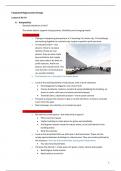
GENT BOURGOYEN NATURE CENTRE BY EVR ARCHITECTS
‘above zero’, olaf Ottobecker: he captures ice mountains that turned black due to the
climate change (of carbon), he shows the world the impact on the climate change
1. Who are the carbon polluters?
o For everything we do, we need energy, which produces carbon.
• Embodied carbon = emissions from construction
• Operational carbon = emissions in use phase
• Built environment in the world is 40% of all produced CO2 emissions,
waste and energy
2. Action plan: use a design strategy – to build or not to build?
o This makes us polluters, because we need everything, how to solve it?
• Do we have to build it? What is happening without the building? Can we
cancel buildings? The art to build nothing. Maybe it just needs a light
makeover?
❖ Case study: urban NL Rotterdam: a denser + greener city, there
is a balance between nature and buildings.
❖ Vacancy in a school building? How to use empty space. Don’t
build empty spaces.
CASE STUDY: EVR-research, contest Kattenberg
▪ Need for a parking, auditoria, meeting place and education and sport. Need
to study existing functions. What is where, and what do we need?
1
, ▪ It’s an info-nature centre building on a natural site, very near the city line.
Existing site and building was very small, made of stone, contrasting with
nature. The site was very unique because of the direct natural edge, near
the city. It was a contest, but EVR architects were the only office who
visited the site.
3. Step 1 sustainable concept – spatial design criteria
o Correct choice of construction site
o What is the context?
• Paths?
• Wind? (In Belgium wind mostly comes from the West!!!) > if you have an
entrance from the west, it’s mostly a problem in open sites. Wind is
almost never coming from the east.
• The sun > IS SO IMPORTANT!!! In summer it’s not a problem. In the
winter it’s mostly a problem, darker, lower, or no sun.
❖ East morning sun, light comes very deep, in summer it’s
dangerous, see that it doesn’t heat up the building too much in
summer! Shading systems are needing here. The coldest
orientation (cold from russia etc)
❖ South: magnificent orientation, living spaces, terraces,
❖ North: exposition rooms, art, classrooms, storage shadow
❖ West: afternoon sun, low light enters, a lot of wind and rain
o Zoning, limitation of m²
• We use too much space, we need to remember, what we actually need
for common spaces, and don’t use more.
2
Lesson 5 24/10
A. Zero carbon > green energy (5.2)
Kevin Anderson on climate > there is a catastrophe for all species, including our own. He is one
of the world’s leading climatologists.
This lecture is about what we can do, and what is the future we have to work on?
We are connected by oil > and oil is carbon.
- What is carbon? / carbon negative
We’re going to look at a specific building (small), and look at the steps of it.
GENT BOURGOYEN NATURE CENTRE BY EVR ARCHITECTS
‘above zero’, olaf Ottobecker: he captures ice mountains that turned black due to the
climate change (of carbon), he shows the world the impact on the climate change
1. Who are the carbon polluters?
o For everything we do, we need energy, which produces carbon.
• Embodied carbon = emissions from construction
• Operational carbon = emissions in use phase
• Built environment in the world is 40% of all produced CO2 emissions,
waste and energy
2. Action plan: use a design strategy – to build or not to build?
o This makes us polluters, because we need everything, how to solve it?
• Do we have to build it? What is happening without the building? Can we
cancel buildings? The art to build nothing. Maybe it just needs a light
makeover?
❖ Case study: urban NL Rotterdam: a denser + greener city, there
is a balance between nature and buildings.
❖ Vacancy in a school building? How to use empty space. Don’t
build empty spaces.
CASE STUDY: EVR-research, contest Kattenberg
▪ Need for a parking, auditoria, meeting place and education and sport. Need
to study existing functions. What is where, and what do we need?
1
, ▪ It’s an info-nature centre building on a natural site, very near the city line.
Existing site and building was very small, made of stone, contrasting with
nature. The site was very unique because of the direct natural edge, near
the city. It was a contest, but EVR architects were the only office who
visited the site.
3. Step 1 sustainable concept – spatial design criteria
o Correct choice of construction site
o What is the context?
• Paths?
• Wind? (In Belgium wind mostly comes from the West!!!) > if you have an
entrance from the west, it’s mostly a problem in open sites. Wind is
almost never coming from the east.
• The sun > IS SO IMPORTANT!!! In summer it’s not a problem. In the
winter it’s mostly a problem, darker, lower, or no sun.
❖ East morning sun, light comes very deep, in summer it’s
dangerous, see that it doesn’t heat up the building too much in
summer! Shading systems are needing here. The coldest
orientation (cold from russia etc)
❖ South: magnificent orientation, living spaces, terraces,
❖ North: exposition rooms, art, classrooms, storage shadow
❖ West: afternoon sun, low light enters, a lot of wind and rain
o Zoning, limitation of m²
• We use too much space, we need to remember, what we actually need
for common spaces, and don’t use more.
2