Integrated Regenerative Design
Lesson 2 3/10
Why are we skipping nature?
A. Lean Processes/ lean management
- Can we illiminate non-value-added compenents?
- Lean: is about skipping everything that we don’t need. Creating more value for fewer effort
- Lean = no waste and focus on valua added components
1. Study and research
o Thinking must always come before
making; it is nearly impossible to
create effectively without knowledge.
Libraries are important.
o As an architect, you need to visit a lot
of architecture and study its designs
and elements.
o Ask yourself the “WHY?” question. It
brings you to the core of the topic,
determining if it’s important or not.
• Example: TED Talks
2. Define your ambitions
o This is the why > what do you believe, and why will you do certain things?
o Draw ambitions and write them down. These sketches help you communicate your
values to others.
o Ex. OMA tried to make sketches and schemes with simple mission statements to
highlight the most important elements.
3. Design a process
o A process line is very important for your project > time, to do’s, planning. Set your
targets and goals.
o Identify all the different elements required for the project: habitat, water, energy,
budget, materials, etc. See what is possible and what is needed.
o Start with the END sometimes (what is the dream?),
only produce what is needed, what is the essence
of the question?
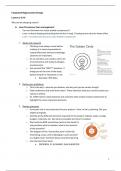
o The diagram of the "discomfort zone" (slide 43):
Interesting, scary, and challenging > push yourself
to a higher level. Comfort allows very little learning.
o Use the best (free) tools
• DROPBOX, PI, SCANNER, SUN SURVEYER
1
, 4. Think in different scenarios
o Make possibilities, in the
beginning. Good designs
come from trying and
testing.
5. Think in different scales
o Analyze what is happening
at different scales or
levels. Zoom in and out
constantly.
o Choose materials early in the process, not at the end. It's essential to know how
and what you can design.
6. Your story & your representation
o Choose your style, color, find references you like
o The model > do we need it? Do we need to have a real one or a digital one?
o Make a strong presentation.
• Ex. BIG architects focus heavily on storytelling, changing both the
question and the answer.
7. Check & assess the quality
o Invest in quality
o Use an assessment system:
• BREEAM SYSTEM: ranks different design elements.
• TODstandard: helps identify the most critical layers in your design.
• Find the Roadbook in TOLEDO >
reference links for knowing where
to find good information.
o Rate your own quality on a scale of 1–10.
Mistakes can happen, but the key is how you
respond to them.
B. Re-presentation
- Focus on quality and expressing your "why." Examine
different themes yourself. It’s about finding what
attracts you and identifying your mode of
expression. Try to achieve more in less time. Make clear drawings, etc.
- We are reviewing these topics quickly to provide examples.
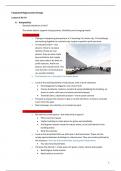
- Casestudy Muide-Meule stede = structure sketch
o Current new projects
o Greenery & public activities
2
Lesson 2 3/10
Why are we skipping nature?
A. Lean Processes/ lean management
- Can we illiminate non-value-added compenents?
- Lean: is about skipping everything that we don’t need. Creating more value for fewer effort
- Lean = no waste and focus on valua added components
1. Study and research
o Thinking must always come before
making; it is nearly impossible to
create effectively without knowledge.
Libraries are important.
o As an architect, you need to visit a lot
of architecture and study its designs
and elements.
o Ask yourself the “WHY?” question. It
brings you to the core of the topic,
determining if it’s important or not.
• Example: TED Talks
2. Define your ambitions
o This is the why > what do you believe, and why will you do certain things?
o Draw ambitions and write them down. These sketches help you communicate your
values to others.
o Ex. OMA tried to make sketches and schemes with simple mission statements to
highlight the most important elements.
3. Design a process
o A process line is very important for your project > time, to do’s, planning. Set your
targets and goals.
o Identify all the different elements required for the project: habitat, water, energy,
budget, materials, etc. See what is possible and what is needed.
o Start with the END sometimes (what is the dream?),
only produce what is needed, what is the essence
of the question?
o The diagram of the "discomfort zone" (slide 43):
Interesting, scary, and challenging > push yourself
to a higher level. Comfort allows very little learning.
o Use the best (free) tools
• DROPBOX, PI, SCANNER, SUN SURVEYER
1
, 4. Think in different scenarios
o Make possibilities, in the
beginning. Good designs
come from trying and
testing.
5. Think in different scales
o Analyze what is happening
at different scales or
levels. Zoom in and out
constantly.
o Choose materials early in the process, not at the end. It's essential to know how
and what you can design.
6. Your story & your representation
o Choose your style, color, find references you like
o The model > do we need it? Do we need to have a real one or a digital one?
o Make a strong presentation.
• Ex. BIG architects focus heavily on storytelling, changing both the
question and the answer.
7. Check & assess the quality
o Invest in quality
o Use an assessment system:
• BREEAM SYSTEM: ranks different design elements.
• TODstandard: helps identify the most critical layers in your design.
• Find the Roadbook in TOLEDO >
reference links for knowing where
to find good information.
o Rate your own quality on a scale of 1–10.
Mistakes can happen, but the key is how you
respond to them.
B. Re-presentation
- Focus on quality and expressing your "why." Examine
different themes yourself. It’s about finding what
attracts you and identifying your mode of
expression. Try to achieve more in less time. Make clear drawings, etc.
- We are reviewing these topics quickly to provide examples.
- Casestudy Muide-Meule stede = structure sketch
o Current new projects
o Greenery & public activities
2