, • Part of the airline
• Carry out periodic audits
• The Operations Manual must be followed • Refers to operation of commercial aircraft • Recommended if MCTOM >20,000kg
except for emergencies • Applies to passenger and cargo ops • Mandatory if MCTOM >27,000kg
• PIC is responsible for following procedure • Provides Standards and Recommended • Includes a Safety Review Board
Practices (SARPs) ▪ Chaired by the Accountable Manager (or
a Line Captain)
• Part A – General/Basic (Company Wide) ▪ Allocates appropriate resources
• Part B – Type Specific • I – Definitions • The Safety Manager should:
• Part C – Aerodrome and Routes • II – ARO – Authority ▪ Carry out periodic safety reports
• Part D – Training • III – ORO – Operators (Organization ▪ Facilitate hazard identification
• Prepared in English but may be translated to Requirements) • Communication to individual employees
suit staffing needs • IV – CAT – Commercial Air Transport depends on their specific safety
• Crew members must receive Part A and B for • V – SPA – Specific Approvals responsibilities
personal study
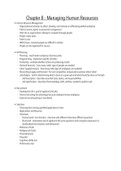
• Alternate – Usable aerodrome if required • Wing Lights (Red and Green)- 110° Range
• MOPSC - Maximum Operational Passenger • Destination Alternate – Alternate • Rear Light ( ) - 140° Range
Seating Configuration aerodrome if the destination is unusable • Only required at night
• MCTOM – Maximum Certified Take-Off Mass • Enroute Alternate – Alternate for enroute • Always steady (not flashing)
• Commercial Air Transport – Transporting emergencies
passengers, cargo or mail for remuneration • ETOPS Alternate – Alternate for emergencies
or other valuable consideration occurring during ETOPS
• Takeoff Alternate – Alternate if departure
aerodrome cannot be returned to
• Flight Time – Considered as brakes off
brakes on time
• Contains identity of the AMO (Part 145) and
identity of the engineer (Part 66)
, • Made by the manufacturer or designer • Large companies have Operations and • Certificate of Registration
• Always less restrictive than the MEL Maintenance systems • Certificate of Airworthiness
• Must be approved by the Manufacturers • Approved by the authority • Noise Certification
State Authority • A form of internal auditing (feedback system) • AOC
• Aircraft Radio License
• Third Party Liability Insurance
• Found in Ops Manual Part B • Must have an accountable manager • Valid Flight Crew License
• Written by the Operator • Other post holders include:
• Approved by the Operators State Authority ▪ Flight Ops
• Only relevant stationary prior to departure ▪ Maintenance System • Mass and Balance
• When moving, use the Abnormal and ▪ Crew Training • Operational Flight Plan
Emergency Procedures Checklists ▪ Ground Operations • NOTAMs
• Operations outside the MEL only allowed • >21 employees = Complex Company • Special Loads
with authority approval • Tech Log
• 90 days to reflect changes from MMEL
They must prevent…
• People in parts of the plane not designed for • State does ramp inspections of paperwork
• Category A – Repaired by the time specified accommodation within a reasonable period (10 days)
in the Remarks/Exceptions • Passengers using portable electronic devices • Commander must allow access to the flight
• Category B – 3 consecutive days • Boarding of intoxicated individuals deck unless it impacts safety
• Category C – 10 consecutive days • Unauthorized admission to the flight deck • FDR kept after an accident for 60 days
• Category D – 120 consecutive days • Carriage of unauthorized people/cargo
• Starts at midnight that night
• Expires 1 minute after midnight • Dry Lease – No crew provided operated
• Includes flight and cabin crew under AOC of the lessee
• Additional crew member – Not associated ▪ Dry Lease In must be <7 months in a 12
with operational or safety duties consecutive month period (non-EU)
• Crew members speak the same language
• Cabin crew must report anything they see to • Wet Lease – Crew provided operated under
• Ops Manual must at least be in English
the Commander AOC of the lessor
• Anything that occurs that affects safety of
other flights must be reported to ATS
• Flight data monitoring program required if
immediately
MCTOM >27,000kg
• Other occurrences reported within 72 hours
• Carry out periodic audits
• The Operations Manual must be followed • Refers to operation of commercial aircraft • Recommended if MCTOM >20,000kg
except for emergencies • Applies to passenger and cargo ops • Mandatory if MCTOM >27,000kg
• PIC is responsible for following procedure • Provides Standards and Recommended • Includes a Safety Review Board
Practices (SARPs) ▪ Chaired by the Accountable Manager (or
a Line Captain)
• Part A – General/Basic (Company Wide) ▪ Allocates appropriate resources
• Part B – Type Specific • I – Definitions • The Safety Manager should:
• Part C – Aerodrome and Routes • II – ARO – Authority ▪ Carry out periodic safety reports
• Part D – Training • III – ORO – Operators (Organization ▪ Facilitate hazard identification
• Prepared in English but may be translated to Requirements) • Communication to individual employees
suit staffing needs • IV – CAT – Commercial Air Transport depends on their specific safety
• Crew members must receive Part A and B for • V – SPA – Specific Approvals responsibilities
personal study
• Alternate – Usable aerodrome if required • Wing Lights (Red and Green)- 110° Range
• MOPSC - Maximum Operational Passenger • Destination Alternate – Alternate • Rear Light ( ) - 140° Range
Seating Configuration aerodrome if the destination is unusable • Only required at night
• MCTOM – Maximum Certified Take-Off Mass • Enroute Alternate – Alternate for enroute • Always steady (not flashing)
• Commercial Air Transport – Transporting emergencies
passengers, cargo or mail for remuneration • ETOPS Alternate – Alternate for emergencies
or other valuable consideration occurring during ETOPS
• Takeoff Alternate – Alternate if departure
aerodrome cannot be returned to
• Flight Time – Considered as brakes off
brakes on time
• Contains identity of the AMO (Part 145) and
identity of the engineer (Part 66)
, • Made by the manufacturer or designer • Large companies have Operations and • Certificate of Registration
• Always less restrictive than the MEL Maintenance systems • Certificate of Airworthiness
• Must be approved by the Manufacturers • Approved by the authority • Noise Certification
State Authority • A form of internal auditing (feedback system) • AOC
• Aircraft Radio License
• Third Party Liability Insurance
• Found in Ops Manual Part B • Must have an accountable manager • Valid Flight Crew License
• Written by the Operator • Other post holders include:
• Approved by the Operators State Authority ▪ Flight Ops
• Only relevant stationary prior to departure ▪ Maintenance System • Mass and Balance
• When moving, use the Abnormal and ▪ Crew Training • Operational Flight Plan
Emergency Procedures Checklists ▪ Ground Operations • NOTAMs
• Operations outside the MEL only allowed • >21 employees = Complex Company • Special Loads
with authority approval • Tech Log
• 90 days to reflect changes from MMEL
They must prevent…
• People in parts of the plane not designed for • State does ramp inspections of paperwork
• Category A – Repaired by the time specified accommodation within a reasonable period (10 days)
in the Remarks/Exceptions • Passengers using portable electronic devices • Commander must allow access to the flight
• Category B – 3 consecutive days • Boarding of intoxicated individuals deck unless it impacts safety
• Category C – 10 consecutive days • Unauthorized admission to the flight deck • FDR kept after an accident for 60 days
• Category D – 120 consecutive days • Carriage of unauthorized people/cargo
• Starts at midnight that night
• Expires 1 minute after midnight • Dry Lease – No crew provided operated
• Includes flight and cabin crew under AOC of the lessee
• Additional crew member – Not associated ▪ Dry Lease In must be <7 months in a 12
with operational or safety duties consecutive month period (non-EU)
• Crew members speak the same language
• Cabin crew must report anything they see to • Wet Lease – Crew provided operated under
• Ops Manual must at least be in English
the Commander AOC of the lessor
• Anything that occurs that affects safety of
other flights must be reported to ATS
• Flight data monitoring program required if
immediately
MCTOM >27,000kg
• Other occurrences reported within 72 hours