1
NU
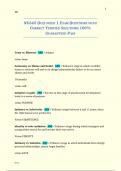
NU665 QUIZ WEEK 1 EXAM QUESTIONS WITH
CORRECT VERIFIED SOLUTIONS 100%
GUARANTEED PASS
Trust vs. Mistrust - ANS ✓infancy
virtue hope
Autonomy vs. Shame and Doubt - ANS ✓Erikson's stage in which a toddler
learns to exercise will and to do things independently; failure to do so causes
shame and doubt
18 months
virtue will
initiative vs guilt - ANS ✓Success in this stage of psychosocial development
leads to a sense of purpose.
virtue PURPOSE
Industry vs. Inferiority - ANS ✓Erikson's stage between 6 and 11 years, when
the child learns to be productive
Virtue COMPETENCE
identity vs role confusion - ANS ✓Erikson's stage during which teenagers and
young adults search for and become their true selves
Virtue FIDELITY
Intimacy vs. Isolation - ANS ✓Erikson's stage in which individuals form deeply
personal relationships, marry, begin families
virtue LOVE
NU665
, 2
NU
Generativity vs. Stagnation - ANS ✓Erikson's stage of social development in
which middle-aged people begin to devote themselves more to fulfilling one's
potential and doing public service
Virtue CARE
integrity vs despair - ANS ✓Erikson's final stage in which those near the end of
life look back and evaluate their lives
Virtue WISDOM
Karl Abraham - ANS ✓separated Freuds psychosexual stages into smaller
phases
oral stage-sucking phase and biting phase etc
Adler - ANS ✓inferiority complex
Franz Alexander - ANS ✓first advanced Sigmund Freud's theory that some
diseases could be caused by individual psychological conflicts
Gordon Allport - ANS ✓trait theory of personality; 3 levels of traits: cardinal,
central, and secondary
Eric Berne - ANS ✓Transactional Analysis
Wilfred Bion - ANS ✓focused on group cohesiveness and group dynamics that
promoted the progression of a group.
John Bowlby - ANS ✓attachment theory
Raymond Cattell - ANS ✓a psychologist interest in personality, who used factor
analysis with hundreds of surface traits to identify which traits were related to
each other. By this process, he identified sixteen source traits, and by factor
analysis reduced fifteen of these into five global factors: extroversion, anxiety,
receptivity, accommodation, and self-control
Ronald Fairbairn - ANS ✓Object Relations Therapy; "splitting"
Sandor Ferenczi - ANS ✓active therapy, mutual analysis
he would analyse a patient and then allow them to analyse him
NU665
NU
NU665 QUIZ WEEK 1 EXAM QUESTIONS WITH
CORRECT VERIFIED SOLUTIONS 100%
GUARANTEED PASS
Trust vs. Mistrust - ANS ✓infancy
virtue hope
Autonomy vs. Shame and Doubt - ANS ✓Erikson's stage in which a toddler
learns to exercise will and to do things independently; failure to do so causes
shame and doubt
18 months
virtue will
initiative vs guilt - ANS ✓Success in this stage of psychosocial development
leads to a sense of purpose.
virtue PURPOSE
Industry vs. Inferiority - ANS ✓Erikson's stage between 6 and 11 years, when
the child learns to be productive
Virtue COMPETENCE
identity vs role confusion - ANS ✓Erikson's stage during which teenagers and
young adults search for and become their true selves
Virtue FIDELITY
Intimacy vs. Isolation - ANS ✓Erikson's stage in which individuals form deeply
personal relationships, marry, begin families
virtue LOVE
NU665
, 2
NU
Generativity vs. Stagnation - ANS ✓Erikson's stage of social development in
which middle-aged people begin to devote themselves more to fulfilling one's
potential and doing public service
Virtue CARE
integrity vs despair - ANS ✓Erikson's final stage in which those near the end of
life look back and evaluate their lives
Virtue WISDOM
Karl Abraham - ANS ✓separated Freuds psychosexual stages into smaller
phases
oral stage-sucking phase and biting phase etc
Adler - ANS ✓inferiority complex
Franz Alexander - ANS ✓first advanced Sigmund Freud's theory that some
diseases could be caused by individual psychological conflicts
Gordon Allport - ANS ✓trait theory of personality; 3 levels of traits: cardinal,
central, and secondary
Eric Berne - ANS ✓Transactional Analysis
Wilfred Bion - ANS ✓focused on group cohesiveness and group dynamics that
promoted the progression of a group.
John Bowlby - ANS ✓attachment theory
Raymond Cattell - ANS ✓a psychologist interest in personality, who used factor
analysis with hundreds of surface traits to identify which traits were related to
each other. By this process, he identified sixteen source traits, and by factor
analysis reduced fifteen of these into five global factors: extroversion, anxiety,
receptivity, accommodation, and self-control
Ronald Fairbairn - ANS ✓Object Relations Therapy; "splitting"
Sandor Ferenczi - ANS ✓active therapy, mutual analysis
he would analyse a patient and then allow them to analyse him
NU665