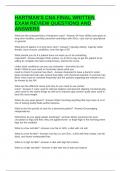
HARTMAN'S CNA FINAL WRITTEN
EXAM REVIEW QUESTIONS AND
ANSWERS
What are the characteristics of long-term care? -Answer-24-hour skilled care given in
long-term facilities, provides personal care/helps with ADLs, care can be specialized
or general
What kind of patient is in long term care? -Answer-Typically elderly, majority white
female, have chronic conditions, over the age of 65
What should you do if a patient does not want you to do something
important? -Answer-Respect their wishes, try to find a way to get the patient to be
willing to complete the task (compromise), and tell the nurse
Under what conditions can you use restraints---and what are the
kinds? What do you need to remember about what you
need to check if a person has them. -Answer-Required to have a doctor's order;
types include bed side rails, locked tray table, and chemical restraint; if a person has
them, they must be checked frequently and the policies regarding the restraint must
be known by the NA
What are the different canes and why do you need to use certain
ones? -Answer-C cane used to improve balance and prevent slipping; functional grip
cane used for the same things as well as to improve grip control; quad cane used to
bear the most weight
When do you wear gloves? -Answer-When touching anything that may have or is at
risk of having bodily fluids and/or bacteria
What is the first priority of care for a dementia patient? -Answer-Encouraging
independence
When/how do you apply elastic stockings? -Answer-When someone has poor
circulation to legs and feet; they are applied knee- or thigh-high in the morning when
legs are the smallest
What is a low salt diet? -Answer-Low Na or NAS, a diet with not salt
What is a low fat diet? -Answer-Low-fat or Low-Chol., a diet with lean meats, low-fat
dairy, and mono-unsaturated fats
What is a high fat diet? -Answer-A diet with high fat content
What is a high salt diet? -Answer-A diet with lots of salt and sodium
EXAM REVIEW QUESTIONS AND
ANSWERS
What are the characteristics of long-term care? -Answer-24-hour skilled care given in
long-term facilities, provides personal care/helps with ADLs, care can be specialized
or general
What kind of patient is in long term care? -Answer-Typically elderly, majority white
female, have chronic conditions, over the age of 65
What should you do if a patient does not want you to do something
important? -Answer-Respect their wishes, try to find a way to get the patient to be
willing to complete the task (compromise), and tell the nurse
Under what conditions can you use restraints---and what are the
kinds? What do you need to remember about what you
need to check if a person has them. -Answer-Required to have a doctor's order;
types include bed side rails, locked tray table, and chemical restraint; if a person has
them, they must be checked frequently and the policies regarding the restraint must
be known by the NA
What are the different canes and why do you need to use certain
ones? -Answer-C cane used to improve balance and prevent slipping; functional grip
cane used for the same things as well as to improve grip control; quad cane used to
bear the most weight
When do you wear gloves? -Answer-When touching anything that may have or is at
risk of having bodily fluids and/or bacteria
What is the first priority of care for a dementia patient? -Answer-Encouraging
independence
When/how do you apply elastic stockings? -Answer-When someone has poor
circulation to legs and feet; they are applied knee- or thigh-high in the morning when
legs are the smallest
What is a low salt diet? -Answer-Low Na or NAS, a diet with not salt
What is a low fat diet? -Answer-Low-fat or Low-Chol., a diet with lean meats, low-fat
dairy, and mono-unsaturated fats
What is a high fat diet? -Answer-A diet with high fat content
What is a high salt diet? -Answer-A diet with lots of salt and sodium