BGZ2024
Food for life
Maastricht University
Bachelor Health Sciences | Collegejaar 2019-2020
,Inhoudsopgave
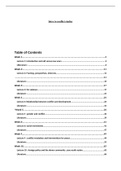
Problem 1 – macro- and micro-nutrients .......................................................................................................... 2
Problem 2 – anatomy and physiology of the digestive system ....................................................................... 18
Summary tables macronutrient digestion ...................................................................................................... 32
Problem 3 – storage of nutrients .................................................................................................................... 35
Problem 4 – oxidation .................................................................................................................................... 44
Problem 5 – protein metabolism .................................................................................................................... 62
Problem 6 – integration (This were presentations integrating tasks 1-5 so not included in this document. But
all the things mentioned in the presentations are already noted in case 1-5) ................................................ 71
Problem 7 – biomarkers ................................................................................................................................. 71
Problem 8 – fat storage in adipose and non-adipose tissue ............................................................................ 80
Problem 9 – dietary fat................................................................................................................................... 90
Problem 10 – gut microbiota .......................................................................................................................... 99
Task 11: A glass of milk before sleep ............................................................................................................ 114
,Problem 1 – macro- and micro-nutrients
Problem statement
What nutrients does the body need?
Brainstorm
Macro-nutrients
- Protein
- Fats
- carbohydrates
Micro-nutrients
- Vitamins
o Water soluble/not soluble
- Minerals
- Fibers
Learning goals
1. What are the macro-nutrients?
a. Fats
b. Carbohydrates (fibers)
c. Proteins
2. What are the micro-nutrients?
a. Minerals
b. Vitamins
3. How are these recommendations made? What kind of data?
4. What is a healthy diet?
5. What can happen when you have an unhealthy/unbalanced diet? What happens when
you’re vegan, vegetarian? When you have a deficiency in types of minerals, what
types of diseases does this bring?
6. What does the term essential mean? What are they? Why do you need them? When
do you need these essential nutrients the most (childhood, pregnancy)?
For question 1 and 2
- Structure (chemical composition)
- Function in the human body
- Recommended daily intake/allowance (percentage) (Gezondheidsraad, IFSA)
- In what type of food can you find them? (What diets? High fat diet? Mediterranean
diet?
- Energy content (Kcal, Joule, what gives the most energy, how energy dense)
Concept map: thema koolhydraten
, 1. What are the macro-nutrients?
Macronutrients preserve the structural and functional integrity of the organism and severe as
biological fuel. The carbohydrate, lipid, and protein nutrients provide energy to maintain
bodily functions during rest and physical activity.
Carbohydrates
Structure
- Chemical formula: Cn(H2O)n.
- Consist of carbon, hydrogen and oxygen.
- Mostly polar molecules, soluble in water.
The basic carbohydrate unit: monosaccharide.
- Monosaccharides may have different numbers of carbon atoms. The terminology
reflects this. Hexose - six carbon atoms, pentose – five carbon atoms and so on.
o Pentoses and hexoses are the most important in terms of mammalian
metabolism.
- The most abundant monosaccharides in our diet and in our bodies are:
o Glucose (C6H12O6) – grape sugar (Hexose)
o Fructose – fruit sugar (Pentose)
o Galactose (C6H12O6) – milk sugar (Hexose)
o Ribose – constituent of nucleic acids
o Sugar alcohols
- Glucose, fructose and galactose have the same chemical formula, but they have a
slightly different C-H-C linkage and are thus different substances, with distinct
biochemical characteristics.
Complex carbohydrates are built up from monosaccharides linked by covalent bonds.
- Disaccharide: a molecule composed of two monosaccharides
- Oligosaccharide: short chain of sugar units
- Polysaccharide: Long chains of sugar molecules linked together
The most abundant disaccharides in our diet and in our bodies are:
- Sucrose – glucose and fructose
- Maltose – two glucose molecules
- Lactose – galactose and glucose
Polysaccharides form during the chemical process of dehydration
synthesis, a water-losing reaction that forms a more complex carbohydrate molecule. We can
divide the polysaccharides into plant polysaccharides and animal polysaccharides.
Food for life
Maastricht University
Bachelor Health Sciences | Collegejaar 2019-2020
,Inhoudsopgave
Problem 1 – macro- and micro-nutrients .......................................................................................................... 2
Problem 2 – anatomy and physiology of the digestive system ....................................................................... 18
Summary tables macronutrient digestion ...................................................................................................... 32
Problem 3 – storage of nutrients .................................................................................................................... 35
Problem 4 – oxidation .................................................................................................................................... 44
Problem 5 – protein metabolism .................................................................................................................... 62
Problem 6 – integration (This were presentations integrating tasks 1-5 so not included in this document. But
all the things mentioned in the presentations are already noted in case 1-5) ................................................ 71
Problem 7 – biomarkers ................................................................................................................................. 71
Problem 8 – fat storage in adipose and non-adipose tissue ............................................................................ 80
Problem 9 – dietary fat................................................................................................................................... 90
Problem 10 – gut microbiota .......................................................................................................................... 99
Task 11: A glass of milk before sleep ............................................................................................................ 114
,Problem 1 – macro- and micro-nutrients
Problem statement
What nutrients does the body need?
Brainstorm
Macro-nutrients
- Protein
- Fats
- carbohydrates
Micro-nutrients
- Vitamins
o Water soluble/not soluble
- Minerals
- Fibers
Learning goals
1. What are the macro-nutrients?
a. Fats
b. Carbohydrates (fibers)
c. Proteins
2. What are the micro-nutrients?
a. Minerals
b. Vitamins
3. How are these recommendations made? What kind of data?
4. What is a healthy diet?
5. What can happen when you have an unhealthy/unbalanced diet? What happens when
you’re vegan, vegetarian? When you have a deficiency in types of minerals, what
types of diseases does this bring?
6. What does the term essential mean? What are they? Why do you need them? When
do you need these essential nutrients the most (childhood, pregnancy)?
For question 1 and 2
- Structure (chemical composition)
- Function in the human body
- Recommended daily intake/allowance (percentage) (Gezondheidsraad, IFSA)
- In what type of food can you find them? (What diets? High fat diet? Mediterranean
diet?
- Energy content (Kcal, Joule, what gives the most energy, how energy dense)
Concept map: thema koolhydraten
, 1. What are the macro-nutrients?
Macronutrients preserve the structural and functional integrity of the organism and severe as
biological fuel. The carbohydrate, lipid, and protein nutrients provide energy to maintain
bodily functions during rest and physical activity.
Carbohydrates
Structure
- Chemical formula: Cn(H2O)n.
- Consist of carbon, hydrogen and oxygen.
- Mostly polar molecules, soluble in water.
The basic carbohydrate unit: monosaccharide.
- Monosaccharides may have different numbers of carbon atoms. The terminology
reflects this. Hexose - six carbon atoms, pentose – five carbon atoms and so on.
o Pentoses and hexoses are the most important in terms of mammalian
metabolism.
- The most abundant monosaccharides in our diet and in our bodies are:
o Glucose (C6H12O6) – grape sugar (Hexose)
o Fructose – fruit sugar (Pentose)
o Galactose (C6H12O6) – milk sugar (Hexose)
o Ribose – constituent of nucleic acids
o Sugar alcohols
- Glucose, fructose and galactose have the same chemical formula, but they have a
slightly different C-H-C linkage and are thus different substances, with distinct
biochemical characteristics.
Complex carbohydrates are built up from monosaccharides linked by covalent bonds.
- Disaccharide: a molecule composed of two monosaccharides
- Oligosaccharide: short chain of sugar units
- Polysaccharide: Long chains of sugar molecules linked together
The most abundant disaccharides in our diet and in our bodies are:
- Sucrose – glucose and fructose
- Maltose – two glucose molecules
- Lactose – galactose and glucose
Polysaccharides form during the chemical process of dehydration
synthesis, a water-losing reaction that forms a more complex carbohydrate molecule. We can
divide the polysaccharides into plant polysaccharides and animal polysaccharides.