IPF PPS
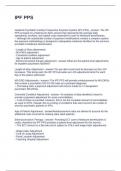
Inpatient Psychiatric Facility Prospective Payment System (IPF PPS) - answer- The IPF
PPS is based on a federal per diem amount that represents the average daily
operational, ancillary, and capital costs expended to care for Medicare beneficiaries.
-- Although the substantial number of payment modifications creates a complex system,
the payment methodology is designed to adequately reimburse facilities for the services
provided to Medicare beneficiaries.
- Length of Stay adjustments
- MS-DRG adjustment
- Comorbid condition adjustment
- Age of patient adjustment
- Electroconvulsive therapy adjustment - answer What are the patient level adjustments
for inpatient psychiatric facilities?
Length-of-Stay Adjustment - answer The per diem costs tend to decrease as the LOS
increases. This being said, the IPF PPS provides an LOS adjustment factor for each
day of the patient admission.
MS-DRG Adjustments - answer- The IPF PPS will provide reimbursement for MS-DRGs
that contain a psychiatric ICD-10-CM code as a principal diagnosis.
-- This being said, a payment adjustment will only be made for 17 designated
psychiatric MS-DRGs.
Comorbid Condition Adjustment - answer- An analysis of data identified a need to
provide a payment adjustment for some comorbidities.
-- A list of these is provided, however, this is not the complete amount of comorbidities
as used in IPPS. Instead, this is a listing of conditions that were found to be costlier to
treat for psychiatric patients in IPFs.
Age of Patient Adjustment - answerReimbursement rates are altered to account for the
additional costs incurred for treating older adult patients.
Electroconvulsive Therapy - answer- Providing ECT care to Medicare beneficiaries is
costly, therefore the IPF PPS provides a patient-level adjustment for this service.
-- The ECT amount is a flat-rate and is subject to COLA and wage-index adjustments.
- Wage-Index Adjustment
- Cost of Living Adjustment
- Rural Location Adjustment
- Teaching Hospital Adjustment
Inpatient Psychiatric Facility Prospective Payment System (IPF PPS) - answer- The IPF
PPS is based on a federal per diem amount that represents the average daily
operational, ancillary, and capital costs expended to care for Medicare beneficiaries.
-- Although the substantial number of payment modifications creates a complex system,
the payment methodology is designed to adequately reimburse facilities for the services
provided to Medicare beneficiaries.
- Length of Stay adjustments
- MS-DRG adjustment
- Comorbid condition adjustment
- Age of patient adjustment
- Electroconvulsive therapy adjustment - answer What are the patient level adjustments
for inpatient psychiatric facilities?
Length-of-Stay Adjustment - answer The per diem costs tend to decrease as the LOS
increases. This being said, the IPF PPS provides an LOS adjustment factor for each
day of the patient admission.
MS-DRG Adjustments - answer- The IPF PPS will provide reimbursement for MS-DRGs
that contain a psychiatric ICD-10-CM code as a principal diagnosis.
-- This being said, a payment adjustment will only be made for 17 designated
psychiatric MS-DRGs.
Comorbid Condition Adjustment - answer- An analysis of data identified a need to
provide a payment adjustment for some comorbidities.
-- A list of these is provided, however, this is not the complete amount of comorbidities
as used in IPPS. Instead, this is a listing of conditions that were found to be costlier to
treat for psychiatric patients in IPFs.
Age of Patient Adjustment - answerReimbursement rates are altered to account for the
additional costs incurred for treating older adult patients.
Electroconvulsive Therapy - answer- Providing ECT care to Medicare beneficiaries is
costly, therefore the IPF PPS provides a patient-level adjustment for this service.
-- The ECT amount is a flat-rate and is subject to COLA and wage-index adjustments.
- Wage-Index Adjustment
- Cost of Living Adjustment
- Rural Location Adjustment
- Teaching Hospital Adjustment