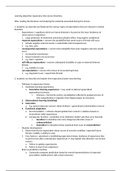
Learning objectives expectancy bias across disorders:
After reading the literature and studying the materials presented during the lecture
1. students can describe and illustrate the various types of expectations that are relevant in mental
disorders
Expectations = cognitions which are future directed n focused on the (non-)incidence of
some event or experience
1. Large predictors of treatment outcomes (placebo effect, drug regime compliance)
response expectations = concern the probability that some source of threat will occur
1. include negative external events n undesirable internal experiences
2. e.g. fear, pain
consequential expectations = concern the probability that some negative outcome would
occur
1. its intensity/aversiveness
2. losses involved in its occurrence
3. e.g. harm, rejection
self-efficacy expectations = concern anticipated (in)ability to cope w external/internal
threats
1. e.g. inability to cope
cue expectations = concern the chance of encountering threat
1. e.g. dog barks (cue) = expect bite (threat)
2. students can describe and explain how expectancy biases may develop.
Pathways to expectancy biases
1. Incidental learning experiences
a. Associative learning experiences = may result in abstract generalized
expectations/schemas
i. Schemas = formed by system consolidation reflected in gradual process of
info reorganization n migration from hippocampus to neocortex
2. Observational learning (modeling)
3. Instruction
a. E.g. parent expresses concern about dirtiness = generalized contamination concern
4. Functional adaptation
a. Accommodation = schemas should update their content n relations based on
inconsistent (safe) experiences
b. Comparator function = prediction error detection; better safe than sorry heuristic
i. Sensitive for deviation into more dangerous direction (case of
underprediction)
ii. Insensitive for deviation below expected level (case of overprediction)
Disorder development
1. Determined by the expectation about course of aversive condition, expected future
threats, inability n ability to cope
2. Core feature = persistent n invalidating expectancy biases; tendency of expectancy bias
to persist even after contradictory experiences (= may explain why disorders run chronic
course)
a. Failure to update expectancies
b. Failure to learn from experience
- Brain as prediction machine
a. Constantly compares predictions based on mental representations of expected
associations (called priors) with actual outcomes
After reading the literature and studying the materials presented during the lecture
1. students can describe and illustrate the various types of expectations that are relevant in mental
disorders
Expectations = cognitions which are future directed n focused on the (non-)incidence of
some event or experience
1. Large predictors of treatment outcomes (placebo effect, drug regime compliance)
response expectations = concern the probability that some source of threat will occur
1. include negative external events n undesirable internal experiences
2. e.g. fear, pain
consequential expectations = concern the probability that some negative outcome would
occur
1. its intensity/aversiveness
2. losses involved in its occurrence
3. e.g. harm, rejection
self-efficacy expectations = concern anticipated (in)ability to cope w external/internal
threats
1. e.g. inability to cope
cue expectations = concern the chance of encountering threat
1. e.g. dog barks (cue) = expect bite (threat)
2. students can describe and explain how expectancy biases may develop.
Pathways to expectancy biases
1. Incidental learning experiences
a. Associative learning experiences = may result in abstract generalized
expectations/schemas
i. Schemas = formed by system consolidation reflected in gradual process of
info reorganization n migration from hippocampus to neocortex
2. Observational learning (modeling)
3. Instruction
a. E.g. parent expresses concern about dirtiness = generalized contamination concern
4. Functional adaptation
a. Accommodation = schemas should update their content n relations based on
inconsistent (safe) experiences
b. Comparator function = prediction error detection; better safe than sorry heuristic
i. Sensitive for deviation into more dangerous direction (case of
underprediction)
ii. Insensitive for deviation below expected level (case of overprediction)
Disorder development
1. Determined by the expectation about course of aversive condition, expected future
threats, inability n ability to cope
2. Core feature = persistent n invalidating expectancy biases; tendency of expectancy bias
to persist even after contradictory experiences (= may explain why disorders run chronic
course)
a. Failure to update expectancies
b. Failure to learn from experience
- Brain as prediction machine
a. Constantly compares predictions based on mental representations of expected
associations (called priors) with actual outcomes