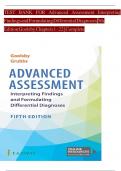
TEST BANK FOR Advanced Assessment Interpreting
Findings and Formulating Differential Diagnoses 5th
v v v v vv v
Edition Goolsby Chapters 1 - 22 | Complete
v v v v v v v
, TABLEOFCONTENTS v v
Chapterv 1.v Assessmentv andv Clinicalv Decisionv Making:v Anv Overview
Chapterv2.v Genomicv Assessment:v Interpretingv Findingsv andv Formulatingv Differentialv Diagnoses
Chapterv 3.v Skin
Chapterv 4.v Head,v Face,v andv Neck
Chapterv 5.v Thev Eye
Chapterv 6.v Ear,v Nose,v Mouth,v andv Throat
Chapterv 7.v Cardiacv andv Peripheralv Vascularv Systems
Chapterv 8.v Respiratoryv System
Chapterv 9.v Breasts
Chapterv 10.v Abdomen
Chapterv 11.v Genitourinaryv System
Chapterv 12.v Malev Reproductivev System
Chapterv 13.v Femalev Reproductivev System
Chapterv 14.v Musculoskeletalv System
Chapterv 15.v Neurologicalv System
Chapterv 16.v Nonspecificv Complaints
Chapterv 17.v Psychiatricv Mentalv Health
Chapterv 18.v Pediatricv Patients
Chapterv 19.v Pregnantv Patients
Chapterv 20.v Assessmentv ofv thev Transgenderv orv Genderv Diversev Adult
Chapterv 21.v Olderv Patients
Chapterv 22.v Personsv Withv Disabilities
, Chapter 1. Assessment and Clinical Decision Making: An Overview
v v v v v v v v
Multiplev Choice
Identifyv thev choicev thatv bestv completesv thev statementKorvanswersv thev question.
1. Whichv typev ofv clinicalv decision-makingv isv mostv reliable?
A. Intuitive
B. Analytical
C. Experiential
D. Augenblick
2. Whichv ofv thev followingv isv false?v Tov obtainv adequatev history,v health-carev providersv mustv be:
A. Methodicalv andv systematic
B. Attentivev tov thev patient‘sv verbalv andv nonverbalv languag
e
C. Ablev tov accuratelyvinterpretv thev patient‘sv responses
D. Adeptv atv readingKintov thev patient‘sv statements
3. Essentialv partsv ofv aKhealthv historyv includev allv ofv thev followingv except:
A. Chiefv complaint
B. Historyv ofv thev presentv illness
C. Currentv vitalv signs
D. Allv ofv thev abovev arev essentialv historyv componen
ts
4. Whichv ofv thev followingv isv false?v Whilev performingv thev physicalv examination,v thev examinerKmustv bev ablev to:
A. Differentiatevbetweenv normalv andv abnormalv findings
B. Recallv knowledgev ofv av rangev ofv conditionsv andv theirv associatedv signsv andv sympt
o
ms
C. Recognizev howv certainv conditionsv affectv thev responsev tov otherv conditions
D. Foreseevunpredictablev findings
5. Thev followingv isv thev leastv reliablev sourcev ofv informationv forv diagnosticv statistics:
A. Evidence-basedvinvestigations
B. Primaryvreportsv ofv research
C. Estimationv basedv onv av provider‘sv experienc
e
, D. Publishedvmeta-analyses
6. Thev followingv canv bev usedv tov assistv inv soundv clinicalv decision-making:
A. Algorithmvpublishedv inv av peer-
reviewedv journalv article
B. Clinicalv practicev guidelines
C. Evidence-basedvresearch
D. Allv ofv thev above
7. Ifv av diagnosticv studyvhasv highv sensitivity,v thisv indicatesv a:
A. Highv percentagev ofv personsv withv thev givenv conditionv willv havev anv abnormalv re
sult
B. Lowvpercentagev ofv personsv withv thev givenv conditionv willv havev anv abnormalv re
s
ult
C. Lowv likelihoodv ofv normalv resultv inv personsv withoutv av givenv condition
D. Nonev ofv thev above
8. Ifv av diagnosticv studyvhasv highv specificity,v thisv indicatesv a:
A. Lowv percentagev ofv healthyv individualsv willv showv av normalv result
B. Highv percentagev ofv healthyv individualsv willv showv av normalv result
C. Highv percentagev ofv individualsv withv av disorderKwillv showv av normalv result
D. Lowv percentagev ofv individualsv withv av disorderv willv showv anv abnormalv re
s
ult
9. Avlikelihoodv ratiov abovev 1v indicatesv thatv av diagnosticv testv showingv a:
A. Positivev resultv isv stronglyv associatedv withv thev disease
B. Negativev resultv isv stronglyv associatedv withv absencev ofv thev disea
se
C. Positivev resultv isv weaklyv associatedv withv thev disease
D. Negativev resultv isv weaklyv associatedv withv absencev ofv thev disea
s
e
Findings and Formulating Differential Diagnoses 5th
v v v v vv v
Edition Goolsby Chapters 1 - 22 | Complete
v v v v v v v
, TABLEOFCONTENTS v v
Chapterv 1.v Assessmentv andv Clinicalv Decisionv Making:v Anv Overview
Chapterv2.v Genomicv Assessment:v Interpretingv Findingsv andv Formulatingv Differentialv Diagnoses
Chapterv 3.v Skin
Chapterv 4.v Head,v Face,v andv Neck
Chapterv 5.v Thev Eye
Chapterv 6.v Ear,v Nose,v Mouth,v andv Throat
Chapterv 7.v Cardiacv andv Peripheralv Vascularv Systems
Chapterv 8.v Respiratoryv System
Chapterv 9.v Breasts
Chapterv 10.v Abdomen
Chapterv 11.v Genitourinaryv System
Chapterv 12.v Malev Reproductivev System
Chapterv 13.v Femalev Reproductivev System
Chapterv 14.v Musculoskeletalv System
Chapterv 15.v Neurologicalv System
Chapterv 16.v Nonspecificv Complaints
Chapterv 17.v Psychiatricv Mentalv Health
Chapterv 18.v Pediatricv Patients
Chapterv 19.v Pregnantv Patients
Chapterv 20.v Assessmentv ofv thev Transgenderv orv Genderv Diversev Adult
Chapterv 21.v Olderv Patients
Chapterv 22.v Personsv Withv Disabilities
, Chapter 1. Assessment and Clinical Decision Making: An Overview
v v v v v v v v
Multiplev Choice
Identifyv thev choicev thatv bestv completesv thev statementKorvanswersv thev question.
1. Whichv typev ofv clinicalv decision-makingv isv mostv reliable?
A. Intuitive
B. Analytical
C. Experiential
D. Augenblick
2. Whichv ofv thev followingv isv false?v Tov obtainv adequatev history,v health-carev providersv mustv be:
A. Methodicalv andv systematic
B. Attentivev tov thev patient‘sv verbalv andv nonverbalv languag
e
C. Ablev tov accuratelyvinterpretv thev patient‘sv responses
D. Adeptv atv readingKintov thev patient‘sv statements
3. Essentialv partsv ofv aKhealthv historyv includev allv ofv thev followingv except:
A. Chiefv complaint
B. Historyv ofv thev presentv illness
C. Currentv vitalv signs
D. Allv ofv thev abovev arev essentialv historyv componen
ts
4. Whichv ofv thev followingv isv false?v Whilev performingv thev physicalv examination,v thev examinerKmustv bev ablev to:
A. Differentiatevbetweenv normalv andv abnormalv findings
B. Recallv knowledgev ofv av rangev ofv conditionsv andv theirv associatedv signsv andv sympt
o
ms
C. Recognizev howv certainv conditionsv affectv thev responsev tov otherv conditions
D. Foreseevunpredictablev findings
5. Thev followingv isv thev leastv reliablev sourcev ofv informationv forv diagnosticv statistics:
A. Evidence-basedvinvestigations
B. Primaryvreportsv ofv research
C. Estimationv basedv onv av provider‘sv experienc
e
, D. Publishedvmeta-analyses
6. Thev followingv canv bev usedv tov assistv inv soundv clinicalv decision-making:
A. Algorithmvpublishedv inv av peer-
reviewedv journalv article
B. Clinicalv practicev guidelines
C. Evidence-basedvresearch
D. Allv ofv thev above
7. Ifv av diagnosticv studyvhasv highv sensitivity,v thisv indicatesv a:
A. Highv percentagev ofv personsv withv thev givenv conditionv willv havev anv abnormalv re
sult
B. Lowvpercentagev ofv personsv withv thev givenv conditionv willv havev anv abnormalv re
s
ult
C. Lowv likelihoodv ofv normalv resultv inv personsv withoutv av givenv condition
D. Nonev ofv thev above
8. Ifv av diagnosticv studyvhasv highv specificity,v thisv indicatesv a:
A. Lowv percentagev ofv healthyv individualsv willv showv av normalv result
B. Highv percentagev ofv healthyv individualsv willv showv av normalv result
C. Highv percentagev ofv individualsv withv av disorderKwillv showv av normalv result
D. Lowv percentagev ofv individualsv withv av disorderv willv showv anv abnormalv re
s
ult
9. Avlikelihoodv ratiov abovev 1v indicatesv thatv av diagnosticv testv showingv a:
A. Positivev resultv isv stronglyv associatedv withv thev disease
B. Negativev resultv isv stronglyv associatedv withv absencev ofv thev disea
se
C. Positivev resultv isv weaklyv associatedv withv thev disease
D. Negativev resultv isv weaklyv associatedv withv absencev ofv thev disea
s
e