Large Lesson Plan
Function – agreeing and disagreeing
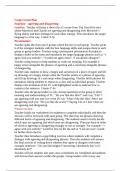
Lead in:- Teacher will play a short clip of a scene from Top Gun (first one)
where Maverick and Charlie are agreeing and disagreeing over Maverick’s
flying ability and their feelings for each other emerge. This introduces the target
language in a fun way. 5 mins T-Ss
Presentation:
Teacher splits the class into 6 groups which has ten in each group. Teacher picks
6 of the strongest students with the best language skills and assigns them to each
group as group leaders. Teacher using a powerpoint presentation & projecter
displays slides to the room and introduces the target language phrases such as “ I
agree with you entirely”, “I could not agree more”, “I am afraid I disagree”.
Teacher using emojis to help students to work out meaning. For example a
happy emoji alongside the phrases of agreeing and a sad emoji alongside phrases
of disagreeing.
Teacher asks students to draw a happy and sad emoji on a piece of paper and lift
up drawings of a happy emojis when the Teacher points to a phrase of agreeing
and lift up drawings of a sad emoji when disagreeing. Teacher drills phrases for
intonation asking students to repeat as a class and as individual groups. Teacher
displays the formation of the TL with highlighted words to indicate how to
construct the sentence. 15mins T-Ss.
Teacher asks the group leaders to ask concept questions to the group to elicit
meaning and understanding of TL. “Do you like this film?” and I say “I do” I
am agreeing with you and vice versa If I say “I don’t like this film” then I am
disagreeing with you. “Do you like the actors”? Saying I do or I don’t then we
are agreeing and disagreeing.
Practice section
Teacher hands out worksheets for students to complete individually and then the
answers will be reviewed with each group. The sheet has ten phrases showing
different levels of agreeing and disagreeing. The students need to firstly decide
which ones are agreeing and which ones are disagreeing. Then put them in order
of which is agreeing or disagreeing strongly or not so strongly. For example “ I
agree with you entirely” would be first on the list and or “I am not sure” would
be further down the list.
Teacher then introduces a gap filling exercise where students will complete a
dialogue with agreeing and disagreeing phrases. Then the students will answer
the final activity of writing down whether they agree or disagree with some
example sentences “ Do you like heights?”answering I absolutely don’t or I
absolutely do?”
Teacher will put students into pairs once worksheets are completed and students
will discuss their answers within the groups. Group leaders will convey any
Function – agreeing and disagreeing
Lead in:- Teacher will play a short clip of a scene from Top Gun (first one)
where Maverick and Charlie are agreeing and disagreeing over Maverick’s
flying ability and their feelings for each other emerge. This introduces the target
language in a fun way. 5 mins T-Ss
Presentation:
Teacher splits the class into 6 groups which has ten in each group. Teacher picks
6 of the strongest students with the best language skills and assigns them to each
group as group leaders. Teacher using a powerpoint presentation & projecter
displays slides to the room and introduces the target language phrases such as “ I
agree with you entirely”, “I could not agree more”, “I am afraid I disagree”.
Teacher using emojis to help students to work out meaning. For example a
happy emoji alongside the phrases of agreeing and a sad emoji alongside phrases
of disagreeing.
Teacher asks students to draw a happy and sad emoji on a piece of paper and lift
up drawings of a happy emojis when the Teacher points to a phrase of agreeing
and lift up drawings of a sad emoji when disagreeing. Teacher drills phrases for
intonation asking students to repeat as a class and as individual groups. Teacher
displays the formation of the TL with highlighted words to indicate how to
construct the sentence. 15mins T-Ss.
Teacher asks the group leaders to ask concept questions to the group to elicit
meaning and understanding of TL. “Do you like this film?” and I say “I do” I
am agreeing with you and vice versa If I say “I don’t like this film” then I am
disagreeing with you. “Do you like the actors”? Saying I do or I don’t then we
are agreeing and disagreeing.
Practice section
Teacher hands out worksheets for students to complete individually and then the
answers will be reviewed with each group. The sheet has ten phrases showing
different levels of agreeing and disagreeing. The students need to firstly decide
which ones are agreeing and which ones are disagreeing. Then put them in order
of which is agreeing or disagreeing strongly or not so strongly. For example “ I
agree with you entirely” would be first on the list and or “I am not sure” would
be further down the list.
Teacher then introduces a gap filling exercise where students will complete a
dialogue with agreeing and disagreeing phrases. Then the students will answer
the final activity of writing down whether they agree or disagree with some
example sentences “ Do you like heights?”answering I absolutely don’t or I
absolutely do?”
Teacher will put students into pairs once worksheets are completed and students
will discuss their answers within the groups. Group leaders will convey any