Rocío Fernández Martín 1º F (IBDP)
Busines management
unit 5: Operations
5.1 Introduction to operations
management
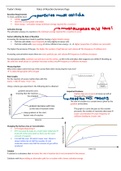
Operations management is the process of transforming resources (or inputs) into outputs to
achieve business objectives. It involves the planning, organizing, coordinating and controlling of
all activities involved in the transformation of inputs into outputs.
Inputs are all the resources needed for the product: physical, financial and human resources.
Output is the product itself, whether a good or a service. Feedback occurs when the output of
a business becomes an input to the same business. Feedback often involves information from
production and output that can inform the business about needed changes.
The ‘process’ part of the system for businesses includes all the business functions: human
resource management, finance and accounts, and marketing. Operations management is the
final function. It involves the specific process of transforming inputs into outputs to achieve
business objectives.
,Rocío Fernández Martín 1º F (IBDP)
Operations management is about ensuring that goods and services meet the needs and wants
(desires) of customers à the provision of goods and services in the right quantities and at the
right quality in a cost-effective and timely manner.
The other business functions support and impact the work of the operations department as
follows:
• The marketing department discovers consumers’ needs and attracts customers.
• The human resource department recruits, trains and motivates the employees that
make the products.
• The finance and accounts department ensures that funds are in place to meet the
needs of production.
Exam tip:
But operations management, in turn, affects the other When you are discussing operations
management in the exam, it is important
business functions too. For example, when operations
to remember that each function of the
managers make decisions on production methods, this may business is interdependent with the other
result in a need for either more or less people (human functions. When you make these
connections, you show you understand
resources). The human resource and finance and
business as a system.
accounting departments will need to deal with the employee
and cost implications of those production choices. All functions of the business are
interdependent.
Operations will involve the management of factors of production, such as:
• Land: This will include location decisions and finding the right base for a business.
• Labour: This refers to the number and the skills of people you employ.
• Capital: This refers to capital goods such as equipment and machinery.
• Enterprise (management): This refers to the ability of employees to come up with new
ideas, to find solutions to problems and be creative.
The combination of resources will depend on factors such as the nature of the process, but
also the cost and availability of different resources.
• Capital-intensive process: An operations process that has a high proportion of capital
compared to labour and land. For example, a bottling plant or car production.
• Labour-intensive process: An operations process that has a high proportion of labour
compared to capital and land. For example, clothes manufacture.
,Rocío Fernández Martín 1º F (IBDP)
Selecting an appropriate operation method
(not in Kognity) Production methods can either be labour or capital-intensive. Choosing labour
or capital- intensive methods of production depends on:
• Relative cost of labour and capital.
• Size of the market.
• Corporate objectives.
Labour-intensive production
Labour-intensive production uses a greater proportion of labour than any other factor input. A
key benefit is the ability to offer personalized services. It is essential in some industries, e.g.
health care and education. Labour-intensive production is highly suited for firms that:
• Make products that are highly customized, e.g. tailormade suits.
• Are in the tertiary sector.
• Operate farming in economically developing countries.
Capital-intensive production
Capital-intensive industries have a relatively high proportion of capital costs compared with
labour costs. High levels of output are possible. However, products tend to be highly
homogeneous, so there is no unique selling point (USP) from customization. Capital-intensive
production is ideal for firms that:
• Have goods that can be batch or mass produced AND
• Operate in large markets that demand large volumes
• AND/OR
• Have ambitious growth objectives.
Added value
Operations management involves all the stages of the transformation process and is directly
involved in the process of adding value (the price that customers pay for the good or service
is greater than the costs of producing that product), since it will affect factors such as:
• The amount of resources used and how they are used, affecting cost of production.
The more efficient the operations are, the less waste there is and the lower the cost
per unit should be.
• The quality of production and factors such as speed of delivery, which will affect how
much customers will pay and how many sales are made.
, Rocío Fernández Martín 1º F (IBDP)
5.2 operations methods
Operations methods refer to the specific methods by which production takes place. The
methods are usually classified by job production, batch production, mass/flow production and
mass customization. However, it is not always so straightforward to classify. Many goods
are made using a combination of operations methods.
Job production
This involves creating an individual product from start to finish, tailor made to meet specific
needs of a customer. The products are highly specialized and often unique, one-off items. Highly
skilled workers produce a single good or provide a service to one customer at a time. Producing
these goods and services is usually a very labor-intensive process.
Pros Cons
• Flexibility and choice. The product is • High costs. Production can be costly
adapted to meet individual customer because it is carried out by specialised
requirements and skilled workers using lower quantities
• High quality. Quality is due to the highly of materials. This makes it difficult to
skilled labour and high-quality materials achieve economies of scale.
used in production. • Time-consuming. Production takes more
• High profit margins. The product can be time because specific customer needs
sold for a higher price due to its unique need to be fulfilled.
specifications. • Cash flow problems. Large projects, such
• High worker motivation. Employees are as bridges or stadiums, will be expensive
often more motivated because they can to produce and there will be fewer of
use their expertise and skills them. Businesses will need to manage
cash flow well to ensure they have the
funds to produce the product.
Busines management
unit 5: Operations
5.1 Introduction to operations
management
Operations management is the process of transforming resources (or inputs) into outputs to
achieve business objectives. It involves the planning, organizing, coordinating and controlling of
all activities involved in the transformation of inputs into outputs.
Inputs are all the resources needed for the product: physical, financial and human resources.
Output is the product itself, whether a good or a service. Feedback occurs when the output of
a business becomes an input to the same business. Feedback often involves information from
production and output that can inform the business about needed changes.
The ‘process’ part of the system for businesses includes all the business functions: human
resource management, finance and accounts, and marketing. Operations management is the
final function. It involves the specific process of transforming inputs into outputs to achieve
business objectives.
,Rocío Fernández Martín 1º F (IBDP)
Operations management is about ensuring that goods and services meet the needs and wants
(desires) of customers à the provision of goods and services in the right quantities and at the
right quality in a cost-effective and timely manner.
The other business functions support and impact the work of the operations department as
follows:
• The marketing department discovers consumers’ needs and attracts customers.
• The human resource department recruits, trains and motivates the employees that
make the products.
• The finance and accounts department ensures that funds are in place to meet the
needs of production.
Exam tip:
But operations management, in turn, affects the other When you are discussing operations
management in the exam, it is important
business functions too. For example, when operations
to remember that each function of the
managers make decisions on production methods, this may business is interdependent with the other
result in a need for either more or less people (human functions. When you make these
connections, you show you understand
resources). The human resource and finance and
business as a system.
accounting departments will need to deal with the employee
and cost implications of those production choices. All functions of the business are
interdependent.
Operations will involve the management of factors of production, such as:
• Land: This will include location decisions and finding the right base for a business.
• Labour: This refers to the number and the skills of people you employ.
• Capital: This refers to capital goods such as equipment and machinery.
• Enterprise (management): This refers to the ability of employees to come up with new
ideas, to find solutions to problems and be creative.
The combination of resources will depend on factors such as the nature of the process, but
also the cost and availability of different resources.
• Capital-intensive process: An operations process that has a high proportion of capital
compared to labour and land. For example, a bottling plant or car production.
• Labour-intensive process: An operations process that has a high proportion of labour
compared to capital and land. For example, clothes manufacture.
,Rocío Fernández Martín 1º F (IBDP)
Selecting an appropriate operation method
(not in Kognity) Production methods can either be labour or capital-intensive. Choosing labour
or capital- intensive methods of production depends on:
• Relative cost of labour and capital.
• Size of the market.
• Corporate objectives.
Labour-intensive production
Labour-intensive production uses a greater proportion of labour than any other factor input. A
key benefit is the ability to offer personalized services. It is essential in some industries, e.g.
health care and education. Labour-intensive production is highly suited for firms that:
• Make products that are highly customized, e.g. tailormade suits.
• Are in the tertiary sector.
• Operate farming in economically developing countries.
Capital-intensive production
Capital-intensive industries have a relatively high proportion of capital costs compared with
labour costs. High levels of output are possible. However, products tend to be highly
homogeneous, so there is no unique selling point (USP) from customization. Capital-intensive
production is ideal for firms that:
• Have goods that can be batch or mass produced AND
• Operate in large markets that demand large volumes
• AND/OR
• Have ambitious growth objectives.
Added value
Operations management involves all the stages of the transformation process and is directly
involved in the process of adding value (the price that customers pay for the good or service
is greater than the costs of producing that product), since it will affect factors such as:
• The amount of resources used and how they are used, affecting cost of production.
The more efficient the operations are, the less waste there is and the lower the cost
per unit should be.
• The quality of production and factors such as speed of delivery, which will affect how
much customers will pay and how many sales are made.
, Rocío Fernández Martín 1º F (IBDP)
5.2 operations methods
Operations methods refer to the specific methods by which production takes place. The
methods are usually classified by job production, batch production, mass/flow production and
mass customization. However, it is not always so straightforward to classify. Many goods
are made using a combination of operations methods.
Job production
This involves creating an individual product from start to finish, tailor made to meet specific
needs of a customer. The products are highly specialized and often unique, one-off items. Highly
skilled workers produce a single good or provide a service to one customer at a time. Producing
these goods and services is usually a very labor-intensive process.
Pros Cons
• Flexibility and choice. The product is • High costs. Production can be costly
adapted to meet individual customer because it is carried out by specialised
requirements and skilled workers using lower quantities
• High quality. Quality is due to the highly of materials. This makes it difficult to
skilled labour and high-quality materials achieve economies of scale.
used in production. • Time-consuming. Production takes more
• High profit margins. The product can be time because specific customer needs
sold for a higher price due to its unique need to be fulfilled.
specifications. • Cash flow problems. Large projects, such
• High worker motivation. Employees are as bridges or stadiums, will be expensive
often more motivated because they can to produce and there will be fewer of
use their expertise and skills them. Businesses will need to manage
cash flow well to ensure they have the
funds to produce the product.