Name: Score:
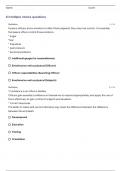
61 Multiple choice questions
Definition 1 of 61
If peace officers allow emotions to affect their judgment, they may lose control. It is essential
that peace officer control those emotions.
* anger
*fear
* Prejudices
* peer pressure
* personal problems
Additional gauges for reasonableness
Emotional as well as physical (Officers)
Officer responsibilities (Searching Officer)
Emotional as well as physical (Subjects)
Definition 2 of 61
*Confidence in an officer's abilities.
Officers gain essential confidence in themselves to respond appropriately and apply the use of
force effectively to gain control of subjects and situations.
* Correct responses.
The ability to make split-second decisions may mean the difference between the difference
between life and death.
Development
Education
Training
Orientation
,Definition 3 of 61
* Race
* Sex
* Age
* Type of body build (i.e., heavyset, medium, small frame)
* weight
* Height
* Color of eyes
* Color of hair
* Hair style (e.g., long, short, curly)
* Clothing -type: hats, jeans, jackets, etc.
-color, style, (e.g., casual, conservative)
* Unusual physical attributes: Scars, Tattoos,
Moles, Missing teeth.
Field Notes: Suspects
Report users
Field Notes: (Field Interview) Victims and Witnesses
Failure to Intervene
Definition 4 of 61
If subjects allow emotions to affect their judgment, they may lose control during an arrest
process.
* anger
* fear
* embarrassment
* lose of freedom
* prejudices
* peer pressure
* personal problems
* mental illness
Emotional as well as physical (Subjects)
Unjustifiable homicide by a public officer
Observation of prisoner during transport
Potential Hazards
,Definition 5 of 61
When using control holds and takedowns, peace officers must be constantly aware that they
are close to the subject and therefore vulnerable to attack.
Officer vulnerability
General control
Report users
The officer's intent
Definition 6 of 61
Peace officers are prohibited from depriving citizens of their rights under the color of the law. If
death results, officers my be punished by life imprisonment.
U.s. code section title 18, section 1001 (false statements)
U.s. Code Section Title 42, Section 1983 (civil)
U.s. code section title 21, section 841 (drug offenses)
U.S. Code Section Title 18, Section 242 (criminal)
Definition 7 of 61
more predictable to the subject.
limited.
improper.
dangerous to the officer or others.
Solution
Reaction
Chemical Change
Response
, Definition 8 of 61
Necessity for intervention:
* it is required by law
* it is morally and ethically correct
* personal integrity demands it
* it enhances officer safety
* it preserves professionalism and supports the law enforcement mission.
*it strengthens public confidence in the law enforcement profession and the individual agency
involved
Handcuff Nomenclature
Balance stance
Failure to Intervene
Takedown Techniques
Definition 9 of 61
The officer may experience unreasonable fear as a result of:
* an emotional response to a traumatic event
* generalization of past trauma (such as being bitten by a dog as a child or suffering a gunshot
wound)
* personal prejudice against people of a particular race, religion, ethic groups, etc.
* overall anxiety as a result of uncertainty about one's own skill and expertise
Additional gauges for reasonableness
Observation of prisoner during transport
Situations: that may generate unreasonable fear
Consideration when deciding to use deadly force
61 Multiple choice questions
Definition 1 of 61
If peace officers allow emotions to affect their judgment, they may lose control. It is essential
that peace officer control those emotions.
* anger
*fear
* Prejudices
* peer pressure
* personal problems
Additional gauges for reasonableness
Emotional as well as physical (Officers)
Officer responsibilities (Searching Officer)
Emotional as well as physical (Subjects)
Definition 2 of 61
*Confidence in an officer's abilities.
Officers gain essential confidence in themselves to respond appropriately and apply the use of
force effectively to gain control of subjects and situations.
* Correct responses.
The ability to make split-second decisions may mean the difference between the difference
between life and death.
Development
Education
Training
Orientation
,Definition 3 of 61
* Race
* Sex
* Age
* Type of body build (i.e., heavyset, medium, small frame)
* weight
* Height
* Color of eyes
* Color of hair
* Hair style (e.g., long, short, curly)
* Clothing -type: hats, jeans, jackets, etc.
-color, style, (e.g., casual, conservative)
* Unusual physical attributes: Scars, Tattoos,
Moles, Missing teeth.
Field Notes: Suspects
Report users
Field Notes: (Field Interview) Victims and Witnesses
Failure to Intervene
Definition 4 of 61
If subjects allow emotions to affect their judgment, they may lose control during an arrest
process.
* anger
* fear
* embarrassment
* lose of freedom
* prejudices
* peer pressure
* personal problems
* mental illness
Emotional as well as physical (Subjects)
Unjustifiable homicide by a public officer
Observation of prisoner during transport
Potential Hazards
,Definition 5 of 61
When using control holds and takedowns, peace officers must be constantly aware that they
are close to the subject and therefore vulnerable to attack.
Officer vulnerability
General control
Report users
The officer's intent
Definition 6 of 61
Peace officers are prohibited from depriving citizens of their rights under the color of the law. If
death results, officers my be punished by life imprisonment.
U.s. code section title 18, section 1001 (false statements)
U.s. Code Section Title 42, Section 1983 (civil)
U.s. code section title 21, section 841 (drug offenses)
U.S. Code Section Title 18, Section 242 (criminal)
Definition 7 of 61
more predictable to the subject.
limited.
improper.
dangerous to the officer or others.
Solution
Reaction
Chemical Change
Response
, Definition 8 of 61
Necessity for intervention:
* it is required by law
* it is morally and ethically correct
* personal integrity demands it
* it enhances officer safety
* it preserves professionalism and supports the law enforcement mission.
*it strengthens public confidence in the law enforcement profession and the individual agency
involved
Handcuff Nomenclature
Balance stance
Failure to Intervene
Takedown Techniques
Definition 9 of 61
The officer may experience unreasonable fear as a result of:
* an emotional response to a traumatic event
* generalization of past trauma (such as being bitten by a dog as a child or suffering a gunshot
wound)
* personal prejudice against people of a particular race, religion, ethic groups, etc.
* overall anxiety as a result of uncertainty about one's own skill and expertise
Additional gauges for reasonableness
Observation of prisoner during transport
Situations: that may generate unreasonable fear
Consideration when deciding to use deadly force