HOSA NUTRITION THROUGHOUT THE
LIFE SPAN E QUESTIONS WITH
CORRECT ANSWERS
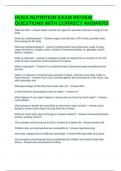
Why do pregnant mothers need more calories? - Answer-To fuel increased metabolic
workload of mother and fetus, and spare protein for building new tissue
Amount of energy increase - Answer-No increase in first trimester. 340 extra calories
per day during the second trimester, and 452 extra calories per day in the 3rd trimester
Needs for protein increase - Answer-Development of the placenta, growth of the fetus,
growth of maternal tissues, increased maternal blood volume, and amniotic fluid
Protein increase - Answer-46g a day to 71 g a day, but the average US women already
consumes 74g a day, so individual counselling is necessary
Teratogenic - Answer-causing a birth defect due to a deficient diet
Need for more calcium - Answer-along with P. development of bones and teeth, and
blood clotting
Need for more iron - Answer-Essential for increased hemoglobin synthesis that is
required for the greater maternal blood volume, and the baby's necessary prenatal
storage of iron. Average intake is 14.5mg/day, when 27mg/day
Need for more folate - Answer-TH4 is used in DNA synthesis, cell division, hemoglobin
synthesis, important until week 6 of gestation to ensure adequate nutrient availability in
the endometrial lining of the uterus for embryonic tissue development. It also causes a
lower chance of neural tube defects
Need for more Vitamin D - Answer-Worldwide deficiency, linked to gestational diabetes
and preterm birth, but not causal. Recommended 15 mcg/d
Weight Gain amount and rate during pregnancy - Answer-22 to 36.8 lbs in total. 2-4 lbs
over the first trimester, and 0.4kg (0.88lbs) per week after that
Basic Principles of Diet and Exercise and Women for pregnant women - Answer-
Sufficient quantity of high quality food, and avoid fasting or skipping meals. Also, at
least 150 minutes of moderate aerobic exercise each week, or even 30 minutes a day
Nausea and vomiting in pregnant women - Answer-Affect 69% of women during early
pregnancy, likely by adaptation to human chorionic gonadotropin during the first
LIFE SPAN E QUESTIONS WITH
CORRECT ANSWERS
Why do pregnant mothers need more calories? - Answer-To fuel increased metabolic
workload of mother and fetus, and spare protein for building new tissue
Amount of energy increase - Answer-No increase in first trimester. 340 extra calories
per day during the second trimester, and 452 extra calories per day in the 3rd trimester
Needs for protein increase - Answer-Development of the placenta, growth of the fetus,
growth of maternal tissues, increased maternal blood volume, and amniotic fluid
Protein increase - Answer-46g a day to 71 g a day, but the average US women already
consumes 74g a day, so individual counselling is necessary
Teratogenic - Answer-causing a birth defect due to a deficient diet
Need for more calcium - Answer-along with P. development of bones and teeth, and
blood clotting
Need for more iron - Answer-Essential for increased hemoglobin synthesis that is
required for the greater maternal blood volume, and the baby's necessary prenatal
storage of iron. Average intake is 14.5mg/day, when 27mg/day
Need for more folate - Answer-TH4 is used in DNA synthesis, cell division, hemoglobin
synthesis, important until week 6 of gestation to ensure adequate nutrient availability in
the endometrial lining of the uterus for embryonic tissue development. It also causes a
lower chance of neural tube defects
Need for more Vitamin D - Answer-Worldwide deficiency, linked to gestational diabetes
and preterm birth, but not causal. Recommended 15 mcg/d
Weight Gain amount and rate during pregnancy - Answer-22 to 36.8 lbs in total. 2-4 lbs
over the first trimester, and 0.4kg (0.88lbs) per week after that
Basic Principles of Diet and Exercise and Women for pregnant women - Answer-
Sufficient quantity of high quality food, and avoid fasting or skipping meals. Also, at
least 150 minutes of moderate aerobic exercise each week, or even 30 minutes a day
Nausea and vomiting in pregnant women - Answer-Affect 69% of women during early
pregnancy, likely by adaptation to human chorionic gonadotropin during the first