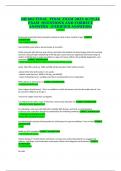
ATI MED-SURG CMS EXAM 2023/ 2024
NEW!!! QUESTIONS AND 100% CORRECT
VERIFIED ANSWERS
Question 1: Priority nursing intervention
for a potassium level of 6.2
Answer: B – Place the patient on a
cardiac monitor.
Explanation: A potassium level of 6.2 is
considered high (hyperkalemia), which
can lead to serious cardiac complications
such as arrhythmias. Monitoring the
,heart via a cardiac monitor is the priority
intervention to detect any dangerous
changes in heart rhythm. Other
interventions, like encouraging fluid
intake or preparing for dialysis, may
follow based on further clinical
assessment.
Question 2: Most concerning finding for
a patient with COPD on 2L oxygen via
nasal cannula
Answer: C – Arterial pH of 7.30.
Explanation: A pH of 7.30 indicates
acidosis, likely respiratory acidosis, which
is a significant concern in COPD patients
as it suggests impaired gas exchange and
, worsening respiratory function. The
productive cough and oxygen saturation
of 95% are less concerning in this
context, and a respiratory rate of 28 is
elevated but not the immediate priority.
Question 3: Expected symptom in a
patient with hypocalcemia
Answer: C – Chvostek's sign.
Explanation: Chvostek's sign is a positive
response (twitching of the facial
muscles) when the facial nerve is
tapped, which is indicative of
hypocalcemia. Bradycardia and
hypoactive reflexes are not as specific to
NEW!!! QUESTIONS AND 100% CORRECT
VERIFIED ANSWERS
Question 1: Priority nursing intervention
for a potassium level of 6.2
Answer: B – Place the patient on a
cardiac monitor.
Explanation: A potassium level of 6.2 is
considered high (hyperkalemia), which
can lead to serious cardiac complications
such as arrhythmias. Monitoring the
,heart via a cardiac monitor is the priority
intervention to detect any dangerous
changes in heart rhythm. Other
interventions, like encouraging fluid
intake or preparing for dialysis, may
follow based on further clinical
assessment.
Question 2: Most concerning finding for
a patient with COPD on 2L oxygen via
nasal cannula
Answer: C – Arterial pH of 7.30.
Explanation: A pH of 7.30 indicates
acidosis, likely respiratory acidosis, which
is a significant concern in COPD patients
as it suggests impaired gas exchange and
, worsening respiratory function. The
productive cough and oxygen saturation
of 95% are less concerning in this
context, and a respiratory rate of 28 is
elevated but not the immediate priority.
Question 3: Expected symptom in a
patient with hypocalcemia
Answer: C – Chvostek's sign.
Explanation: Chvostek's sign is a positive
response (twitching of the facial
muscles) when the facial nerve is
tapped, which is indicative of
hypocalcemia. Bradycardia and
hypoactive reflexes are not as specific to