uman error - A life in error
H
(reasoning)
University of Groningen
hapter 1 - A bizarre beginning
C
1
Chapter 2 - Plans, actions and consequences 2
Chapter 3 - Three performance levels 3
Chapter 4 - Absent-minded slips and lapses 5
Chapter 5 - Individual Differences 6
Chapter 6 - A courtroom application of the SIML 8
Chapter 7 - The Freudian slip revisited 9
Chapter 8 - Planning failures 10
Chapter 9 - Violations 14
Chapter 10 - Organizational accidents 15
Chapter 11 - Organizational culture: resisting change 17
Chapter 12 - Medical error 21
Chapter 13 - Disclosing error 23
Chapter 14 - Reviewing the journey 25
,Chapter 1 - A bizarre beginning
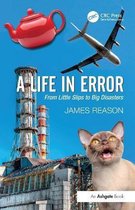
rincipal characteristics of absent-minded errors (in the example of putting cat food
P
in the teapot = behavioral spoonerism):
● Both behavioral sequences were highly routine, meaning people are unlikely to be
monitoring step by step; attention is ‘absent’
● Both the cat’s bowl and the teapot afforded containment
● Some change introduced into a routine sequence of actions (in this case, the cat’s
demands) quite often misdirects actions down the wrong path
ell-used objects develop alocal control zone, oncethe hand enters that zone it is
W
automatically directed to perform object-appropriate actions. These control zones become
particularly evident when we are mooching around the house in a state of reduced
intentionality.
→ these aimless periods reveal that much of our behavior is under the control of the
immediate environment, often resulting in the unintended activation of action programs
appropriate for the circumstances
Tip-of-the-tongue states→ struggle to retrieve aword that we know we know.
1
, Chapter 2 - Plans, actions and consequences
here is no universally agreed scientific definition oferror.
T
→ this chapter tries to put together a working definition of error that will serve as a
framework for what follows
rrorsentail some kind of deviation of human performancefrom an intended, desired or
E
ideal standard.
→ may have adverse effects, but can also be inconsequential or even benign, as in
trial-and-error learning or serendipitous discovery
It is not so much the psychological process of eros that determine the nature of the outcome,
but rather the circumstances of their occurrence that shape anerror’s consequence.
All human actions entail 3 basic elements:
1. plans
2. actions
3. consequences
lanoften begins with the need to alleviate a stateof tension, a specific intention is formed
P
to do this.Planconsists of a stated aim and a roughoutline of the actions necessary to
achieve it.
→ our actions are in error when they fail to achieve the objectives of our current plan;
however our lives are governed by many plans and sometimes they nest together in close
harmony and other times they conflict
→ existence of co-existing and conflicting plans would make a working definition of error
beyond our reach, were it not for2 built-in limitationsto human performance:
1. our physical capacity to turn personal plans into action is limited, we can only be in
one place at any time
2. we possess only a limited mental capacity for carrying out plans, only one is
maximally active at any time
rror= occasions in which a planned sequence of mentalor physical activities fails to
E
achieve its desired goal without the intervention of some chance agency.
→ 2 qualifications important in this definition: intention & absence of any chance intervention
2 ways in which you can fail to achieve your desired objective:
1. Plan of action may be entirely appropriate, but the actions do not go as planned;
these are slips and lapses (absent-mindedness) or trips and fumbles (clumsy or
maladroit actions); they fail at the level of execution rather than in the formulation of
intentions or planning
2. Arise when you actions follow the plan exactly, but the plan itself is inadequate to
achieve its desired goal; these are termed mistakes and involve more complex,
higher-level processes such as judging, reasoning, and decision-making and are
much harder to detect
2
H
(reasoning)
University of Groningen
hapter 1 - A bizarre beginning
C
1
Chapter 2 - Plans, actions and consequences 2
Chapter 3 - Three performance levels 3
Chapter 4 - Absent-minded slips and lapses 5
Chapter 5 - Individual Differences 6
Chapter 6 - A courtroom application of the SIML 8
Chapter 7 - The Freudian slip revisited 9
Chapter 8 - Planning failures 10
Chapter 9 - Violations 14
Chapter 10 - Organizational accidents 15
Chapter 11 - Organizational culture: resisting change 17
Chapter 12 - Medical error 21
Chapter 13 - Disclosing error 23
Chapter 14 - Reviewing the journey 25
,Chapter 1 - A bizarre beginning
rincipal characteristics of absent-minded errors (in the example of putting cat food
P
in the teapot = behavioral spoonerism):
● Both behavioral sequences were highly routine, meaning people are unlikely to be
monitoring step by step; attention is ‘absent’
● Both the cat’s bowl and the teapot afforded containment
● Some change introduced into a routine sequence of actions (in this case, the cat’s
demands) quite often misdirects actions down the wrong path
ell-used objects develop alocal control zone, oncethe hand enters that zone it is
W
automatically directed to perform object-appropriate actions. These control zones become
particularly evident when we are mooching around the house in a state of reduced
intentionality.
→ these aimless periods reveal that much of our behavior is under the control of the
immediate environment, often resulting in the unintended activation of action programs
appropriate for the circumstances
Tip-of-the-tongue states→ struggle to retrieve aword that we know we know.
1
, Chapter 2 - Plans, actions and consequences
here is no universally agreed scientific definition oferror.
T
→ this chapter tries to put together a working definition of error that will serve as a
framework for what follows
rrorsentail some kind of deviation of human performancefrom an intended, desired or
E
ideal standard.
→ may have adverse effects, but can also be inconsequential or even benign, as in
trial-and-error learning or serendipitous discovery
It is not so much the psychological process of eros that determine the nature of the outcome,
but rather the circumstances of their occurrence that shape anerror’s consequence.
All human actions entail 3 basic elements:
1. plans
2. actions
3. consequences
lanoften begins with the need to alleviate a stateof tension, a specific intention is formed
P
to do this.Planconsists of a stated aim and a roughoutline of the actions necessary to
achieve it.
→ our actions are in error when they fail to achieve the objectives of our current plan;
however our lives are governed by many plans and sometimes they nest together in close
harmony and other times they conflict
→ existence of co-existing and conflicting plans would make a working definition of error
beyond our reach, were it not for2 built-in limitationsto human performance:
1. our physical capacity to turn personal plans into action is limited, we can only be in
one place at any time
2. we possess only a limited mental capacity for carrying out plans, only one is
maximally active at any time
rror= occasions in which a planned sequence of mentalor physical activities fails to
E
achieve its desired goal without the intervention of some chance agency.
→ 2 qualifications important in this definition: intention & absence of any chance intervention
2 ways in which you can fail to achieve your desired objective:
1. Plan of action may be entirely appropriate, but the actions do not go as planned;
these are slips and lapses (absent-mindedness) or trips and fumbles (clumsy or
maladroit actions); they fail at the level of execution rather than in the formulation of
intentions or planning
2. Arise when you actions follow the plan exactly, but the plan itself is inadequate to
achieve its desired goal; these are termed mistakes and involve more complex,
higher-level processes such as judging, reasoning, and decision-making and are
much harder to detect
2